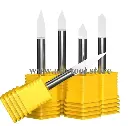
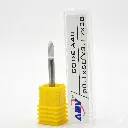
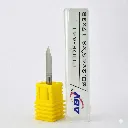
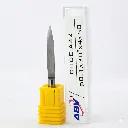
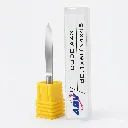
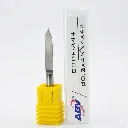
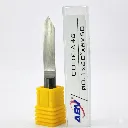
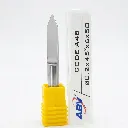
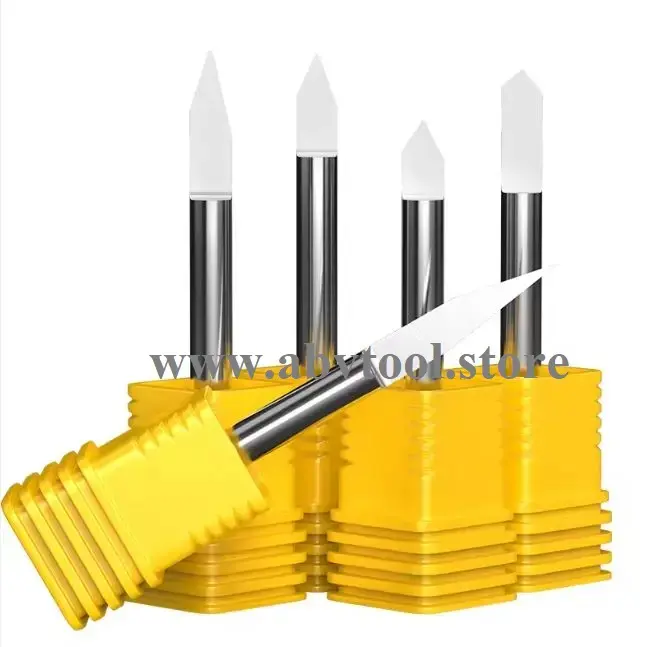
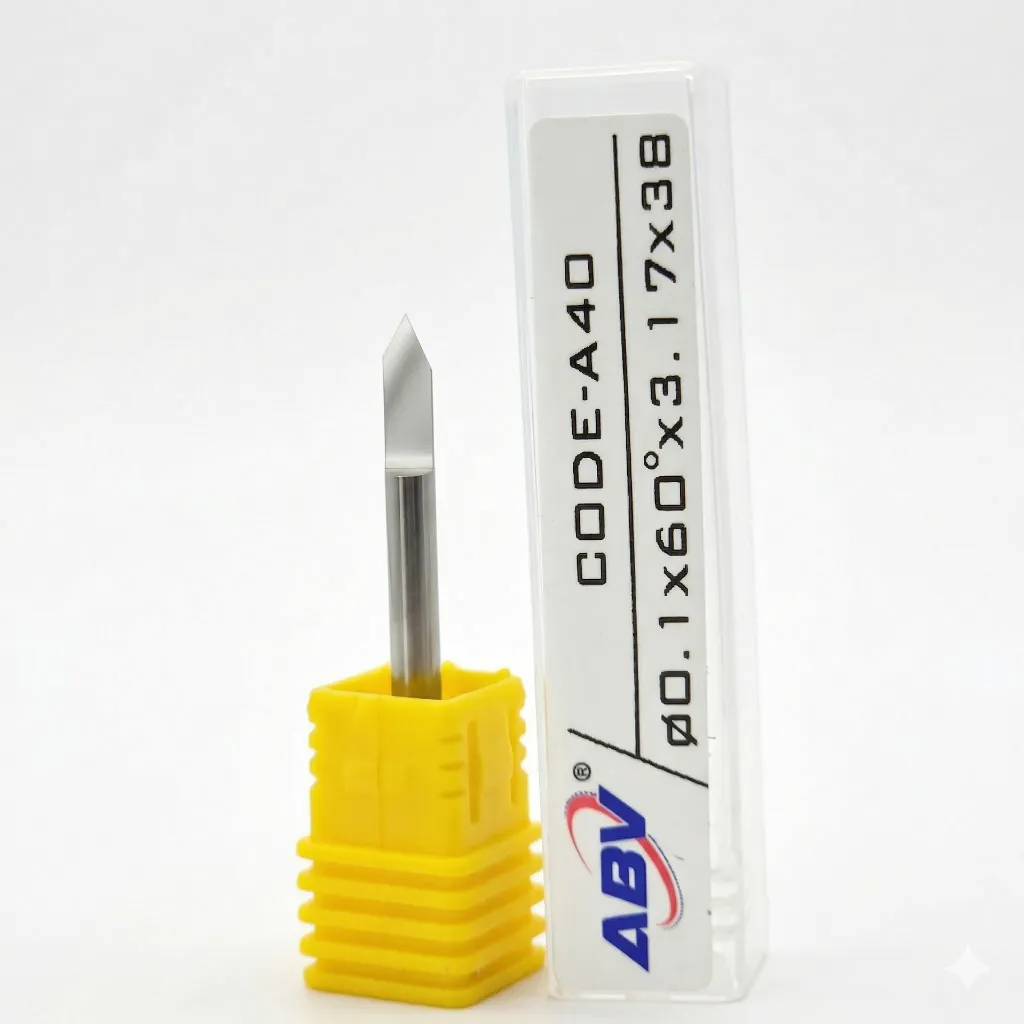
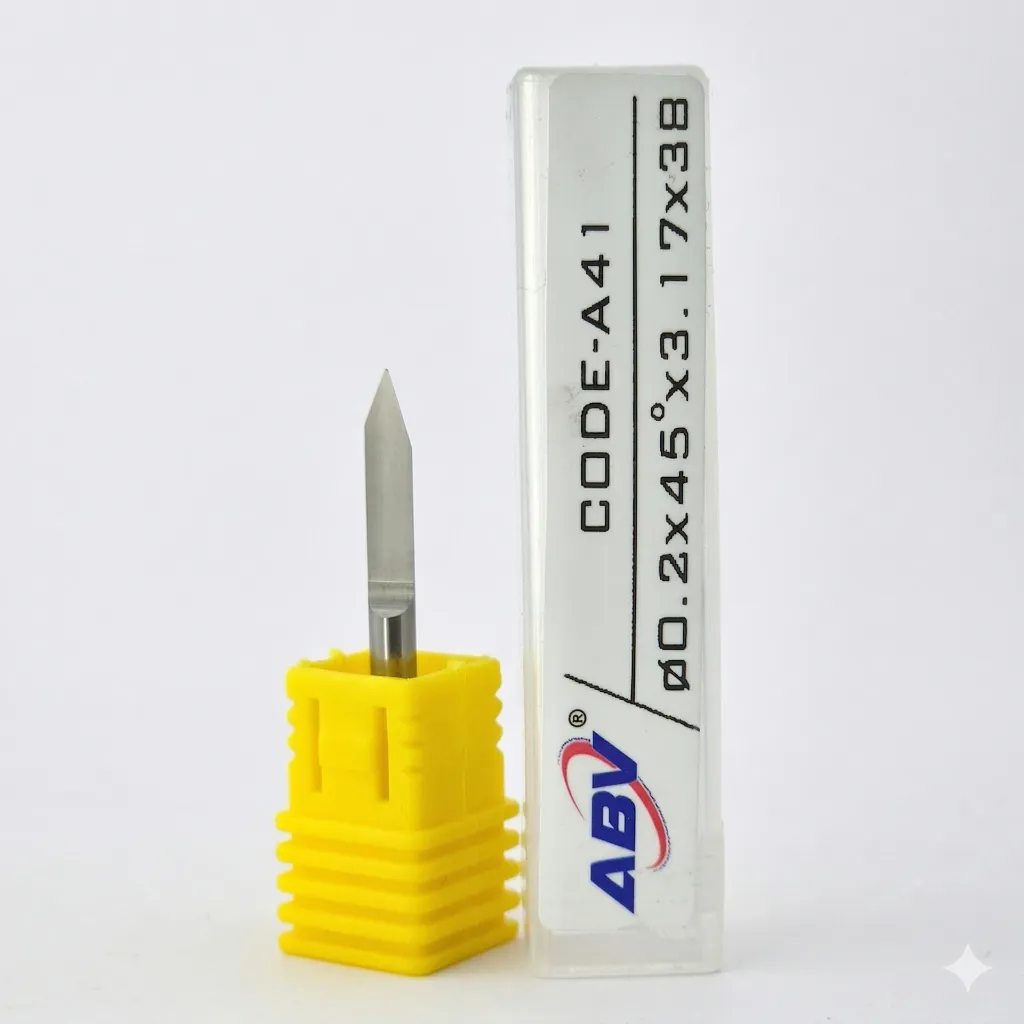
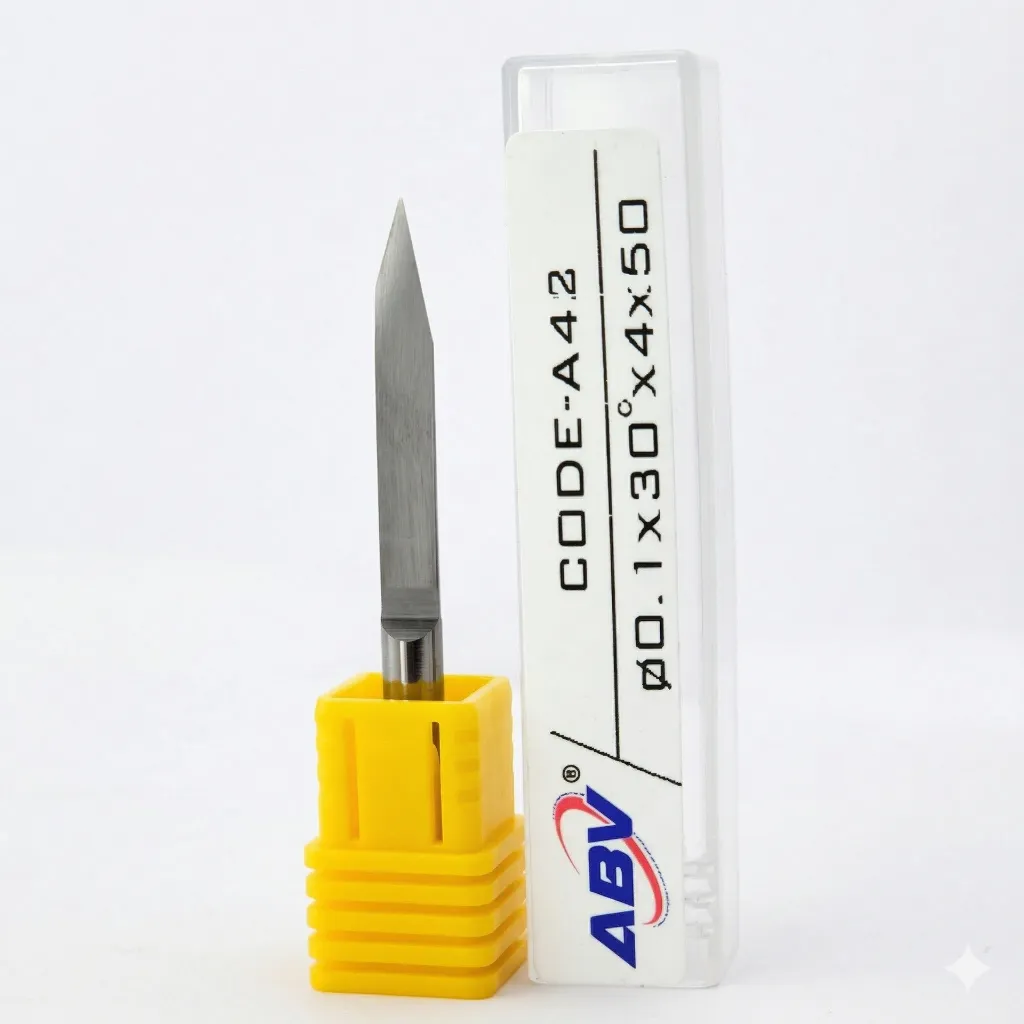
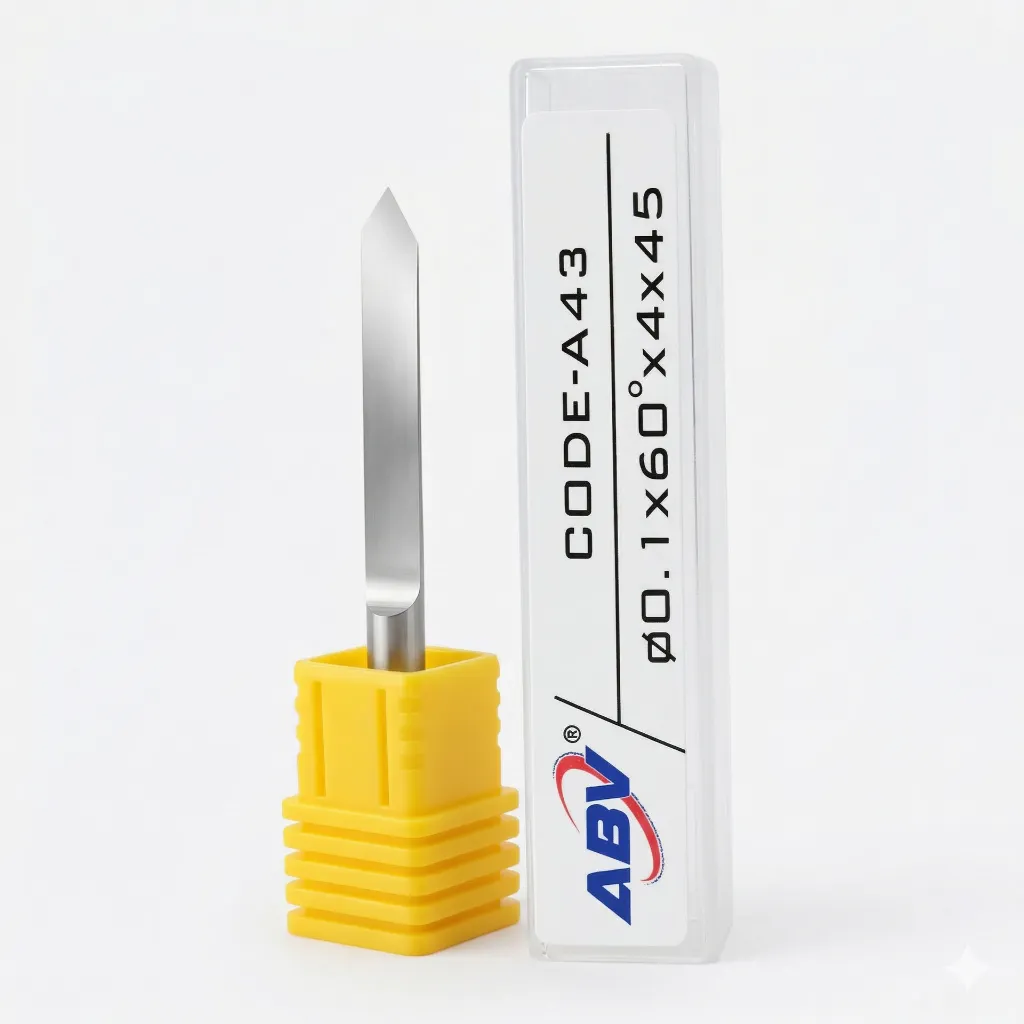
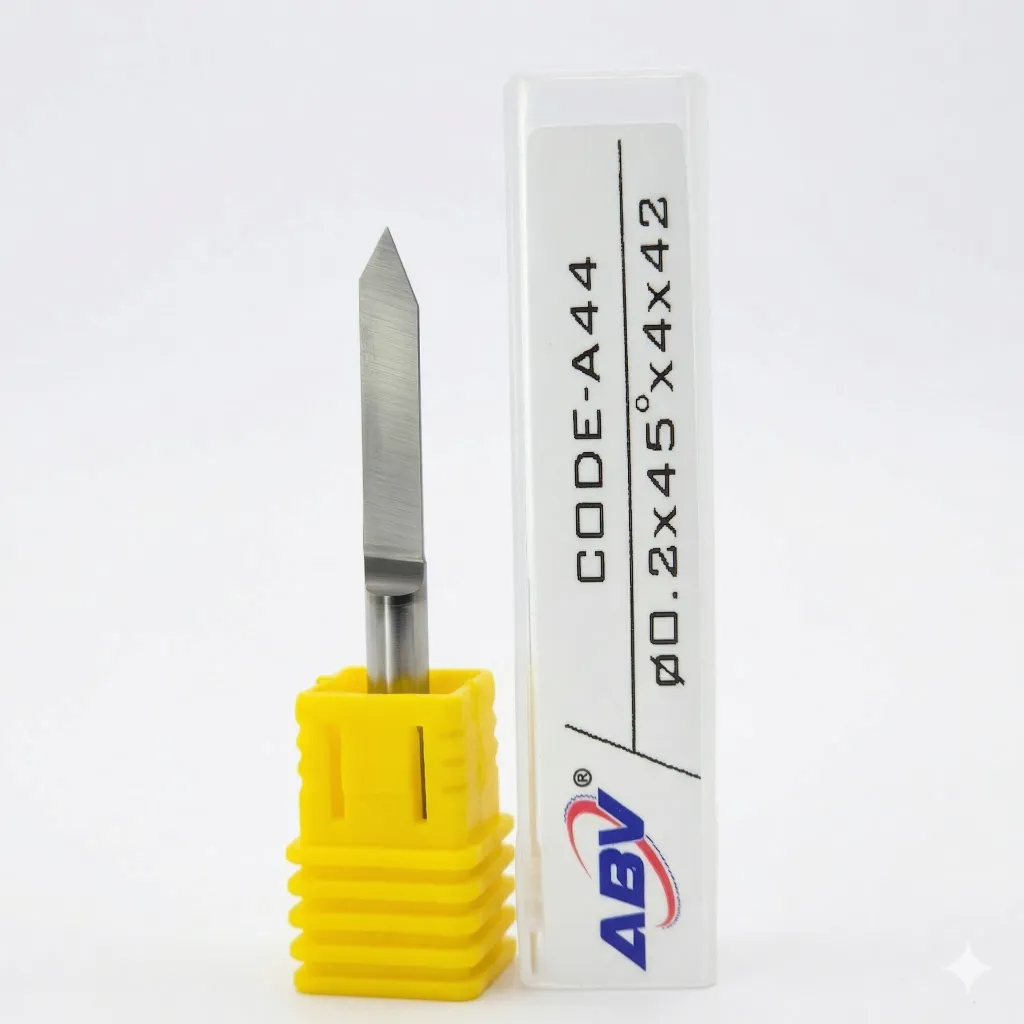
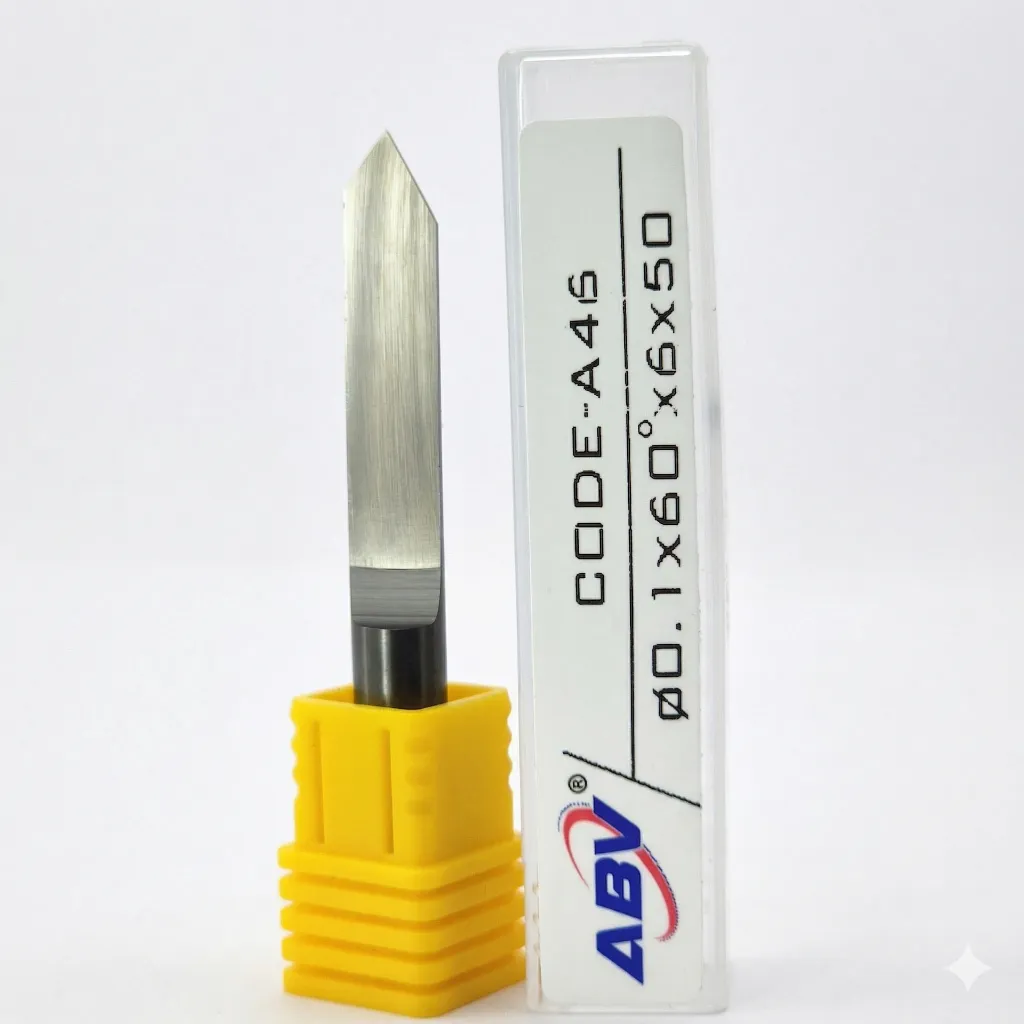
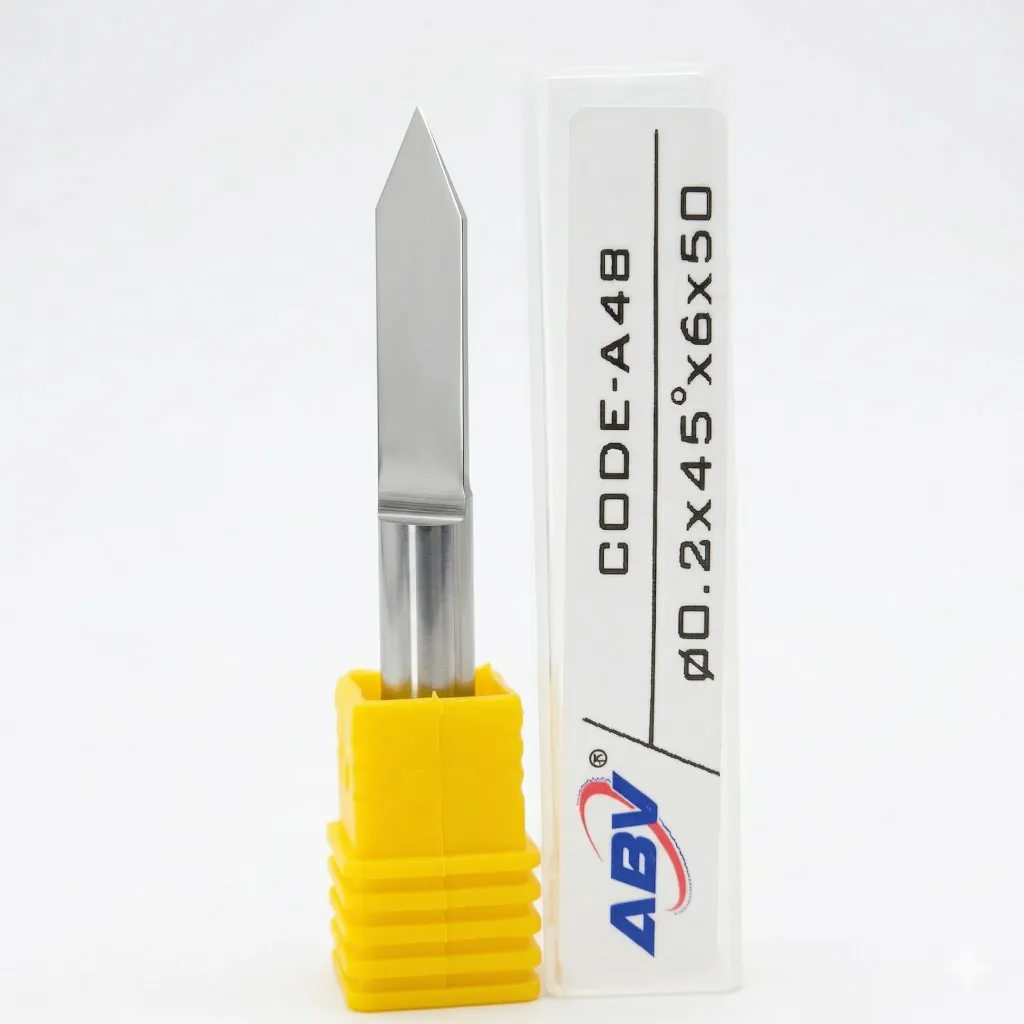
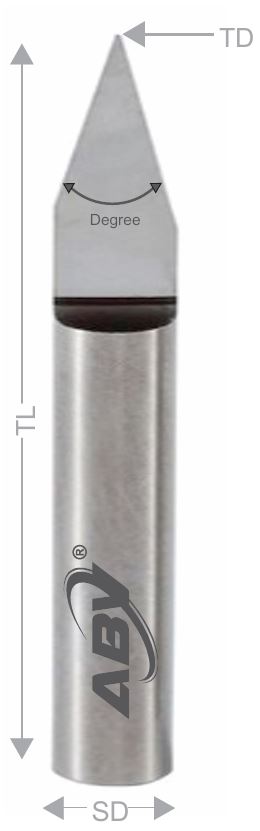
In the world of fine jewelry, an Engraving Bit (also known as a Jewelry Bit or Rotary Graver) is the specialist tool used for micro-detailing on precious metals like Gold, Silver, and Platinum. Unlike general-purpose bits, jewelry bits are engineered for high-magnification precision, where even a 0.1mm difference in tip size is critical.
At ABV Tool, these are typically supplied to CNC jewelry workshops in Ahmedabad for making rings, pendants, and watch components.
1. Types of Jewelry Engraving Bits
There are two main technologies used depending on whether you are removing material or just scratching the surface:
A. Rotary Carbide Engraving Bits (Material Removal)
These are the standard for "deep" engraving. They spin at high speeds (20,000+ RPM) to cut a physical groove into the metal.
V-Bits (Single Point): Featured in various angles (15°, 20°, 30°, 45°, 60°). The sharper the angle (15°), the finer the line.
+1
Flat Tip Engravers: These have a tiny flat at the very tip (e.g., 0.1 {mm} to 0.5{mm}). They are used for clear, legible lettering where a "V" shape might be too deep or narrow.
Ball End Engravers: Used for 3D reliefs and "bright-cutting" effects that catch the light at different angles.
B. Diamond Drag Bits (Etching/Scratching)
These bits do not rotate. The spindle stays off, and a spring-loaded diamond tip is "dragged" across the jewelry.
Best For: Ultra-fine script on the inside of wedding bands or delicate watch backs.
Benefit: No chips or "burrs" are created, and the metal is not removed, just displaced.
2. Best Materials for Jewelry Bits
Since precious metals are "gummy" (they stick to the tool), the choice of material and coating is vital:
| Bit Material | Usage |
| Solid Micro-Grain Carbide | The industrial standard. It stays sharp 10times longer than steel when cutting Gold and Silver. |
| PCD (Polycrystalline Diamond) | The "ultimate" bit. Used for high-volume production; almost impossible to wear out but very expensive. |
| DLC (Diamond-Like Carbon) Coating | A specialized black coating that prevents Gold and Silver from sticking to the bit (anti-clogging). |
3. Key Applications in the Jewelry Industry
Inside Ring Engraving: Names and dates inside gold or platinum bands.
Custom Pendants: Intricate religious icons, logos, or portrait engraving.
Background Texturing: "Matting" or "Frosting" the background of a piece to make the polished parts stand out.
Wax Carving: Jewelry bits are also used on CNCs to carve "Lost Wax" molds before casting.
4. Professional "Jeweler's" Pro-Tips
High RPM / Low Feed: Because the bits are so small (often 0.1mm tips), you need very high spindle speeds (24,000–40,000 RPM) and very slow feed rates to prevent snapping the fragile tip.
Depth of Cut: Jewelry engraving is a "marathon, not a sprint." Take multiple passes of 0.05mm rather than trying to cut 0.2mm in one go.
Lubrication: Use a drop of specialized "cutting wax" or thin oil. This prevents the precious metal from melting and welding itself to the carbide tip.
Zero Runout: A high-quality ER Collet is mandatory. If your spindle has even a tiny "wobble" (runout), a 0.1mm engraving bit will snap instantly.
5. Summary Table for abvtool.in
| Target Material | Recommended Angle | Tip Size |
| Fine Text/Script | 15° or 20° | 0.1mm |
| Bold Lettering | 45° or 60° | 0.2mm to 0.4mm |
| 3D Carving/Relief | 30° (Tapered Ball) | 0.5mm Radius |