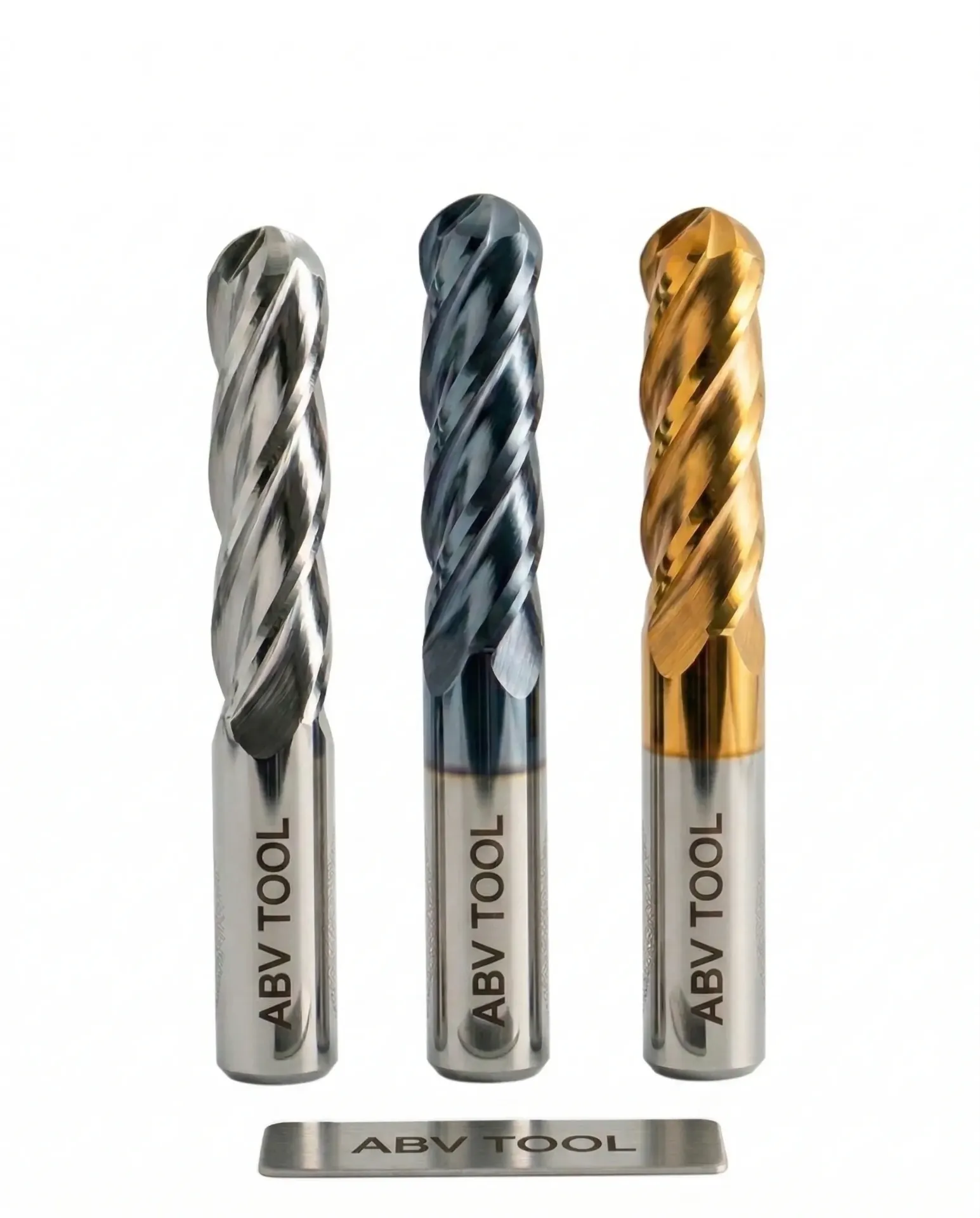
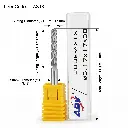
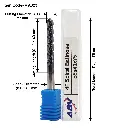
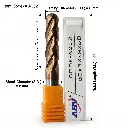
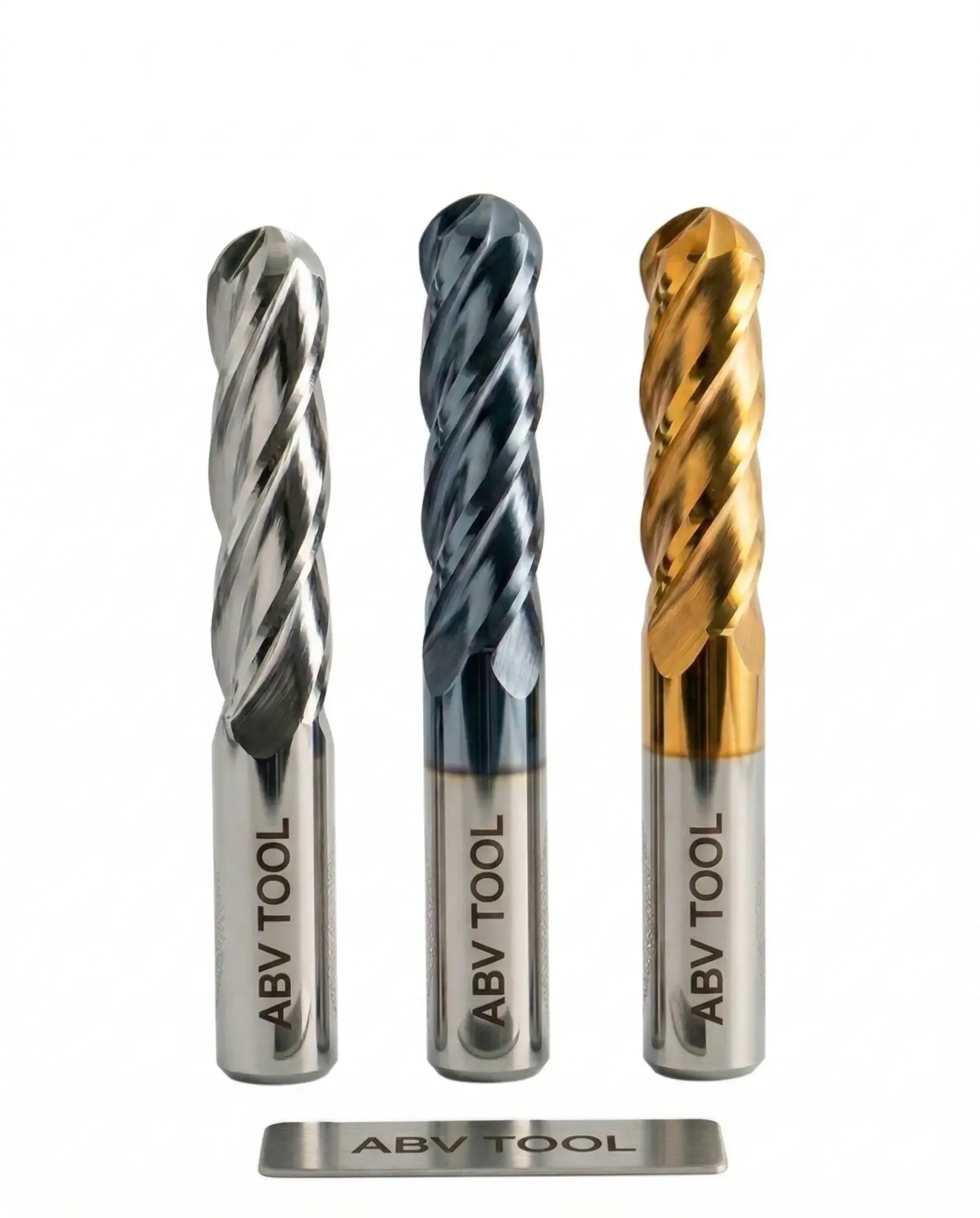
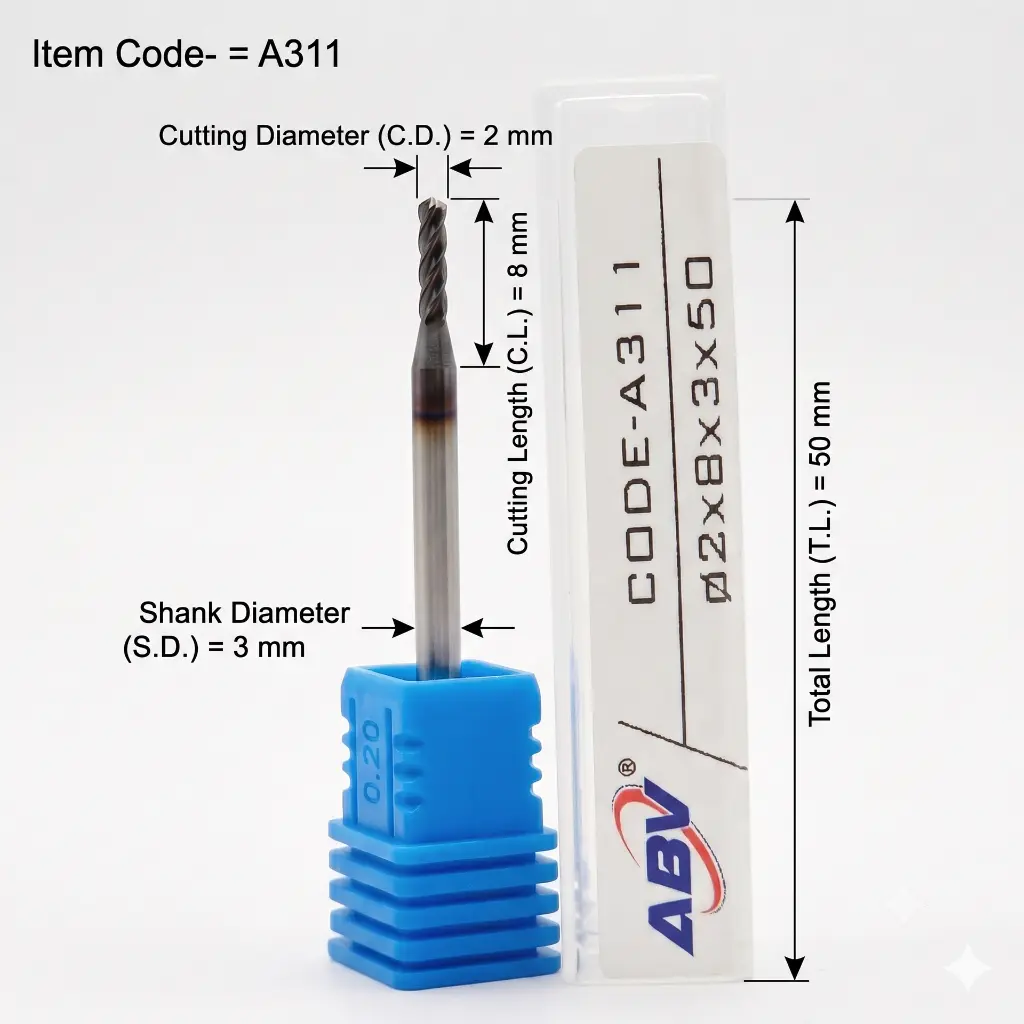
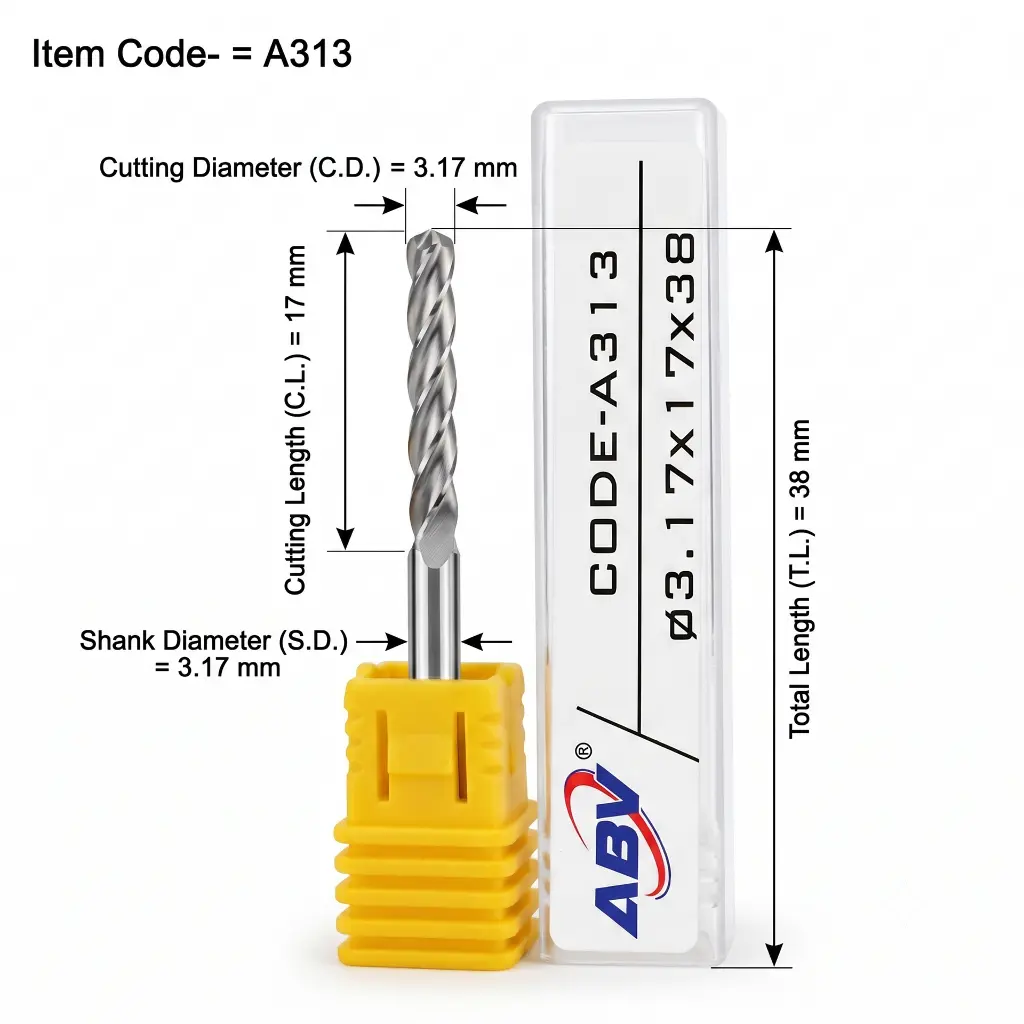
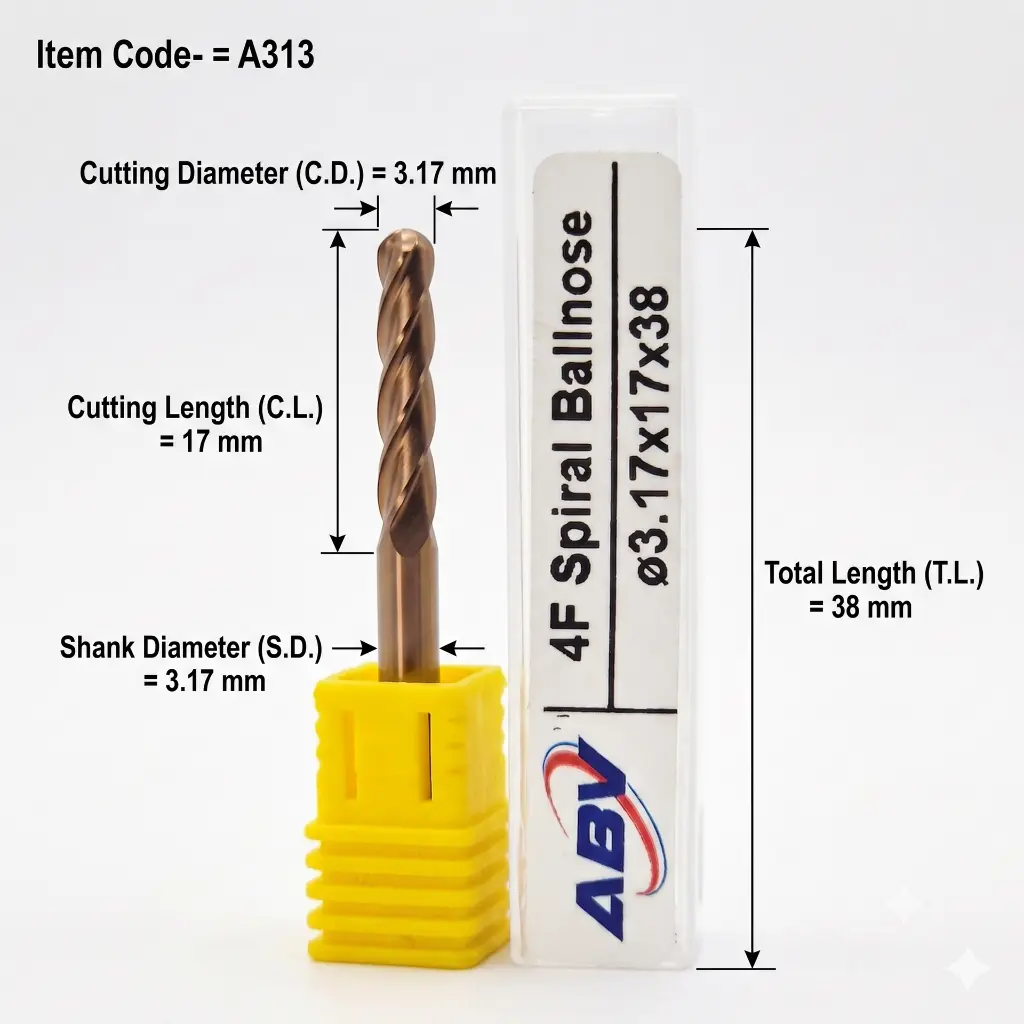
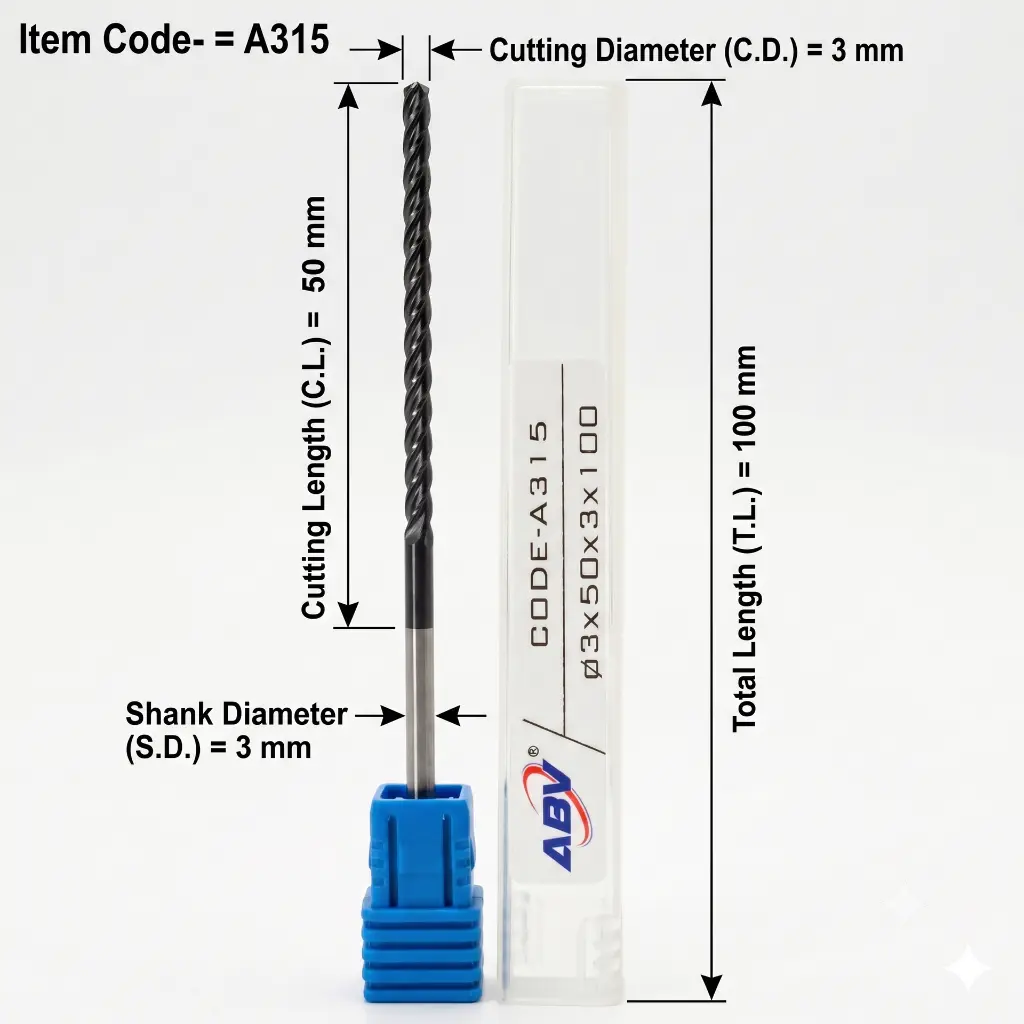
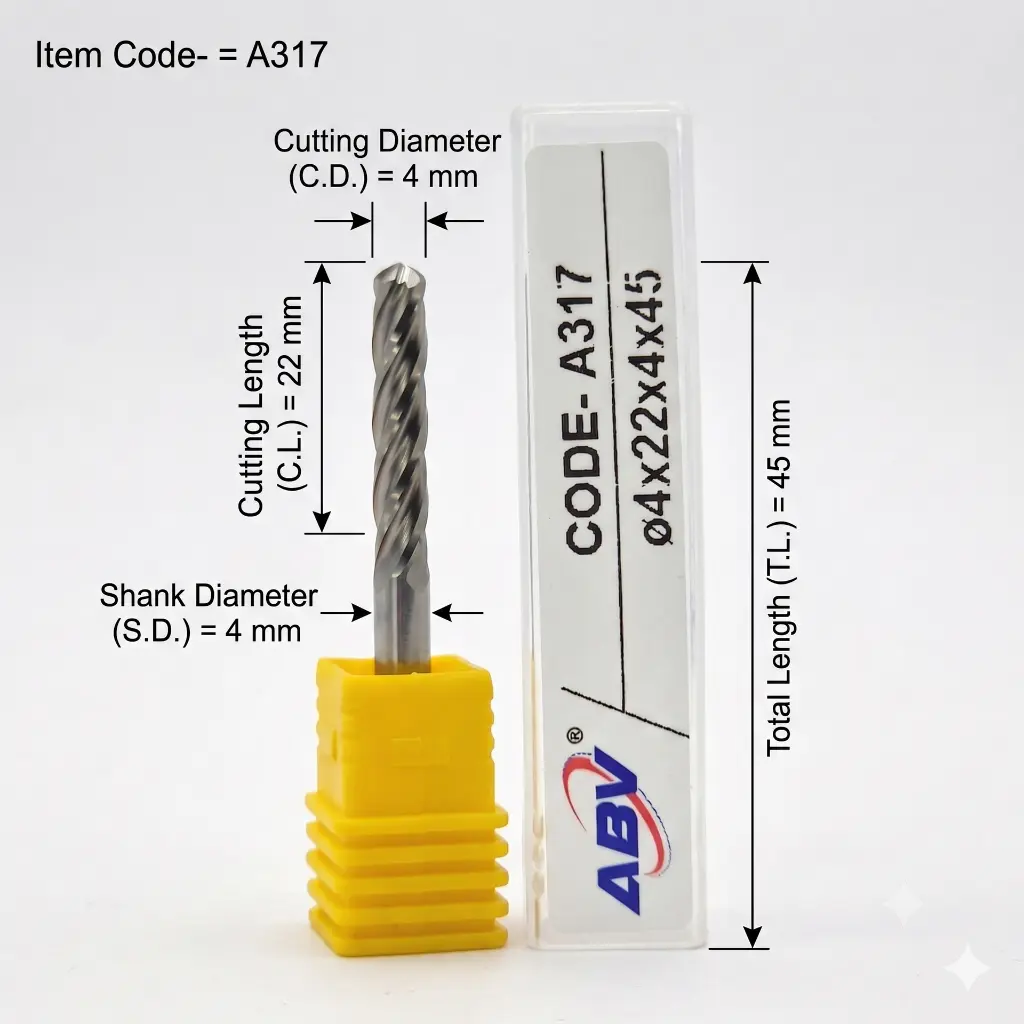
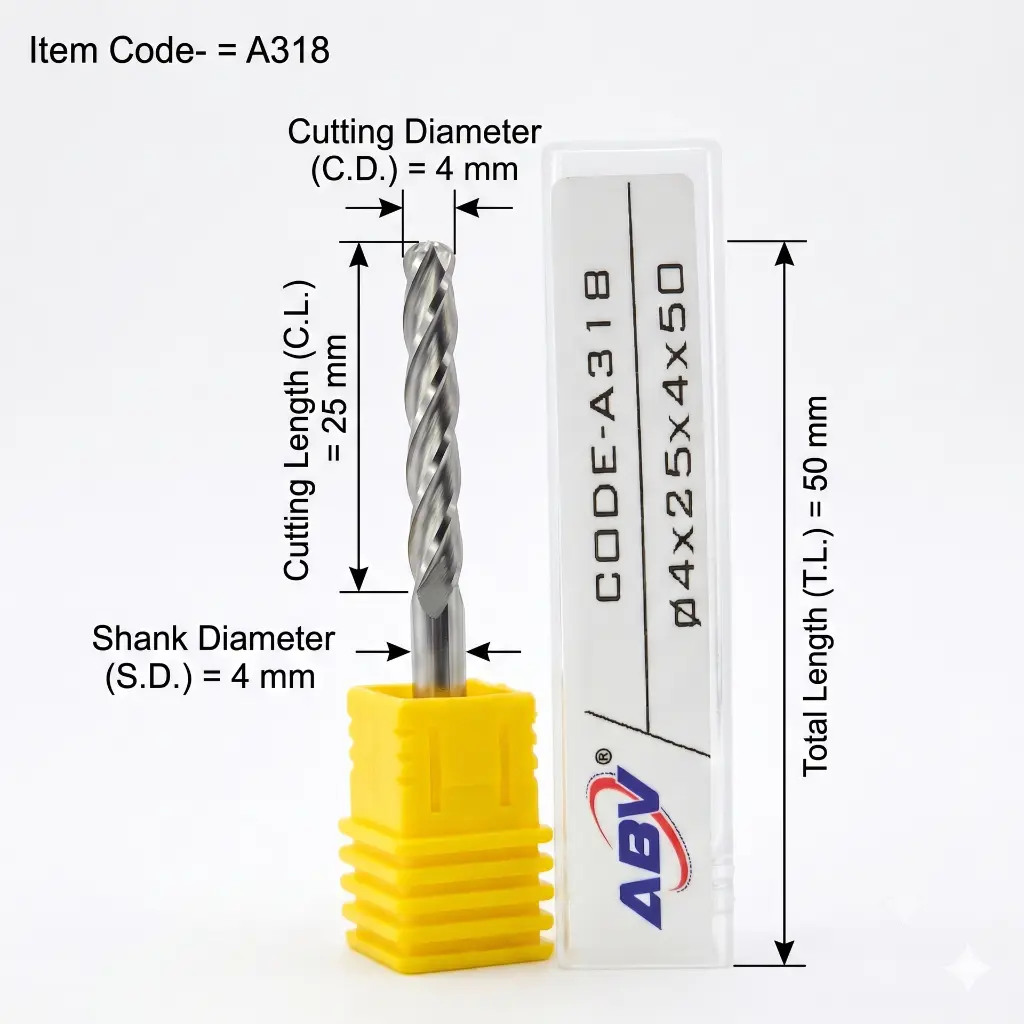
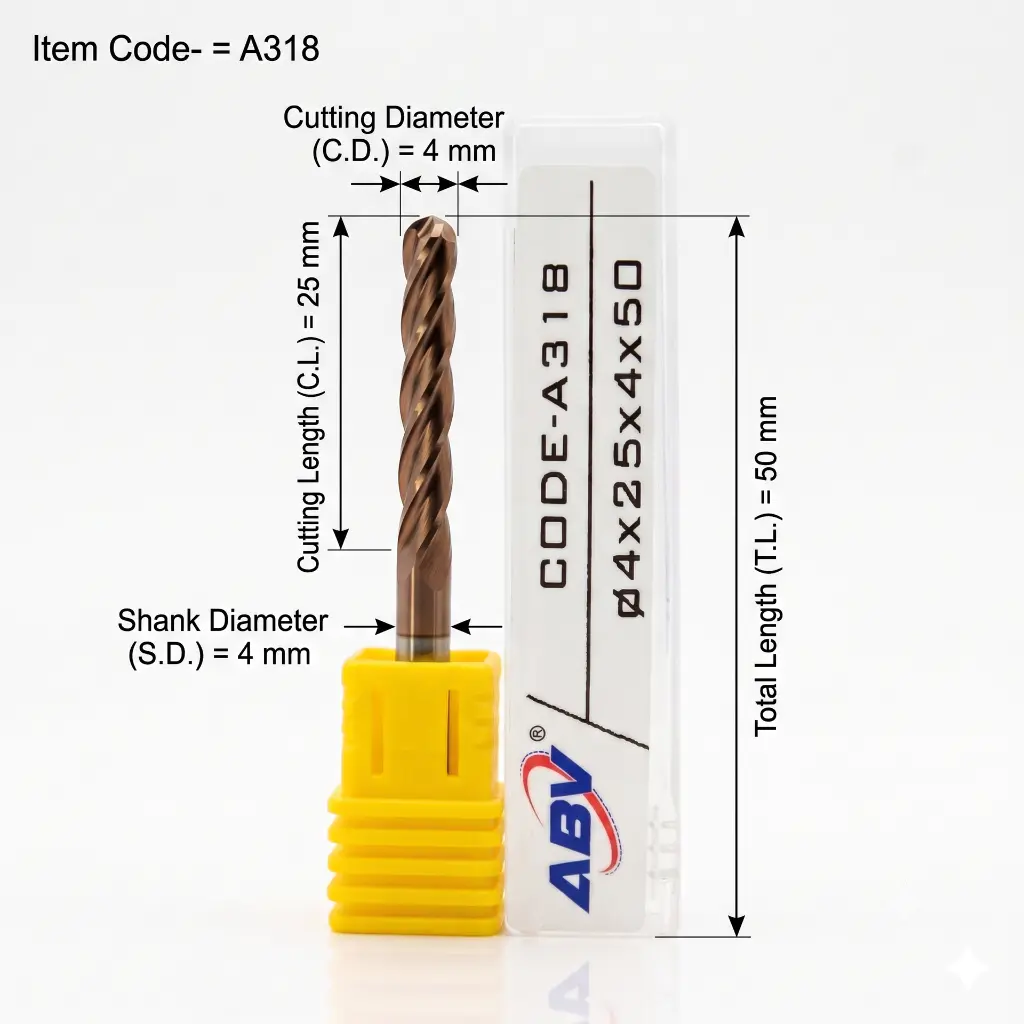
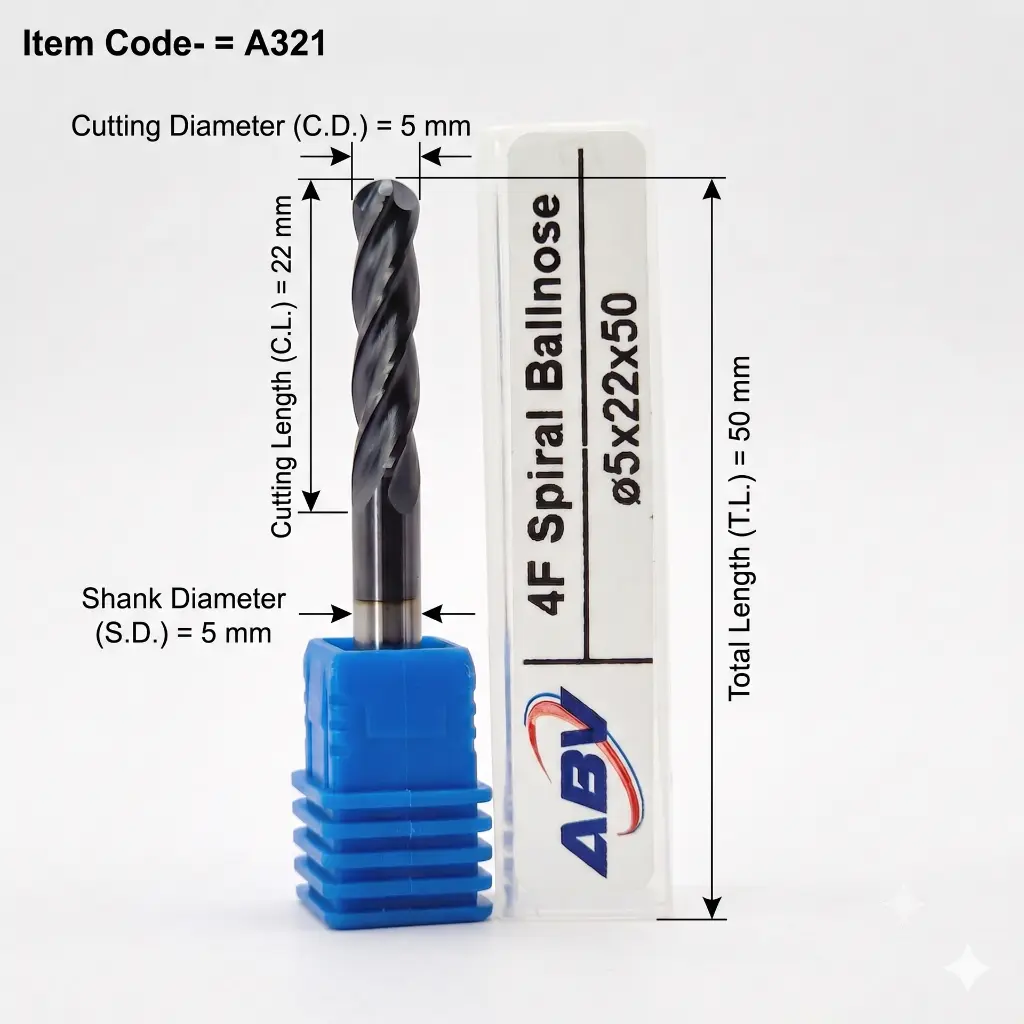
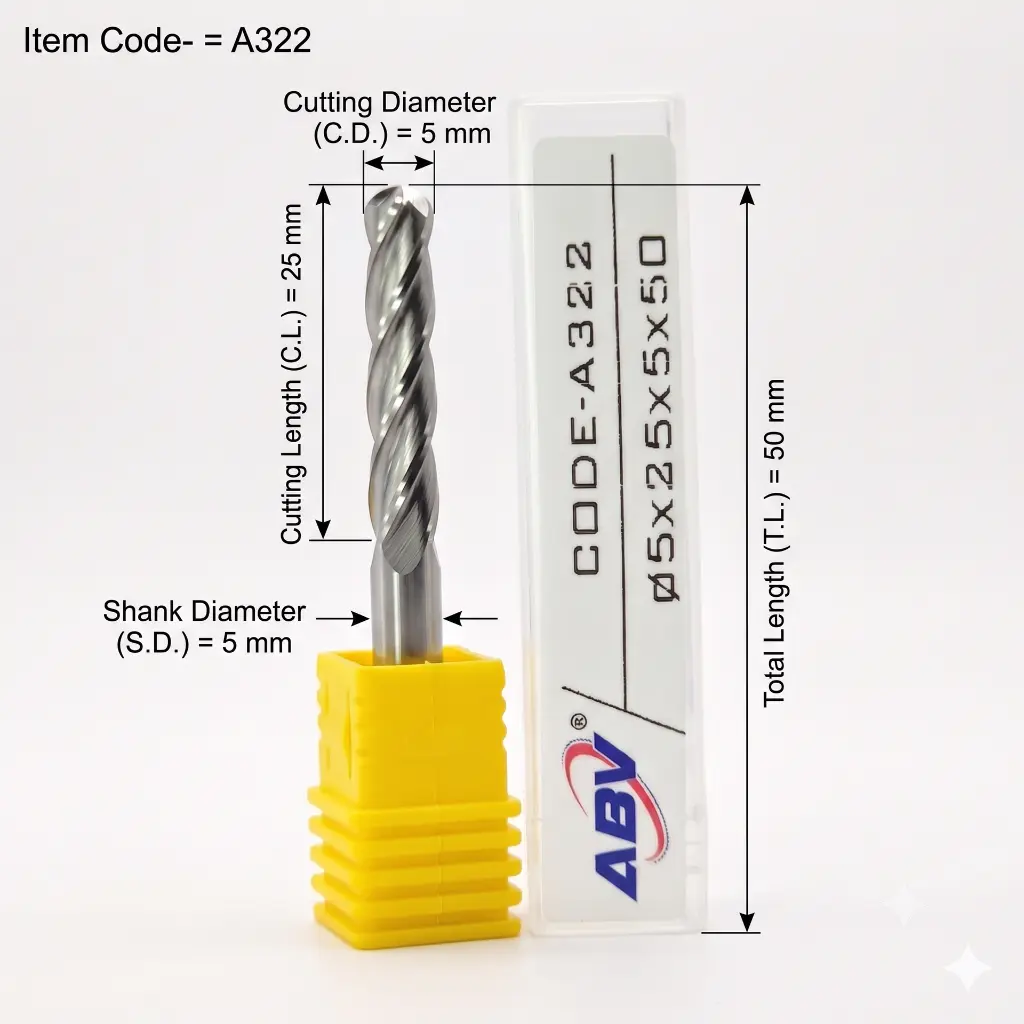
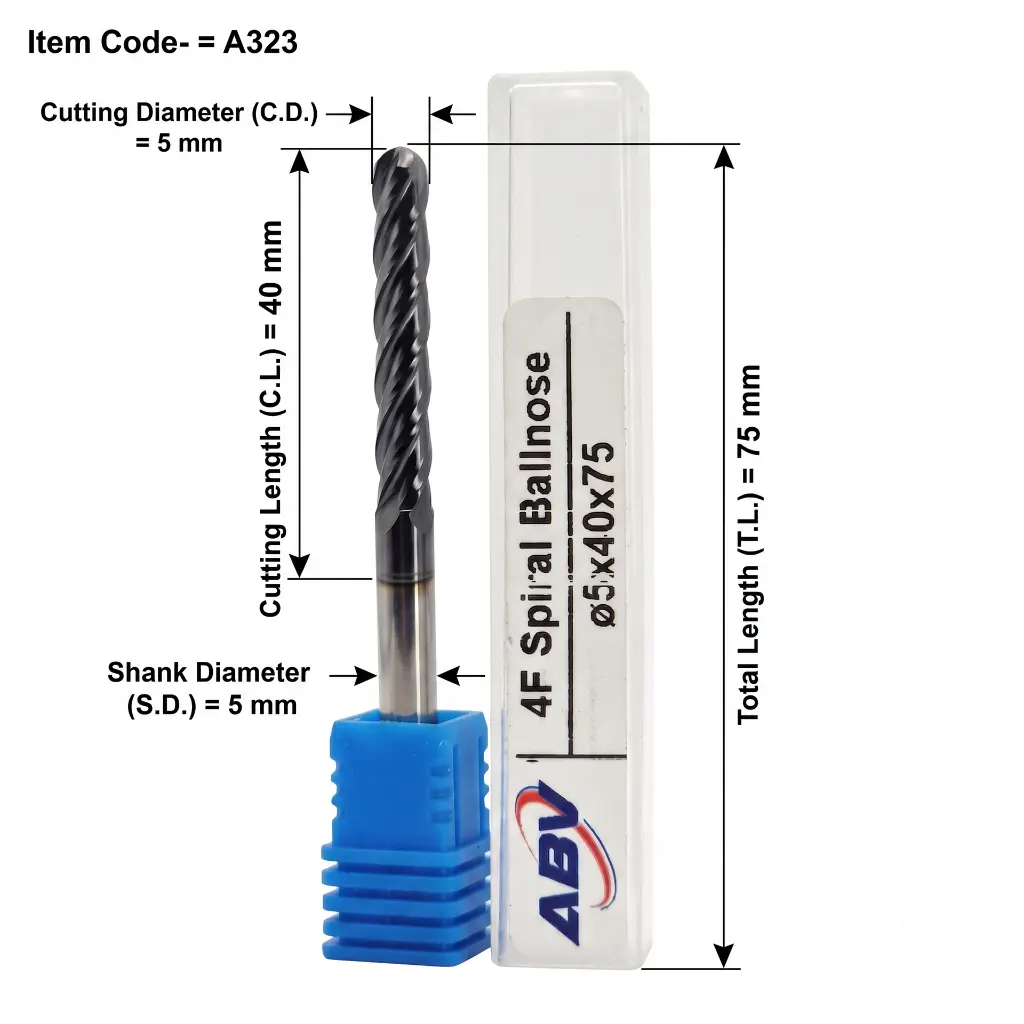
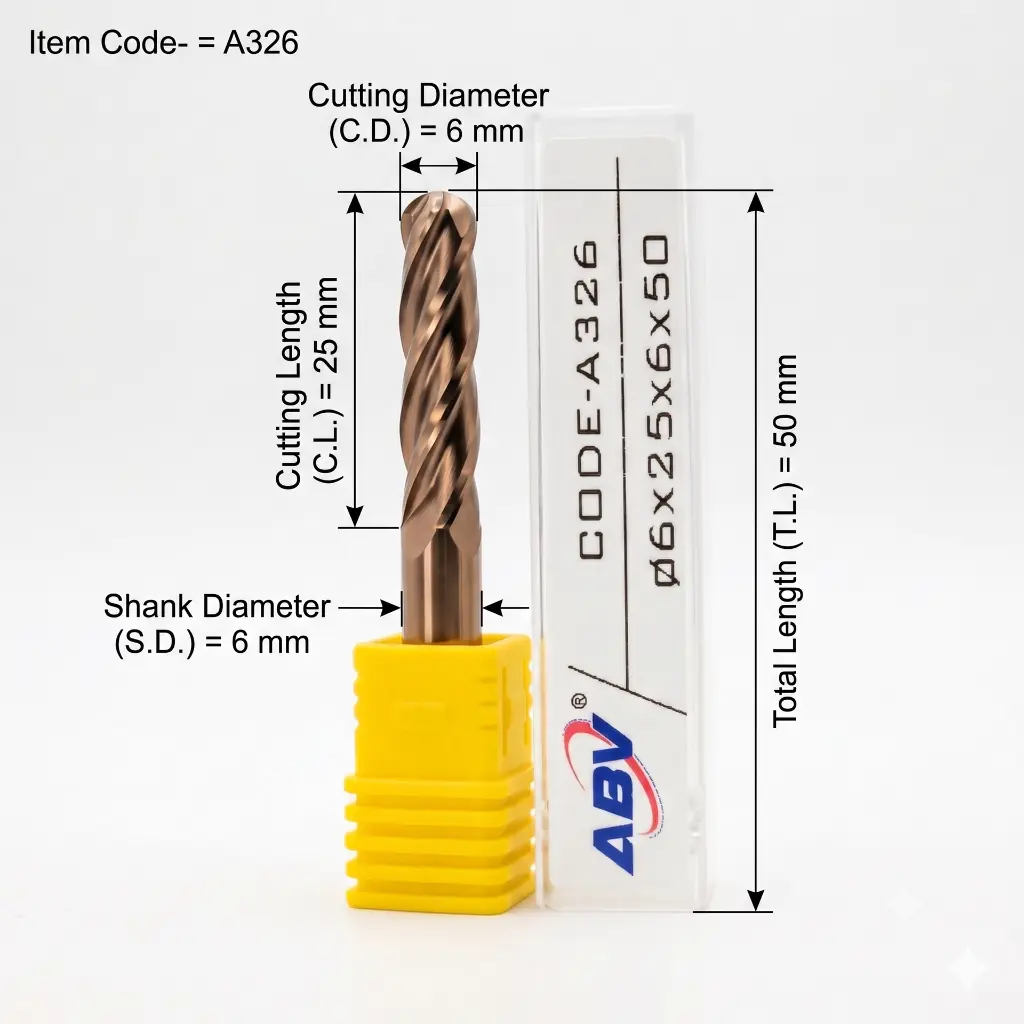
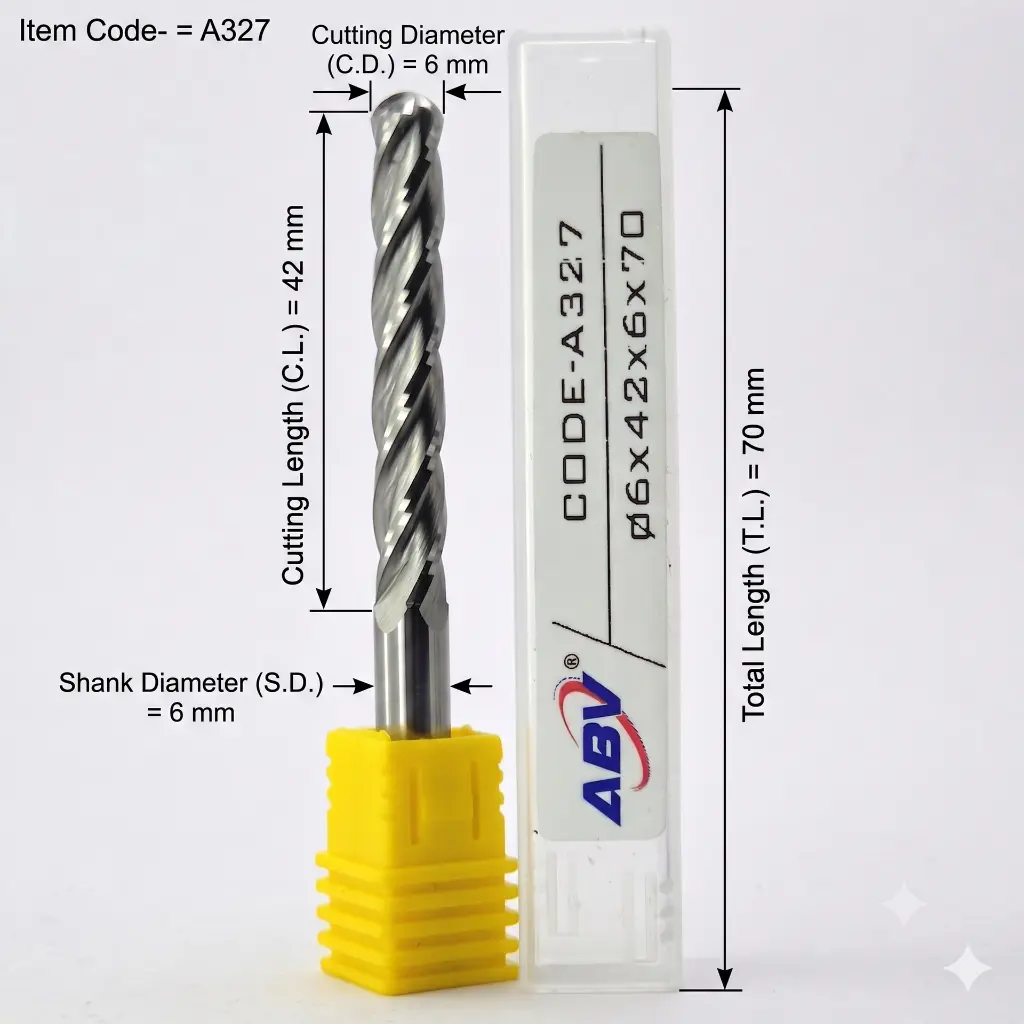
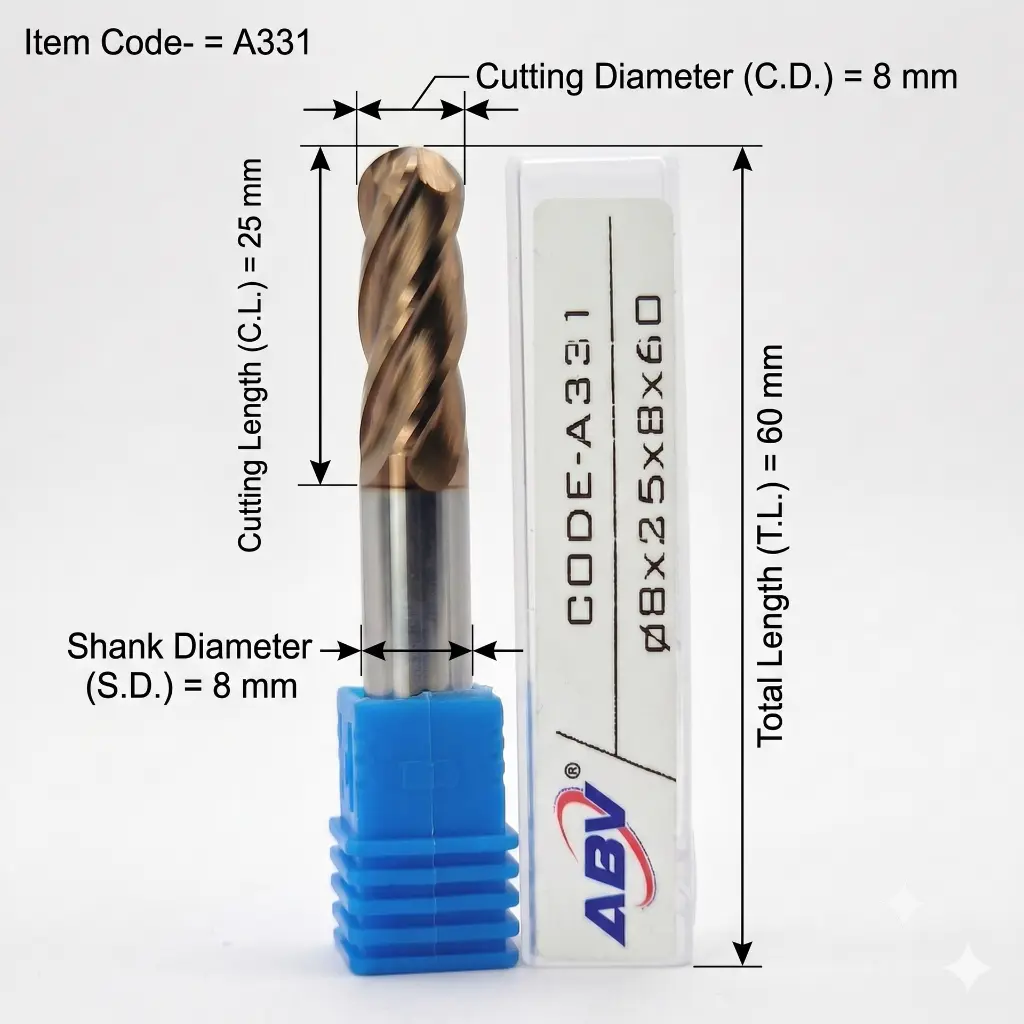
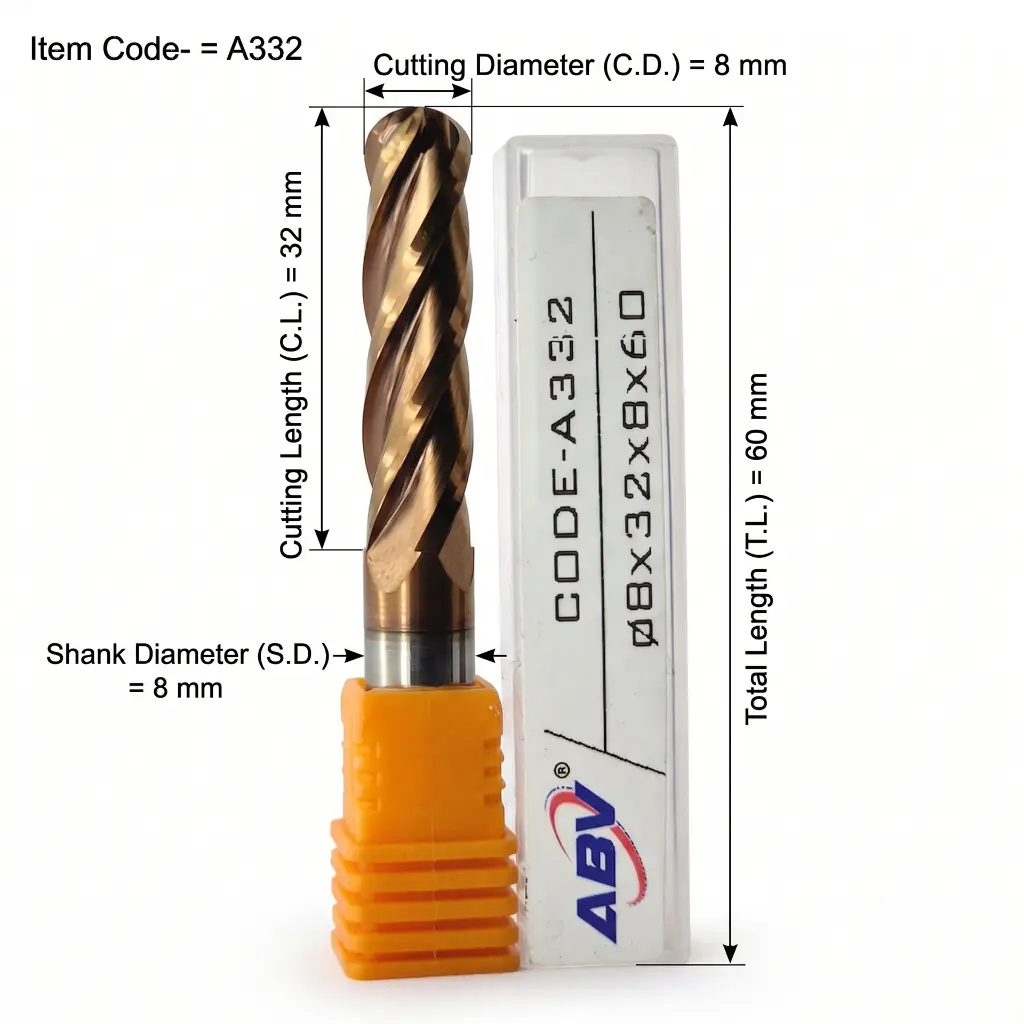
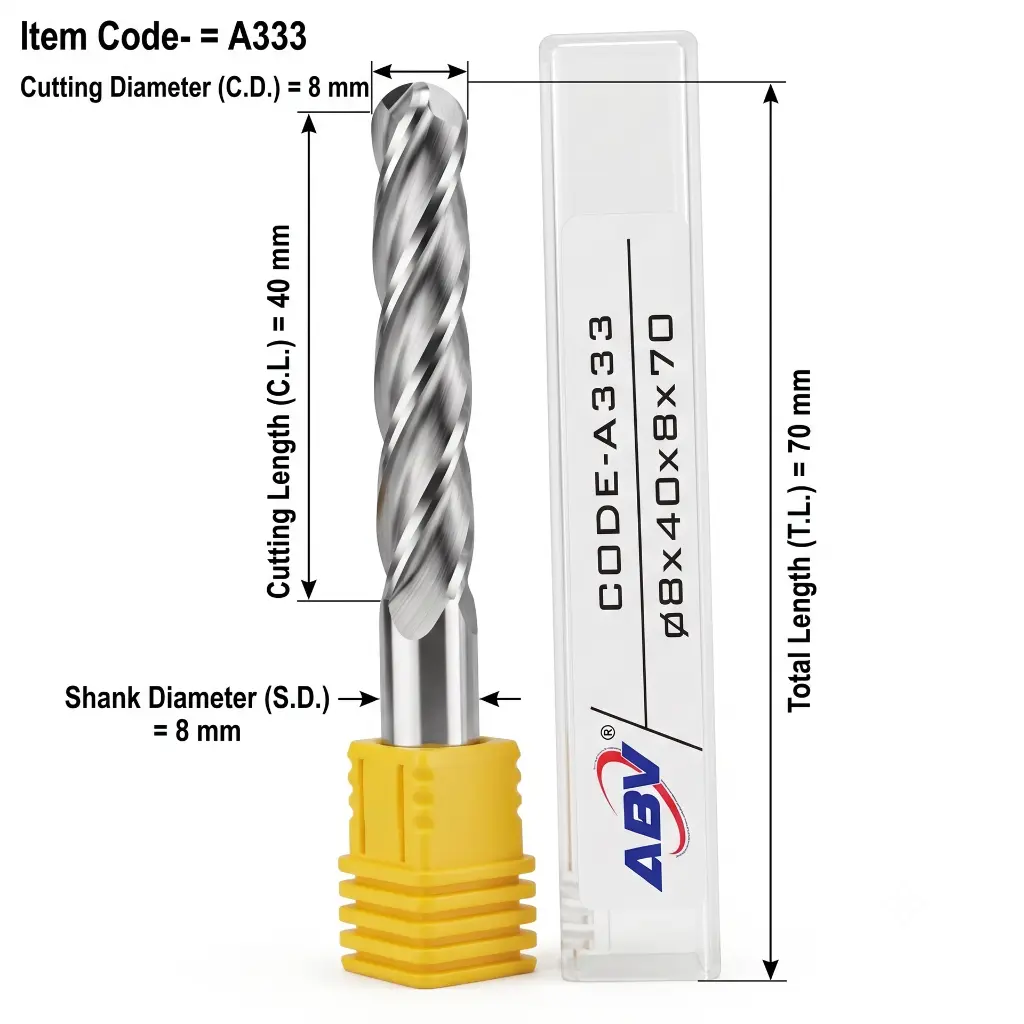
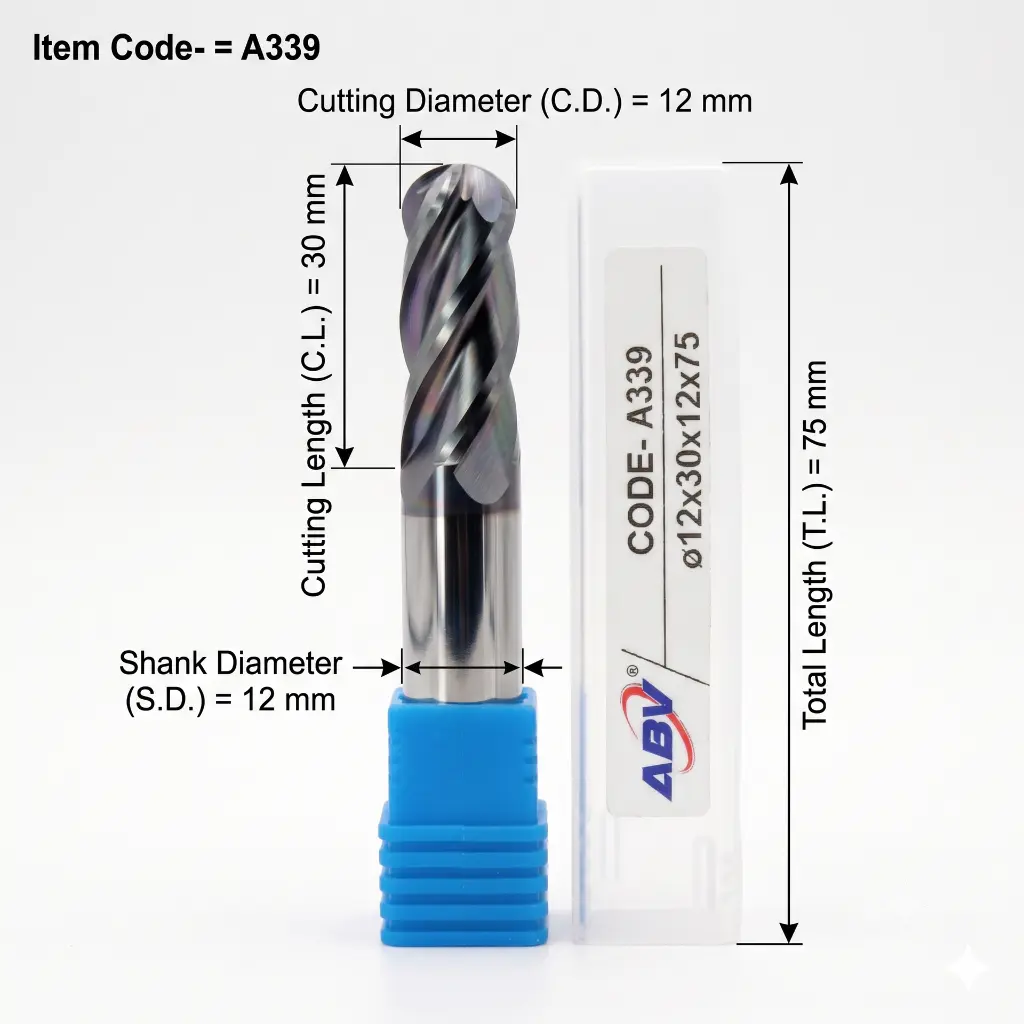
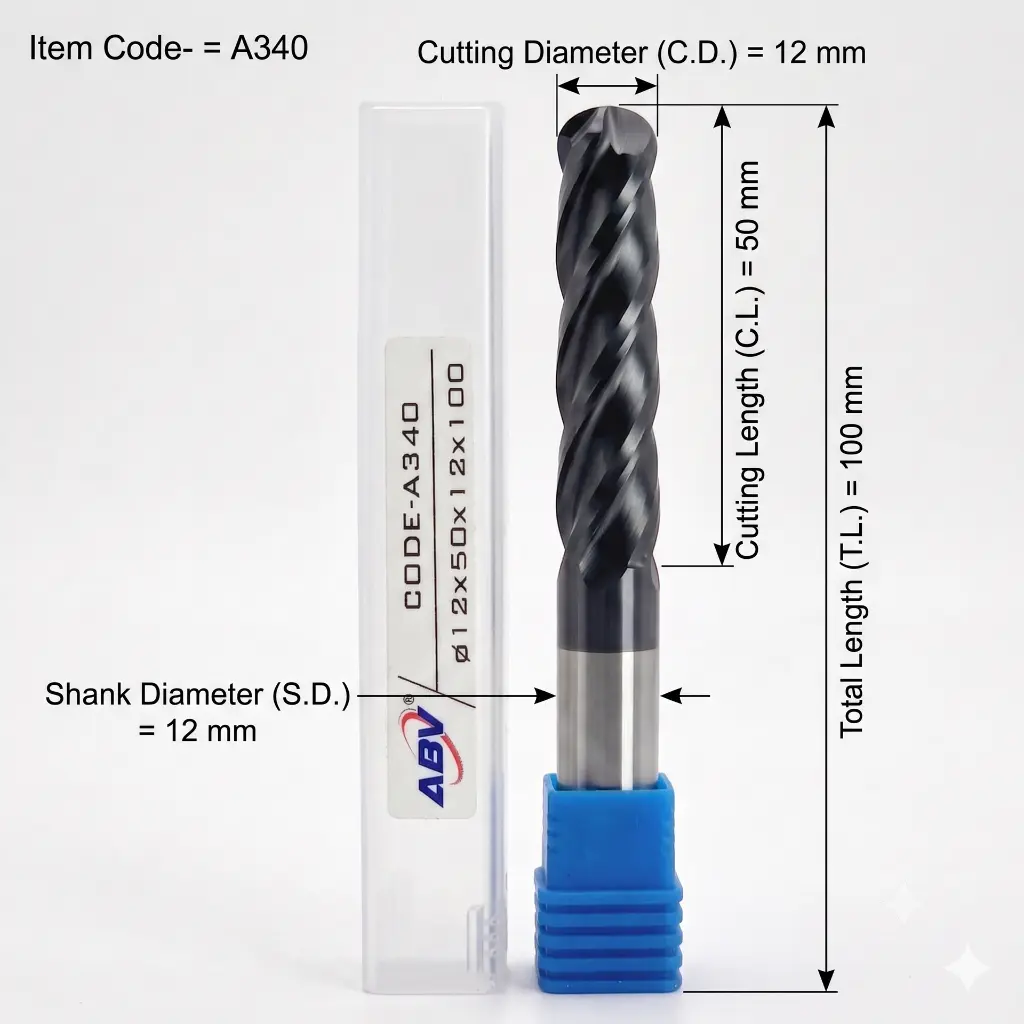
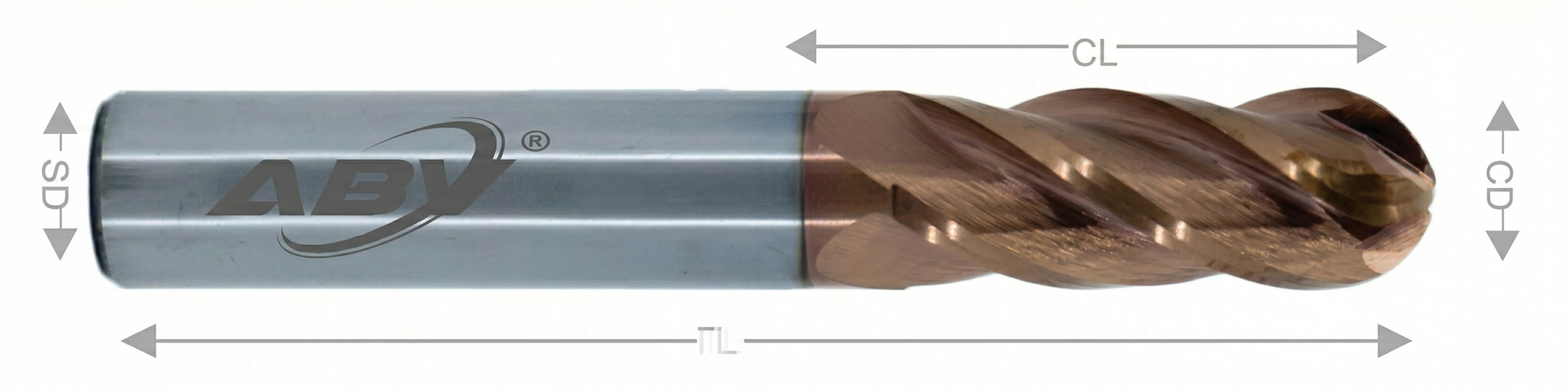
A Four-Flute Carbide Spiral Ball Nose end mill is a precision tool specifically designed for high-speed finishing and hard material machining. While two-flute versions are common for general 3D wood carving, the four-flute version is the go-to for industrial applications where surface finish and tool rigidity are the top priorities.
Having more flutes changes the physics of the cut significantly, making this a "finishing specialist."
1. Why Four Flutes Instead of Two?
Superior Surface Finish: With four cutting edges hitting the material per revolution, the "scallop" marks are much smaller and closer together. This often results in a "mirror" or "sanded" finish straight off the machine.
Increased Feed Rates: Because you have double the cutting edges of a 2-flute, you can theoretically move the machine twice as fast while maintaining the same chip load.
Enhanced Rigidity: A 4-flute bit has a much thicker core (web) than a 1 or 2-flute bit. This makes it incredibly stiff, reducing vibration and tool deflection during heavy 3D contouring.
Longer Tool Life: The workload is distributed across four edges instead of two, meaning each edge stays sharp for a longer period.
2. Best Applications
| Material | Why 4-Flute? |
| Stainless Steel / Steel | Higher flute counts are mandatory for hard metals to maintain rigidity and heat dissipation. |
| Hardwoods (Teak, Oak) | Provides an incredibly smooth finish on complex 3D carvings with zero "fuzz." |
| Tooling Board / Epoxy | Excellent for creating high-precision molds and patterns. |
| Hard Plastics | Reduces the "chatter" often seen when 3D machining dense polymers. |
3. The "Chip Clearance" Trade-off
The biggest challenge with a 4-flute ball nose is chip evacuation.
Note: Because the flutes are closer together, there is less "gullet" space. These bits are not recommended for "roughing" (removing large amounts of material) in soft materials like aluminum or softwoods, as the flutes can clog (pack) with chips and snap the bit.
4. Technical Usage Strategy
Use for Finishing Only: Typically, you would use a 2-flute bit for the "Roughing" pass to clear out the bulk material, then switch to the 4-flute Ball Nose for the "Finishing" pass.
Step-over Settings: For a 4-flute bit, a step-over of 5% to 8% of the tool diameter will produce a surface that requires almost no post-processing.
RPM vs. Feed: You don't necessarily need to run at maximum RPM. Because you have four teeth, you can achieve a high-quality cut at moderate RPMs (12,000–16,000) by increasing your feed rate (IPM).
5. Summary for ABV Tool Inventory
As a leading supplier in Ahmedabad, offering a 4-flute line helps you serve customers who are moving beyond basic woodworking and into: