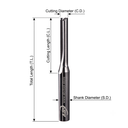
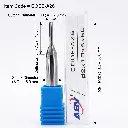
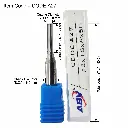
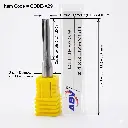
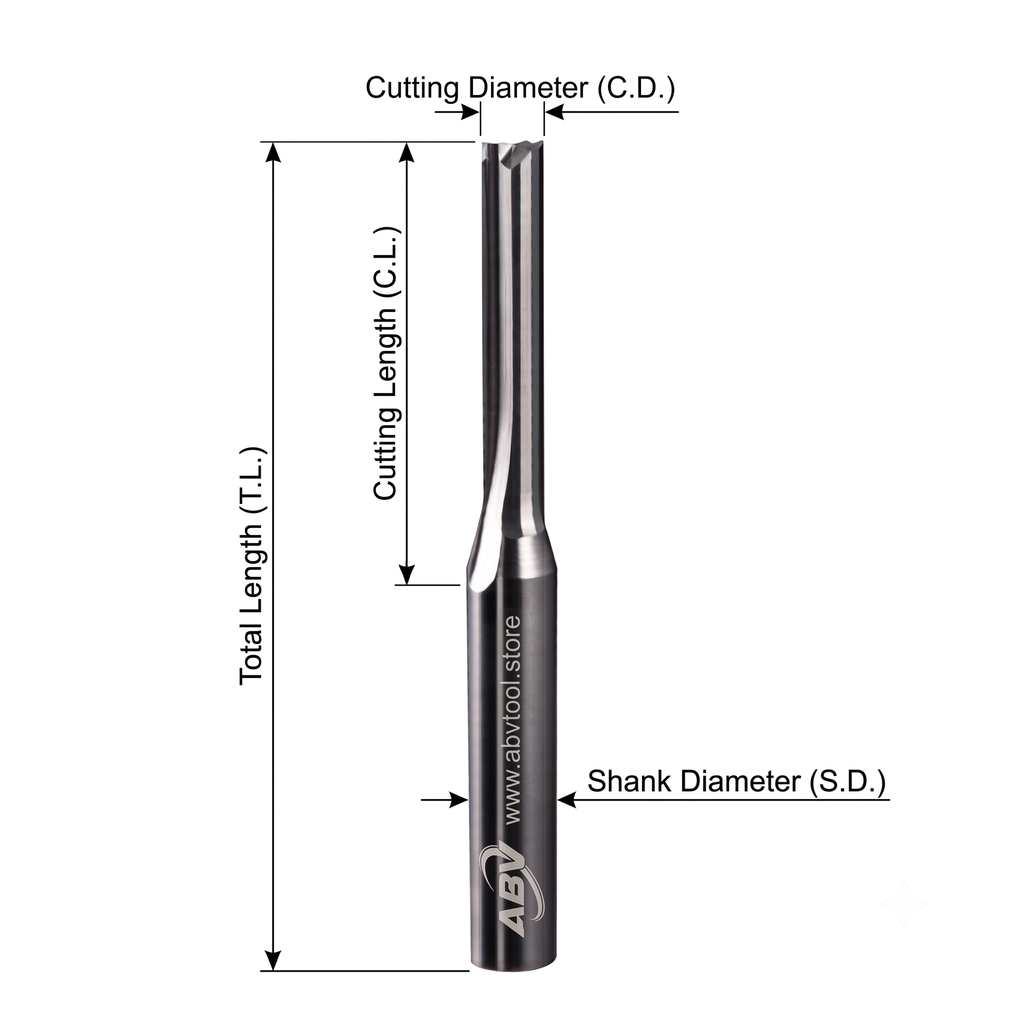
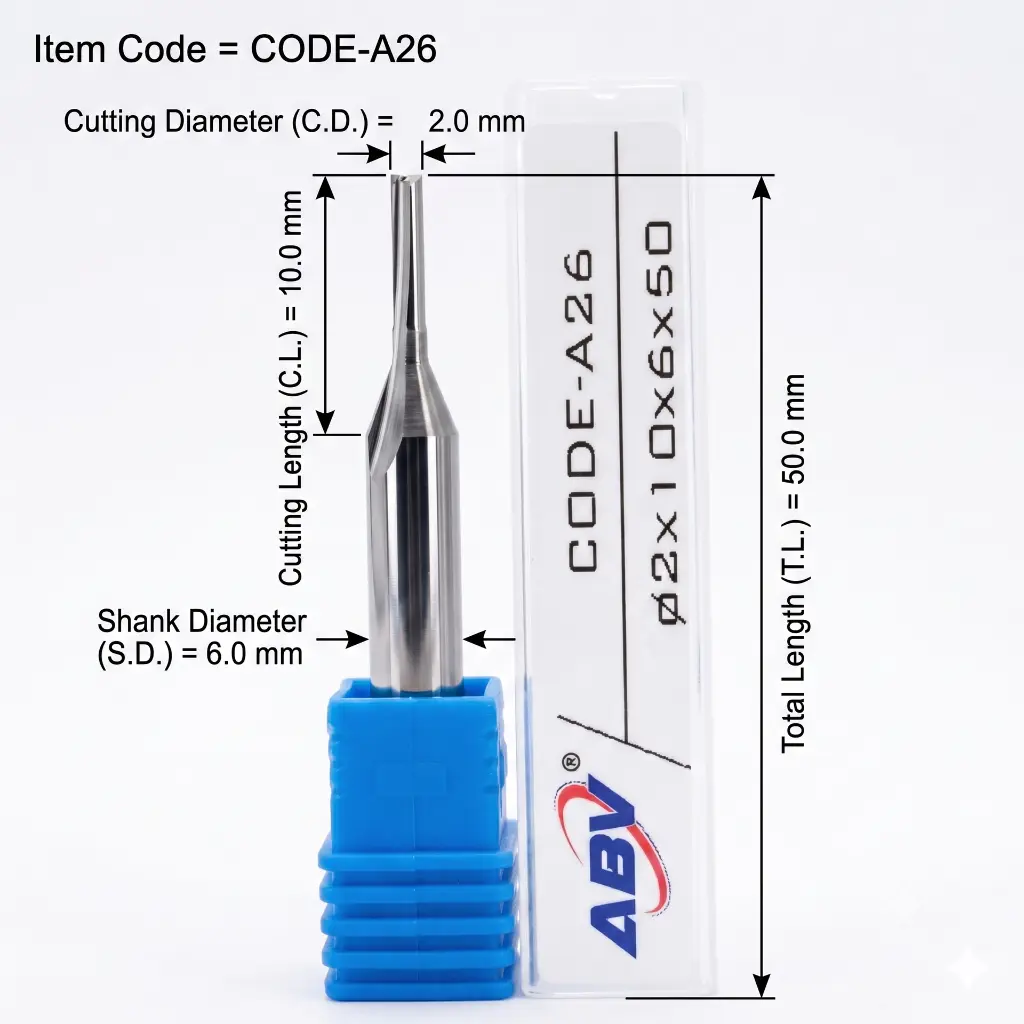
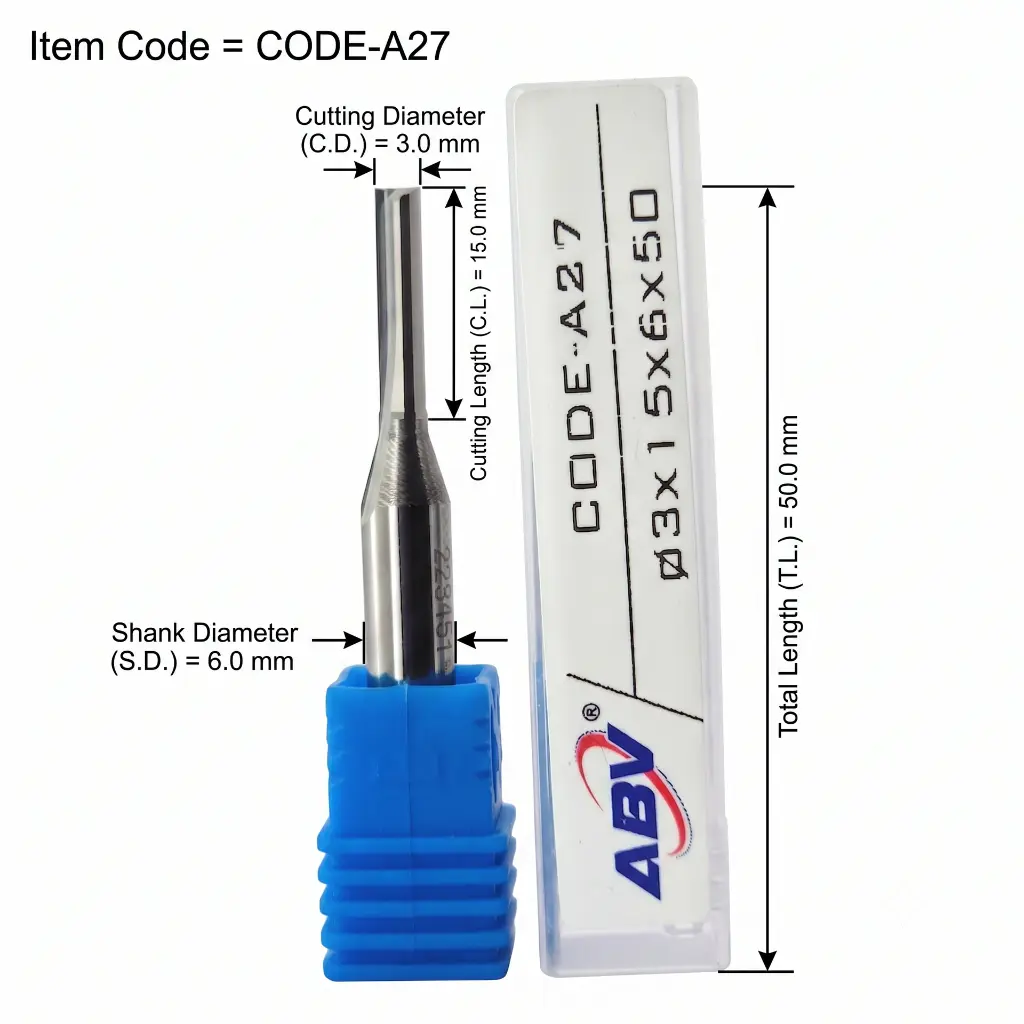
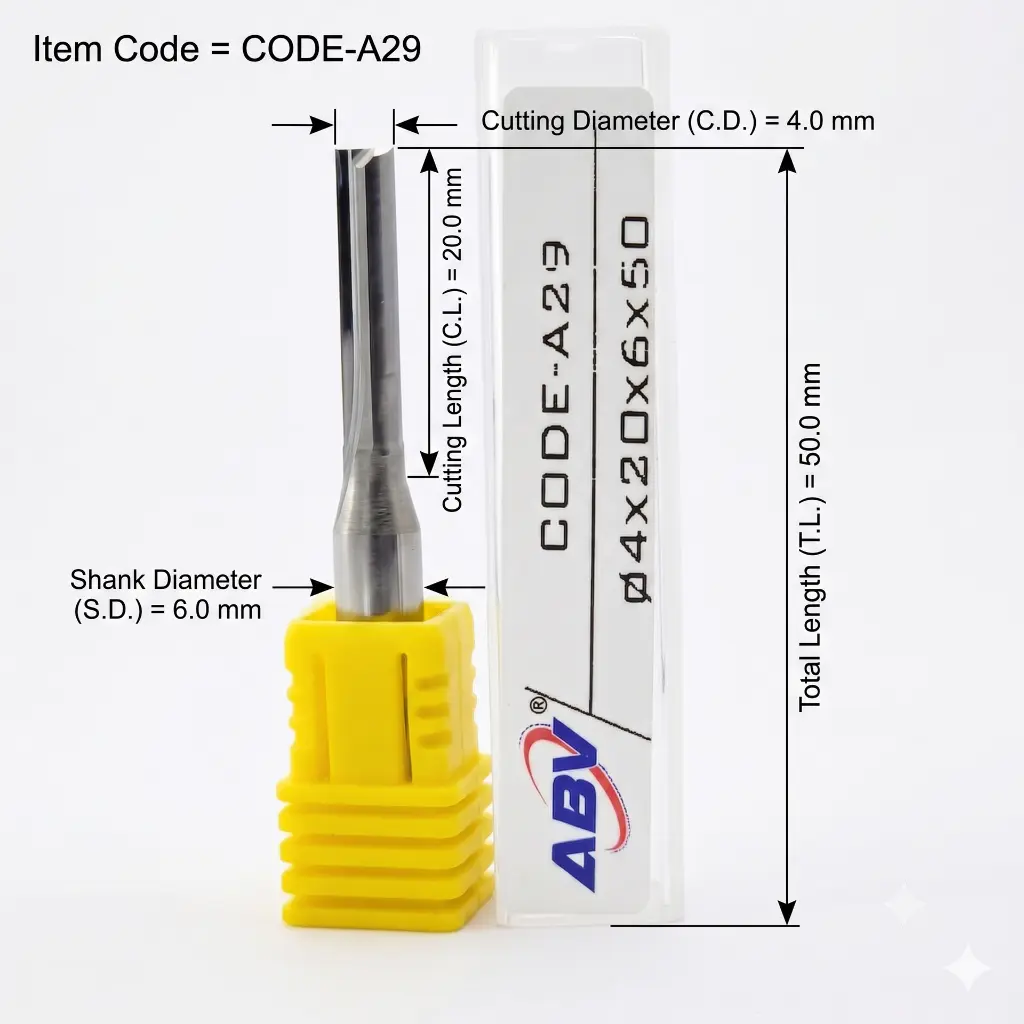
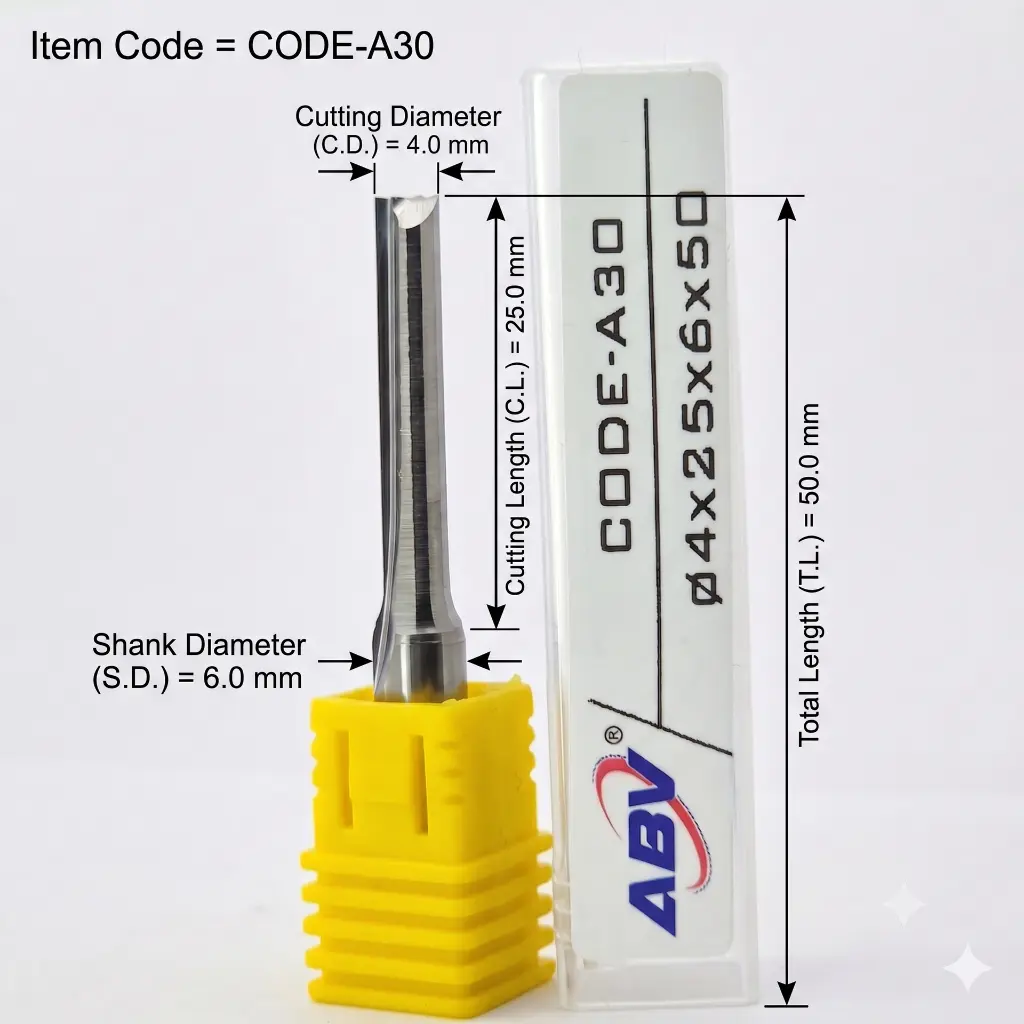
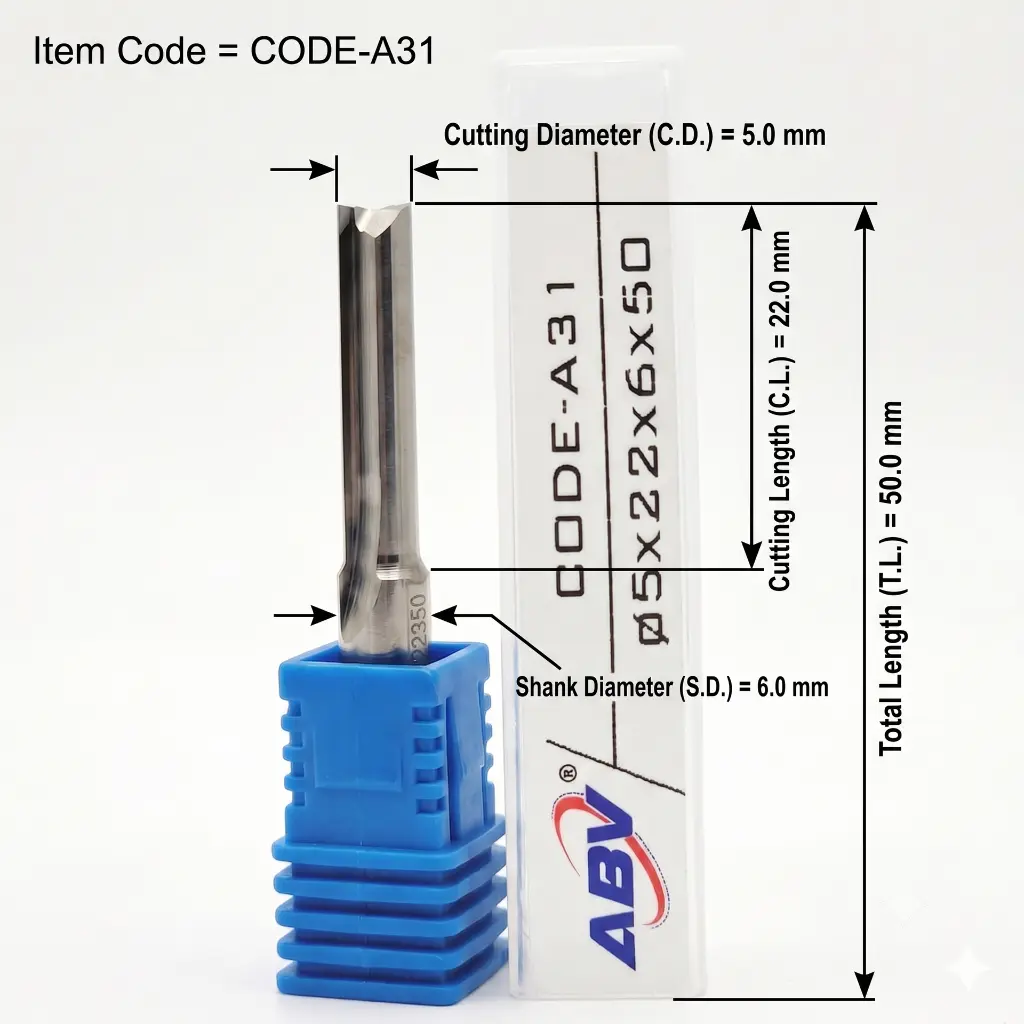
A Heavy Duty Two-Flute Straight Carbide Endmill is the "tank" of the straight-flute world. While standard straight bits are often thin and designed for light trimming, a Heavy Duty (HD) version is engineered for maximum material removal rates ($MRR$) and extreme structural rigidity.
These are typically characterized by a thicker web (the core of the bit) and a reinforced shank, allowing them to handle the high lateral forces of deep-trenching or high-speed CNC routing without snapping.
1. Key "Heavy Duty" Characteristics
Thicker Core (Web): The central part of the tool is beefed up. This reduces vibration and deflection, ensuring the bit stays perfectly vertical even during aggressive cuts.
Sub-Micron Grain Carbide: HD bits usually use a denser grade of tungsten carbide. This provides higher transverse rupture strength (impact resistance) compared to "contractor grade" bits.
Increased Shank Diameter: You will often see these with a 1/2" or 20mm shank even if the cutting diameter is smaller, providing a massive increase in stability over 1/4" alternatives.
Open Flute Geometry: The two flutes are ground deeper to allow for massive "chip gullets," preventing the bit from choking during heavy hogging passes.
2. When to Use the "Heavy Duty" Version
| Application | Why HD is Required |
| Deep Trenching | When cutting grooves deeper than $2\times$ the bit's diameter in one or two passes. |
| High-Density Materials | Phenolic, Trespa, high-density plastics, or extremely hard "Ironwoods." |
| Production CNC Runs | When the machine is running 8+ hours a day and tool failure (snapping) is not an option. |
| Nested Based Manufacturing | Cutting full-depth parts out of 1" or thicker MDF/Plywood sheets in a single pass. |
3. Performance Math & Strategies
To get the "Heavy Duty" performance out of the tool, you need to push it. If you go too slow, you will create friction and heat rather than chips.
Chip Load: These bits are designed for a high chip load (0.010mm to 0.025mm per tooth depending on diameter).
Directional Stability: Because there is no helix (spiral) to pull or push the material, the "Heavy Duty" straight bit is the most accurate tool for creating perfectly sized slots for joinery (like tenons).
Step-Over: For pocketing, you can often run a 60-80% step-over without worrying about the bit "walking" or vibrating off-track.
4. Critical Safety: The "Tuck" Rule
Because these bits are heavier and often used at high RPMs, centrifugal force is a factor.
Important: Always seat the shank of a heavy-duty bit as deep into the collet as possible. If a heavy-duty bit is "over-extended" (too much shank showing), the vibration (harmonics) can lead to catastrophic tool failure or damage to your spindle bearings.
5. Summary Comparison
| Feature | Standard Straight | Heavy Duty Straight |
| Vibration | Moderate to High | Low (Dampened) |
| Pass Depth | Shallow (1 mm) | Deep (2-3mm) |
| Tool Life | Standard | Extended |
| Best For | Hobbyist/Light Trimming | Industrial/Production |