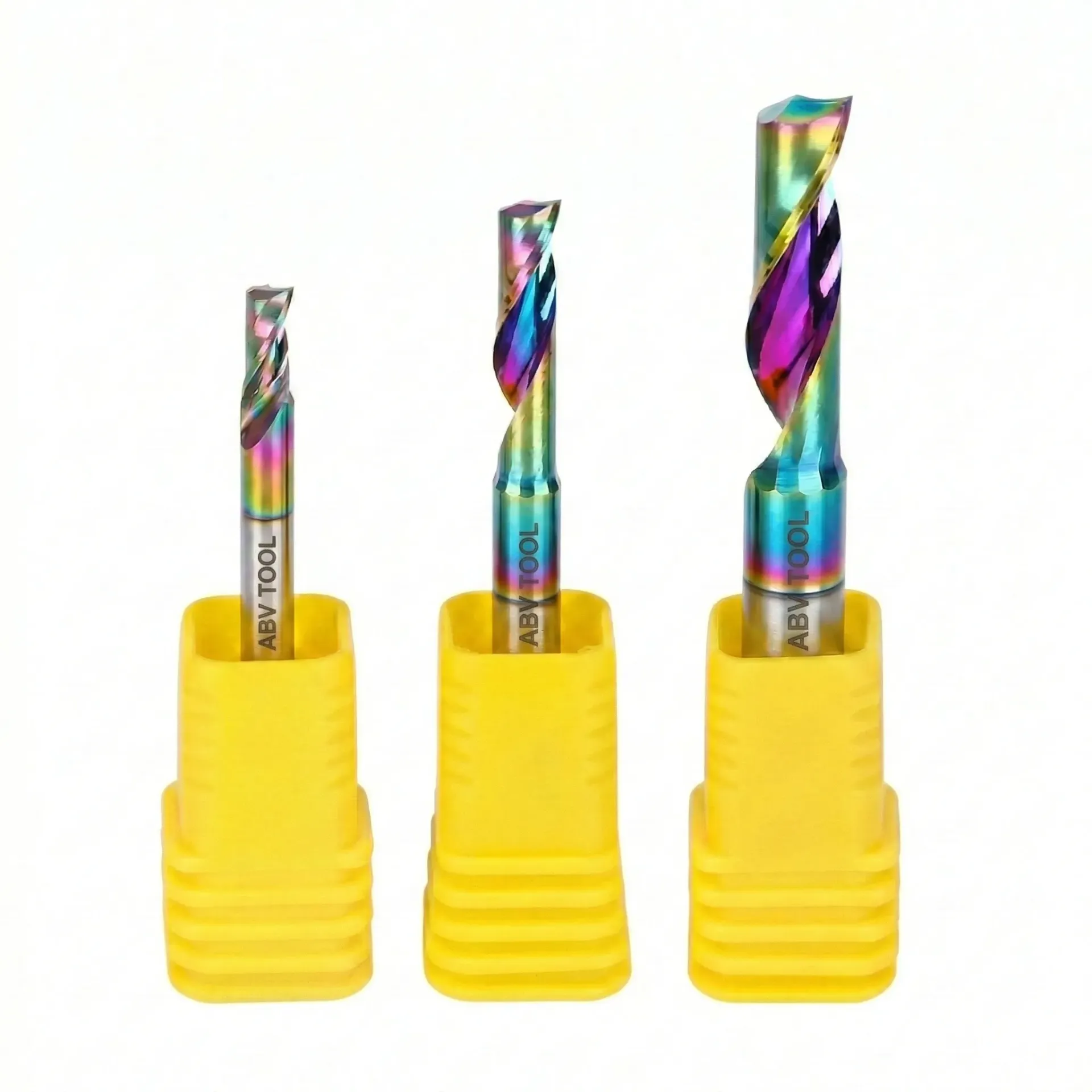
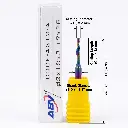
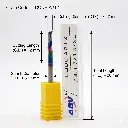
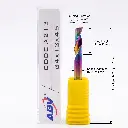
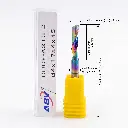
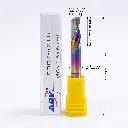
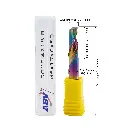
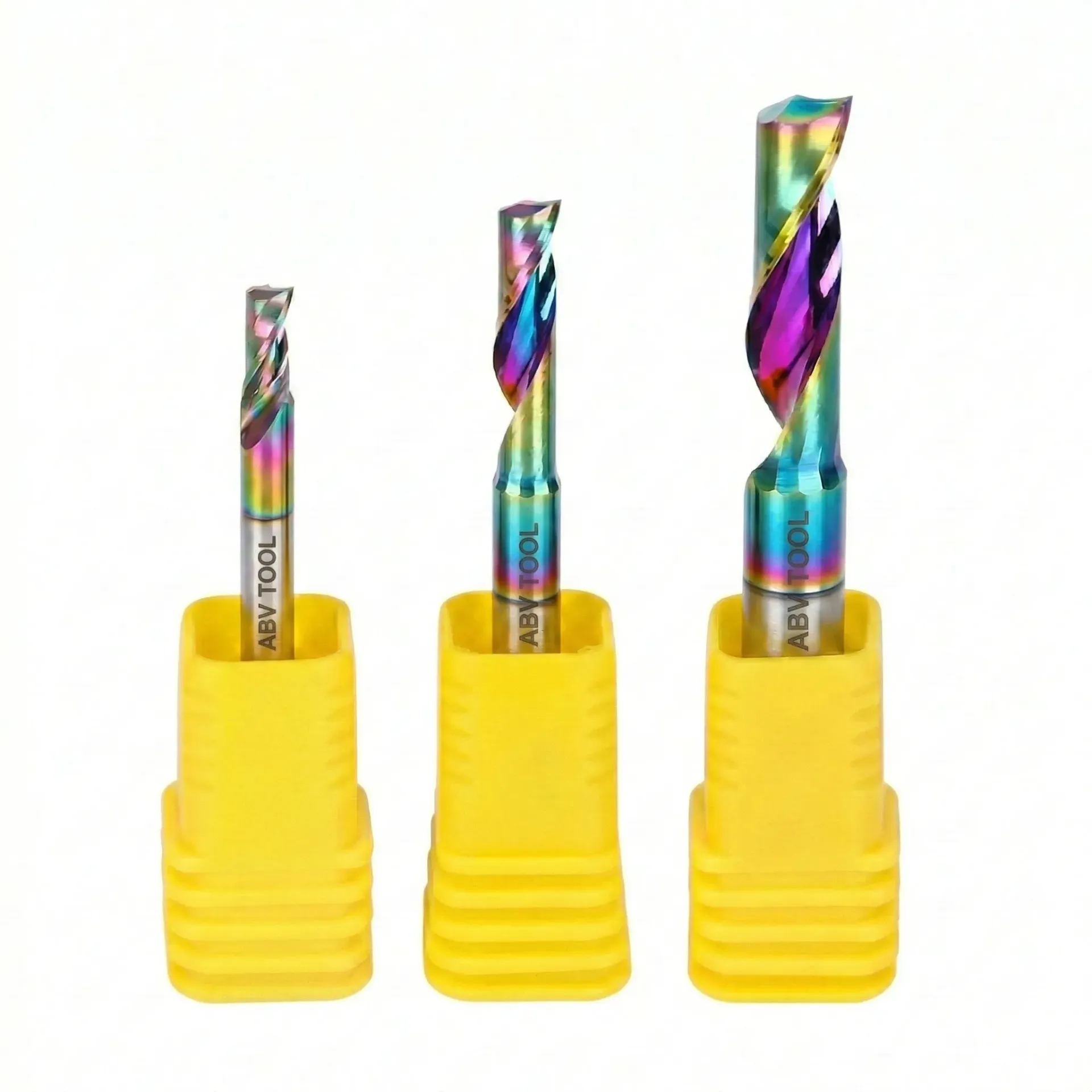
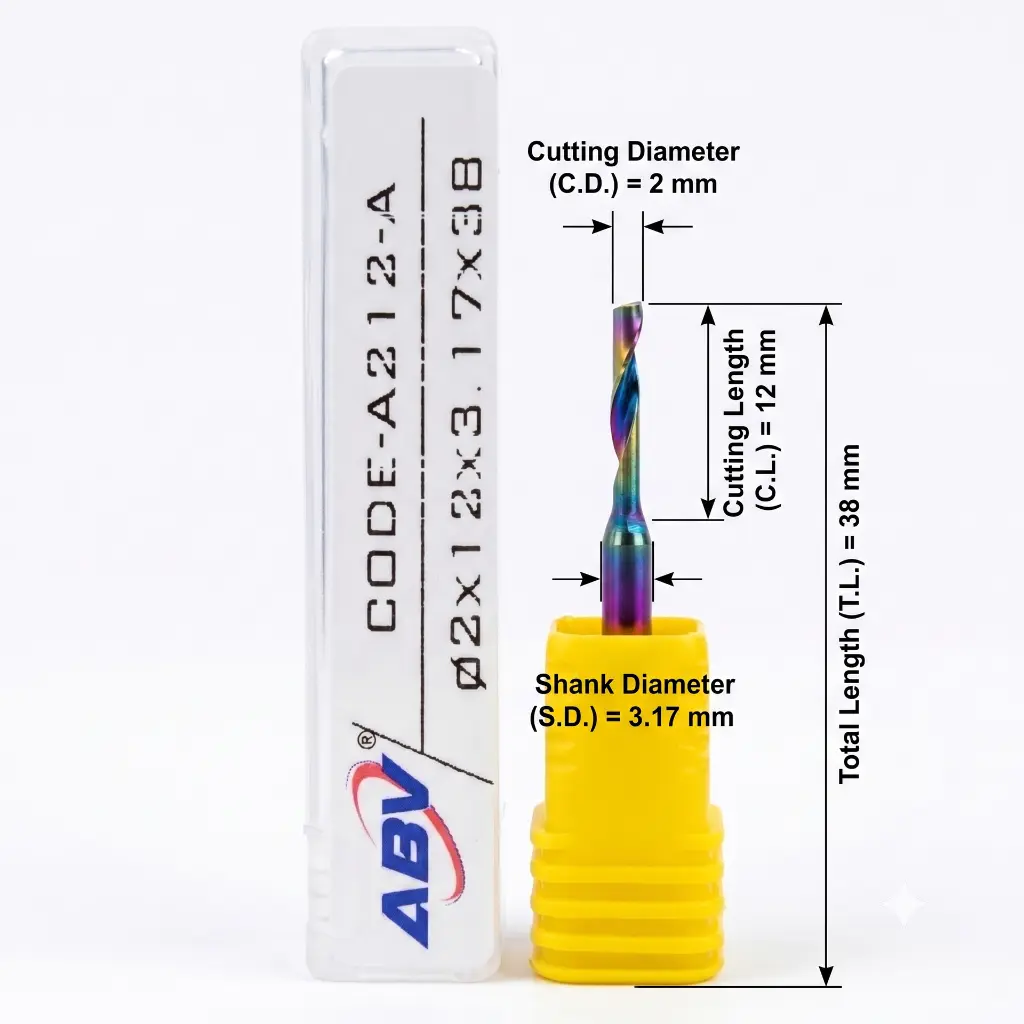
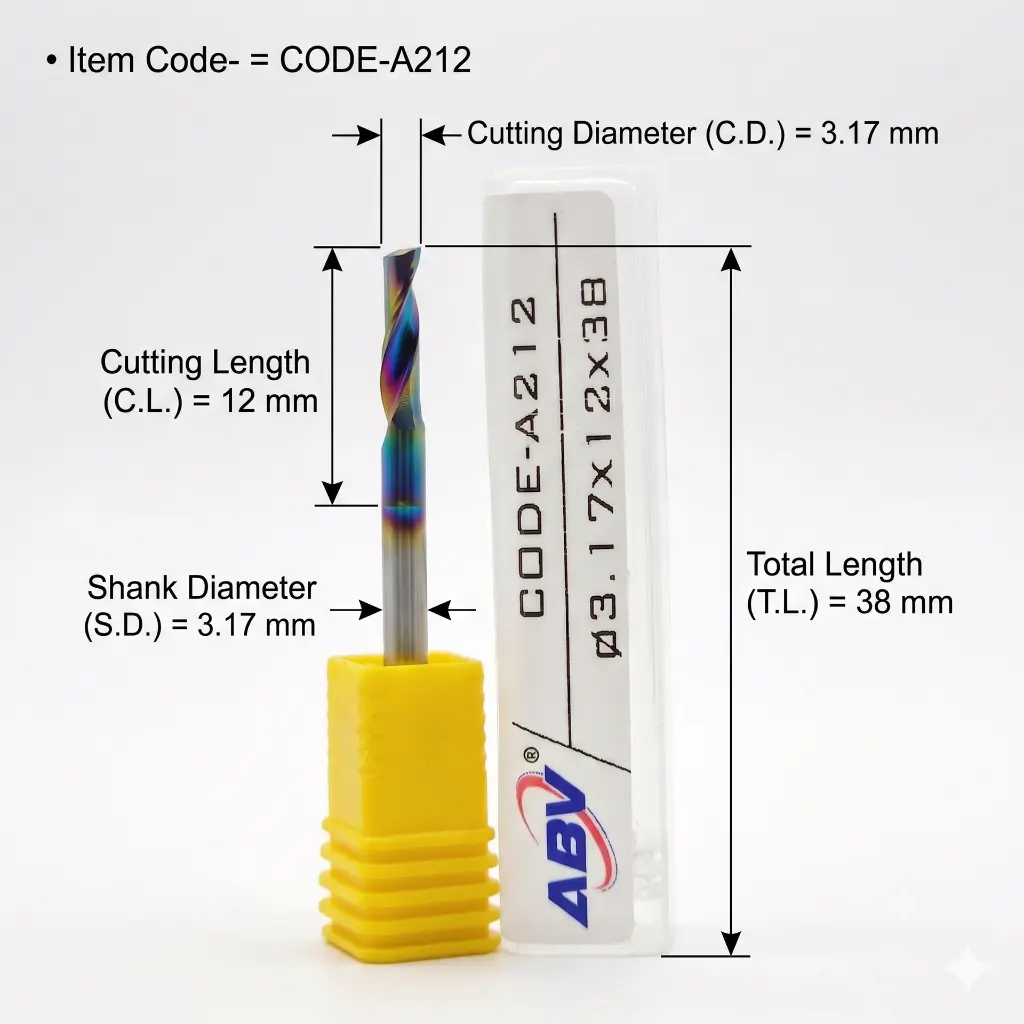
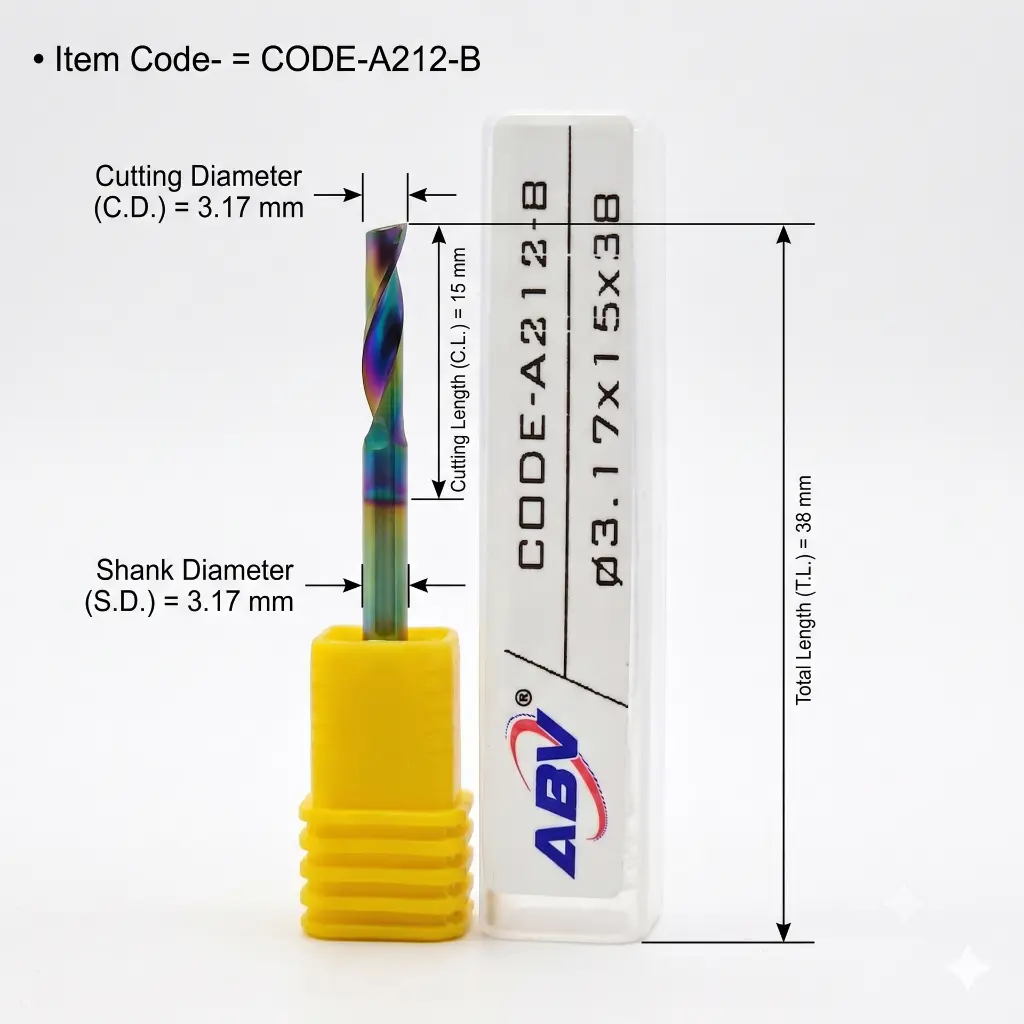
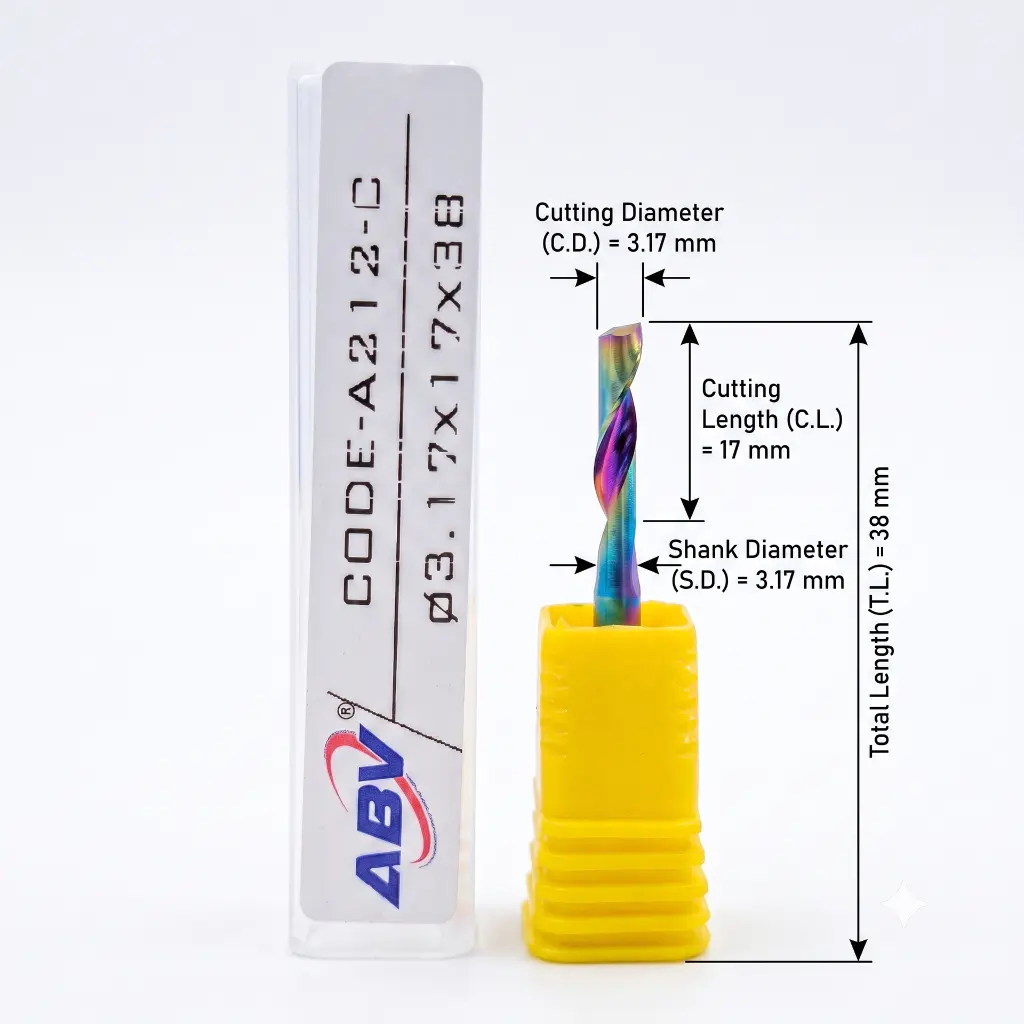
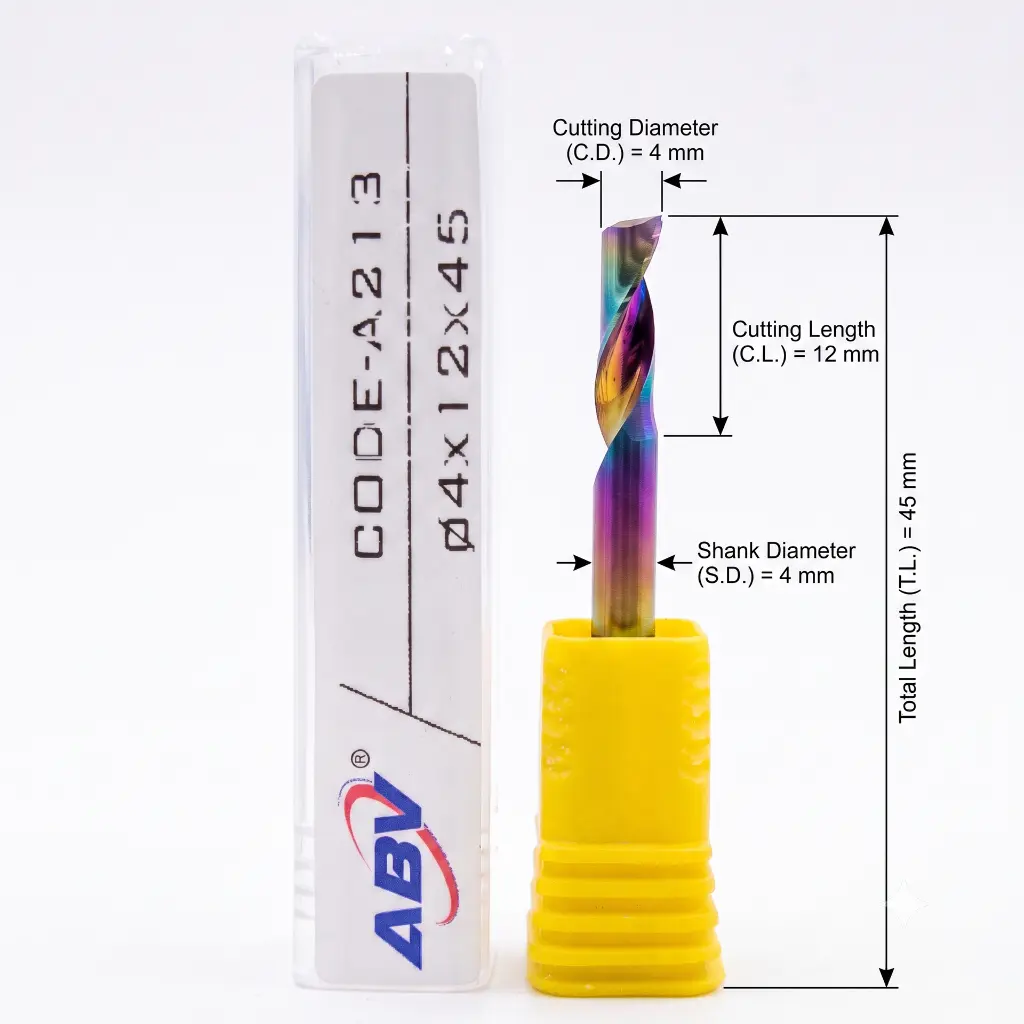
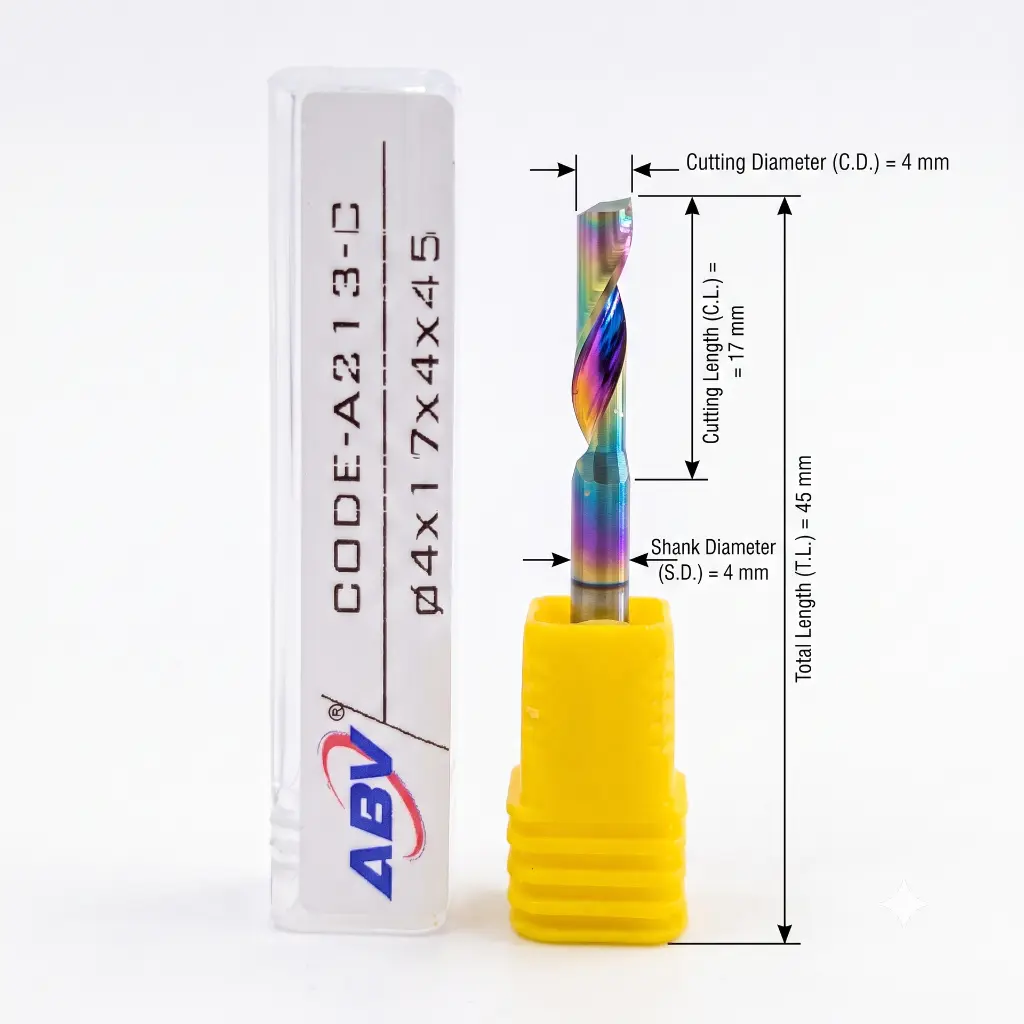
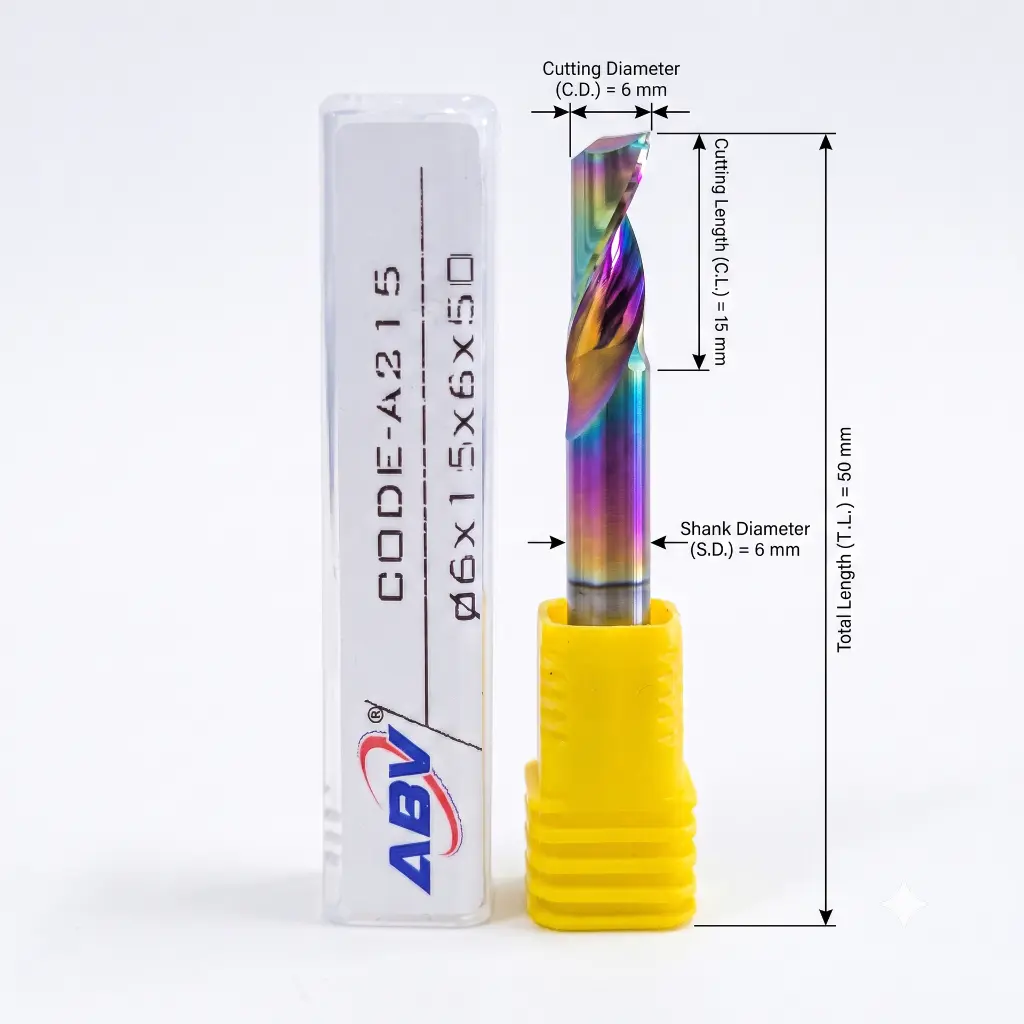
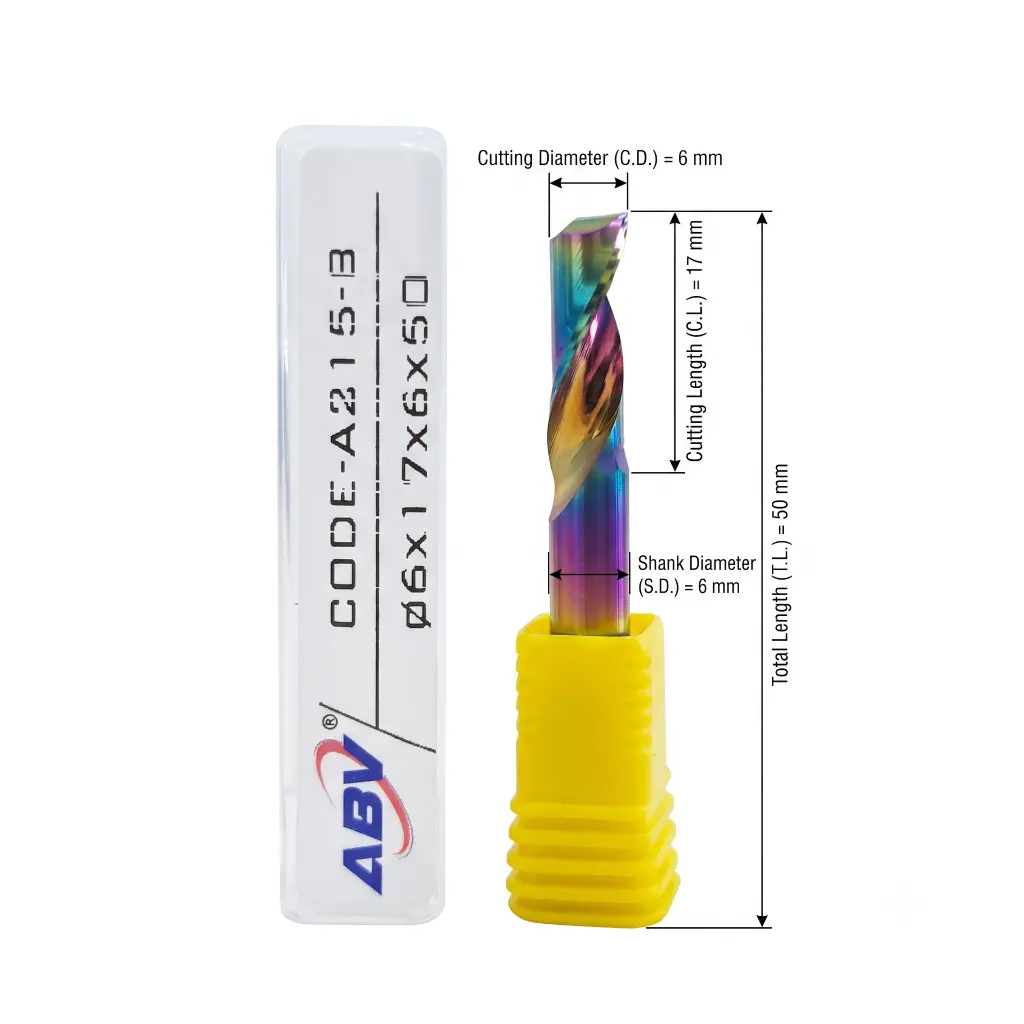
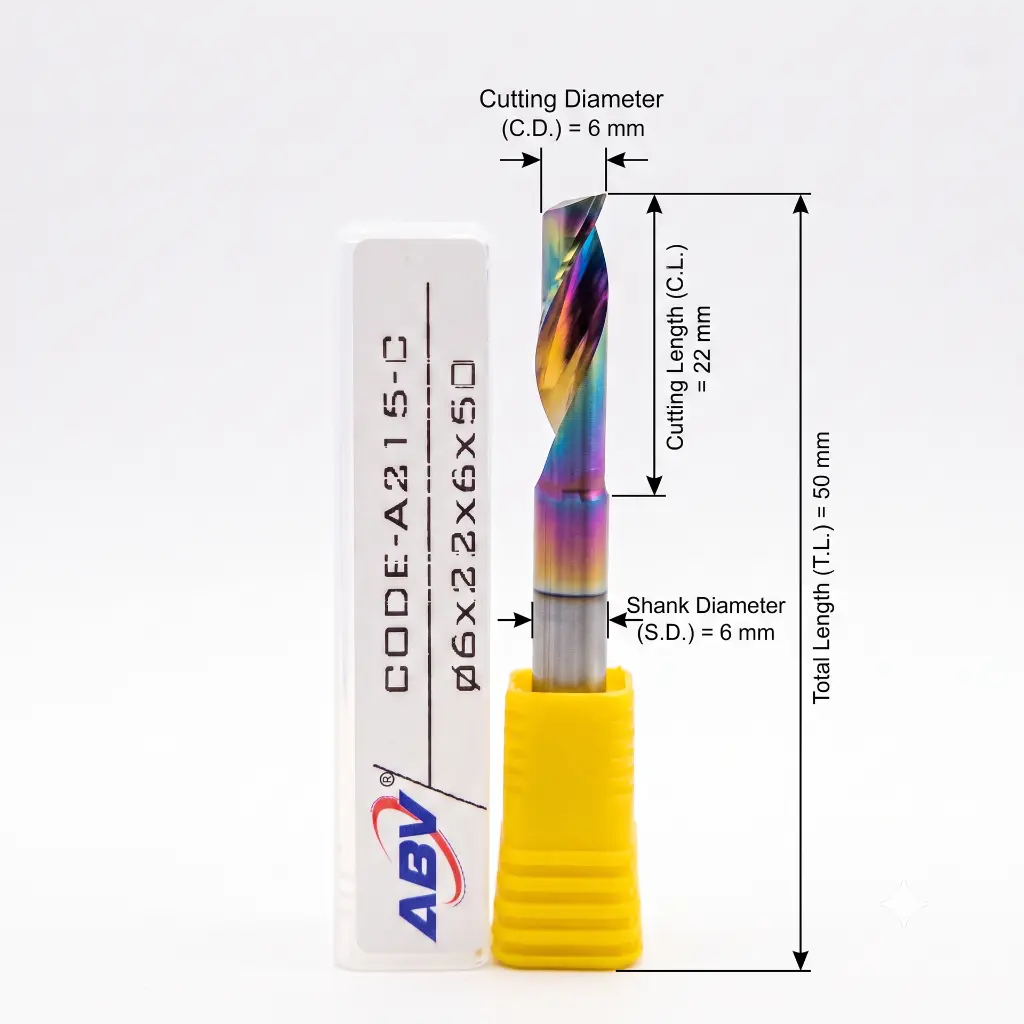
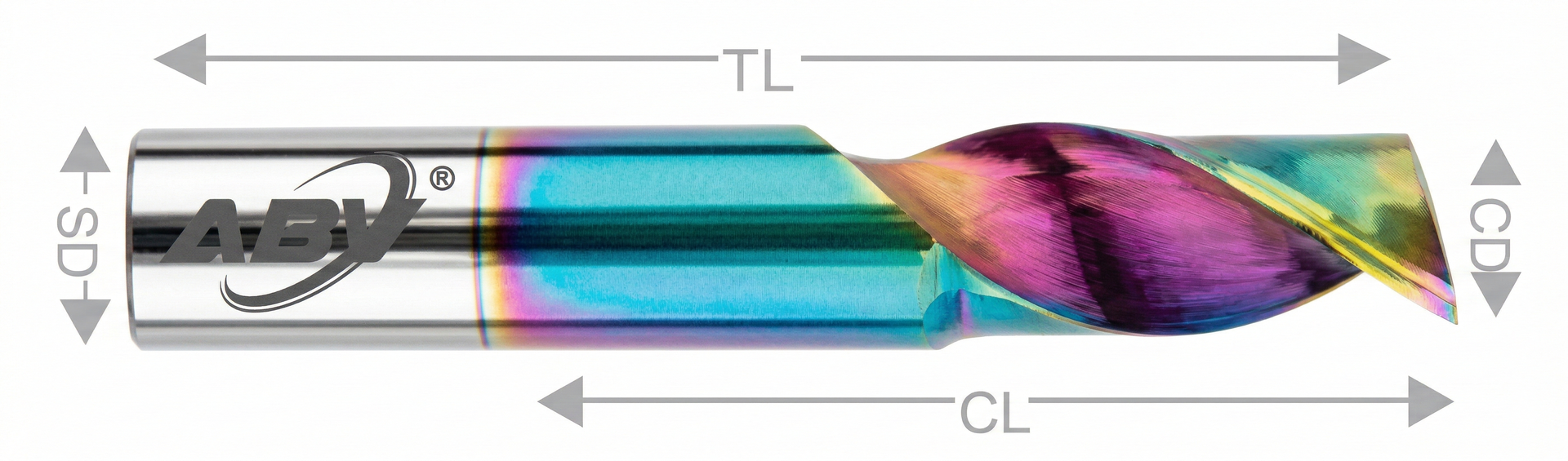
A DLC (Diamond-Like Carbon) Coated Single Flute Endmill is the absolute "Formula 1" of tooling for aluminum machining on a CNC router. It combines the superior chip-clearing geometry of a single "O-flute" with the world's most advanced non-stick coating.
For a business looking to provide the highest-tier tools, this is the gold standard for high-speed aluminum fabrication.
1. The Power of DLC on Aluminum
Aluminum’s biggest weakness is its affinity for carbon steel and carbide. It wants to "bond" to the tool.
The "Non-Stick" Effect: DLC has a coefficient of friction (CoF) typically below 0.1. This is comparable to Teflon. Aluminum chips slide off the flute surface instantly, making "chip welding" almost impossible.
Extreme Edge Sharpness: Unlike thicker coatings (like TiAlN), DLC is applied in an ultra-thin layer (microns). This allows the tool to maintain a "razor edge," which is vital for slicing through soft aluminum rather than "plowing" it.
Hardness: DLC reaches a hardness of up to 80-90 GPa (approaching natural diamond), which protects the carbide substrate from the abrasive particles found in many aluminum alloys (like 6061 or 7075).
2. Benefits for Production Environments
| Feature | Impact on Business / Production |
| Increased Feed Rates | You can push the tool 20–40% faster than uncoated carbide because heat doesn't build up. |
| Tool Longevity | Expect 3x to 5x the life of a standard carbide bit, reducing machine downtime for tool changes. |
| Dry Machining | Because of the low friction, you can often machine aluminum dry (with just air blast), eliminating the mess and cost of coolant/mist systems. |
| Mirror Surface Finish | The razor-sharp edge and slick flute produce a "milled finish" that often eliminates the need for post-processing or polishing. |
3. Comparison: DLC vs. ZrN (Zirconium Nitride)
While ZrN is the traditional choice for aluminum, DLC is the modern upgrade:
ZrN: Excellent for preventing sticking, but has a higher friction coefficient than DLC.
DLC: Harder than ZrN and significantly slicker. It is better suited for high-silicon aluminum or extremely high-speed production where heat is the primary enemy.
4. Technical Performance Tips
High RPM Strategy: These bits thrive at high speeds. On a 3kW or 5kW spindle, you should be looking at 18,000 to 24,000 RPM.
Maintain Chip Load: Even though the bit is slick, you must still maintain a proper chip load (e.g., 0.003 to 0.008 per tooth). If the feed is too slow, the bit will rub, which eventually wears down even a DLC coating.
Vibration Control: Because DLC bits are premium, ensuring your collets (ER20/ER32) are clean and have low runout is essential to prevent micro-chipping the diamond-like layer.
5. Why this is a "Premium Seller" for ABV Tool
Since you are leading the market in Ahmedabad, offering a DLC Single Flute line allows you to target:
Aerospace & Automotive Parts: Where precision and surface finish are non-negotiable.
Signage & ACP Fabricators: Who need to cut thousands of meters of aluminum composite panels without stopping to clean the bit.
High-End Furniture/Architectural Aluminum: Where the edge must be "factory-perfect" right off the machine.