Sintered Flat Head Type
₹ 387.00
₹ 387.00
-
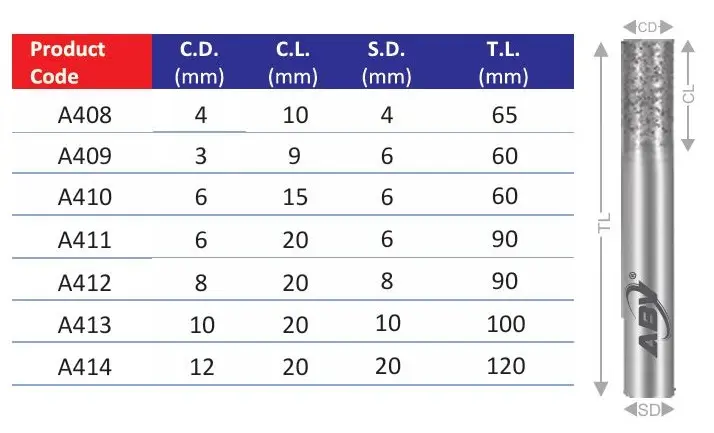
Select Product Code
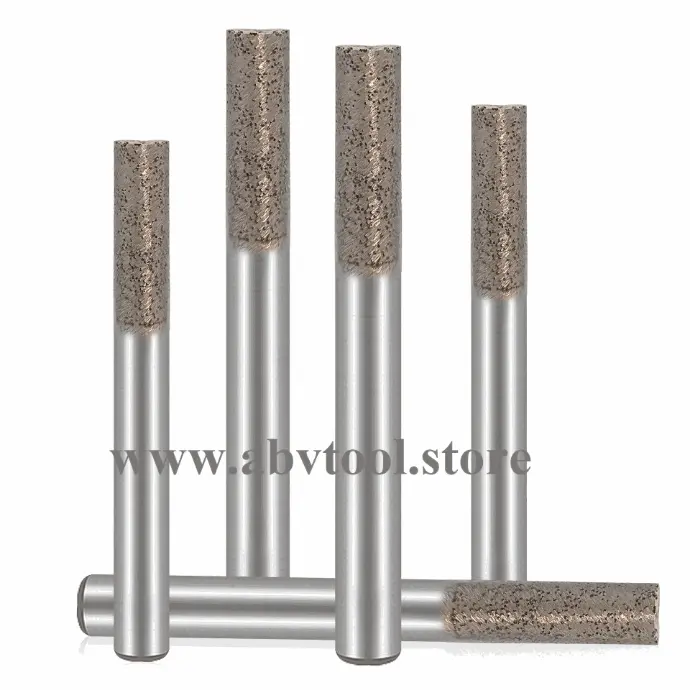
A Sintered Flat Head Stone Tool is the heavy-duty "everlasting" alternative to vacuum brazed tools. While vacuum brazed bits have a single layer of diamond on the surface, sintered tools are made by mixing diamond grit with metal powder and pressing them under extreme heat to form a solid, uniform "segment."
For ABV Tool, these are the premium choice for customers working with Granite, Quartz, and Concrete, where tool life and cost-per-meter are more important than initial sharpness.
Unlike a coating, the diamonds in a sintered bit are embedded throughout the entire thickness of the tool head.
Self-Sharpening: As you use the tool, the metal bond wears away, constantly exposing new, sharp diamond layers underneath.
Extreme Longevity: A sintered bit typically lasts 5 to 10 times longer than a vacuum brazed bit.
Solid Diamond Segment: The "Flat Head" is not just a steel tip with grit; the entire cutting head is a diamond-infused metal matrix.
The square, flat-bottom design is the primary choice for heavy material removal and leveling in stone:
| Task | Description |
| Milling & Leveling | Creating a perfectly flat bottom for sink cutouts or recessed drainboards in granite. |
| Heavy Pocketing | Clearing out large areas of stone for architectural inlays or "pocket" designs. |
| Slotting & Trenching | Cutting straight, deep channels in slabs for structural reinforcements (bars). |
| Industrial Engraving | Deep, large-scale lettering on monuments where tool wear must be kept to a minimum. |
| Feature | Sintered (Metal Bond) | Vacuum Brazed (VB) |
| Best Material | Granite, Hard Quartz, Concrete | Marble, Sandstone, Limestone |
| Tool Life | Extremely Long (Multi-layer) | Moderate (Single-layer) |
| Initial Sharpness | Lower (Requires "dressing") | Very High (Aggressive) |
| Cooling | Wet Use Only (Mandatory) | Wet or Dry |
| Cost | Higher upfront | More affordable |
Because the diamonds are held in a metal matrix, the tool can sometimes "glaze" (feel dull) if the metal isn't wearing away fast enough.
How to fix: If the bit stops cutting effectively, run it into a soft, abrasive material like a sandstone block or a specialized dressing stone. This will strip away the old metal bond and expose a fresh, sharp layer of diamonds.
RPM Settings: Sintered tools require higher pressure but slightly lower RPMs than wood tools—usually 6,000 to 10,000 RPM.
Water is Non-Negotiable: Sintered bits generate massive heat. Without constant water flow, the metal matrix will melt or "smear" over the diamonds, ruining the tool.
Ramping: Just like your carbide bits, always use a ramp-in move for Z-axis entry to avoid "hammering" the diamond segment.