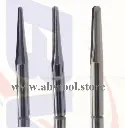
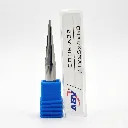
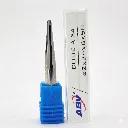
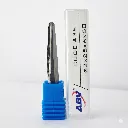
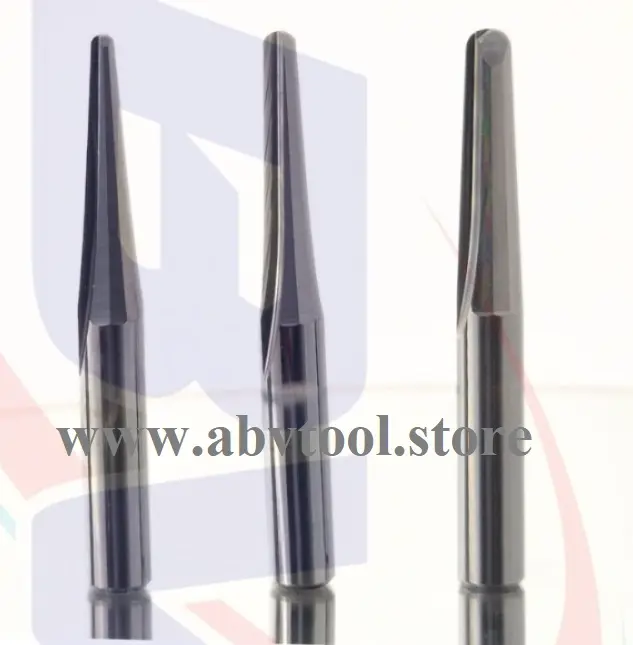
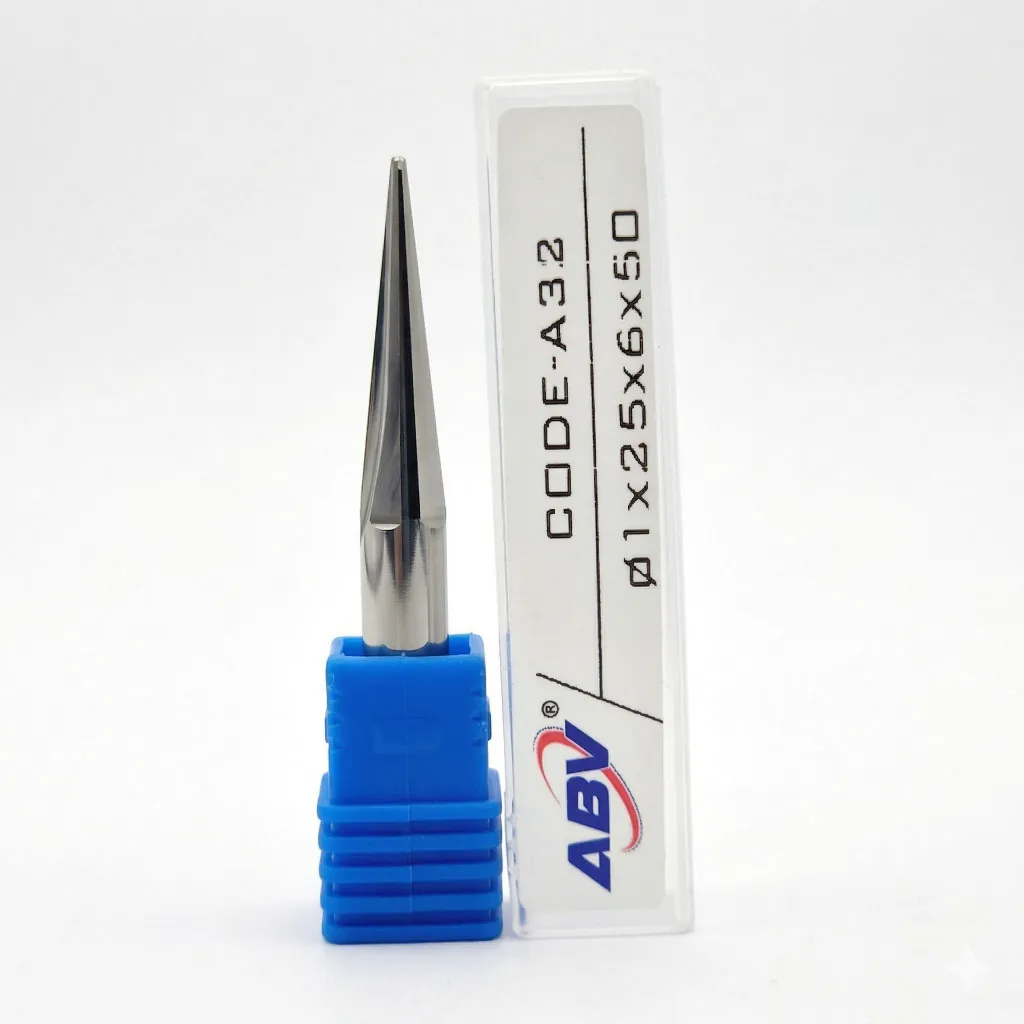
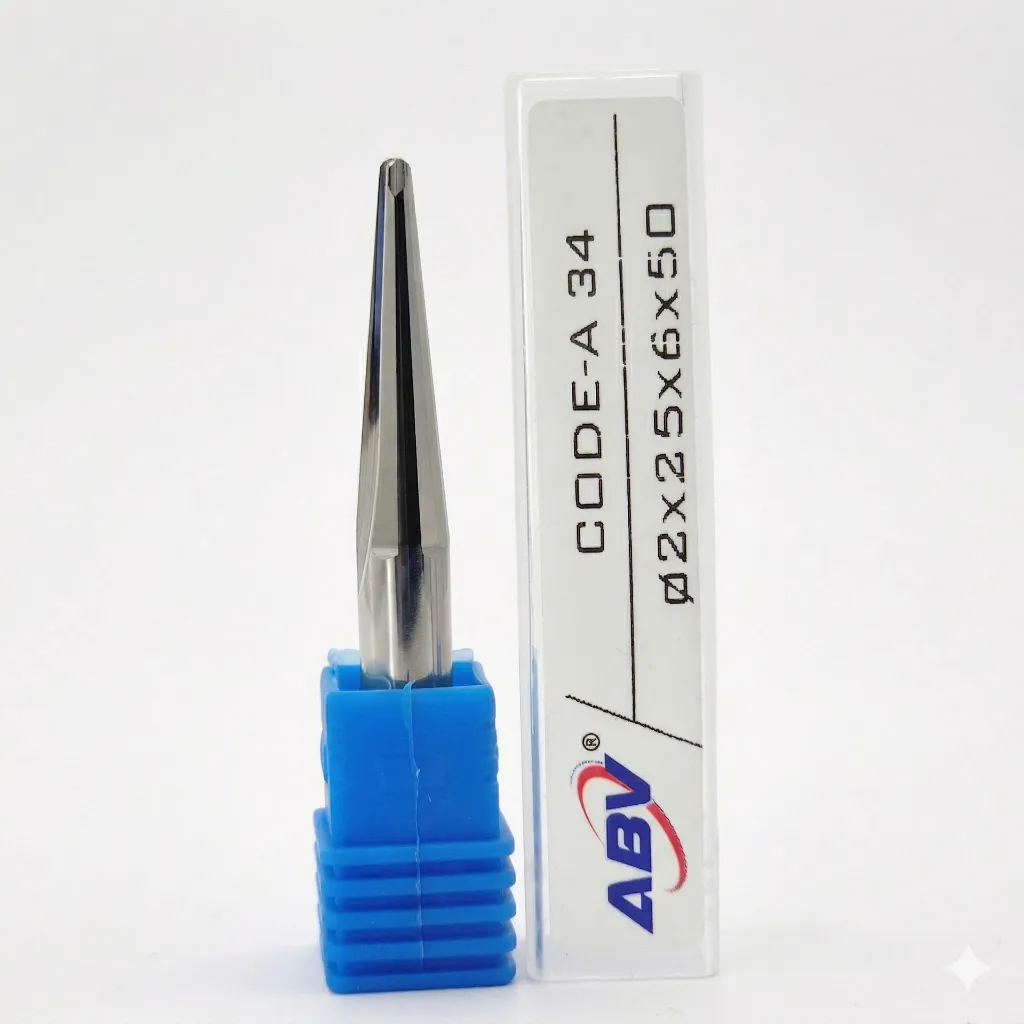
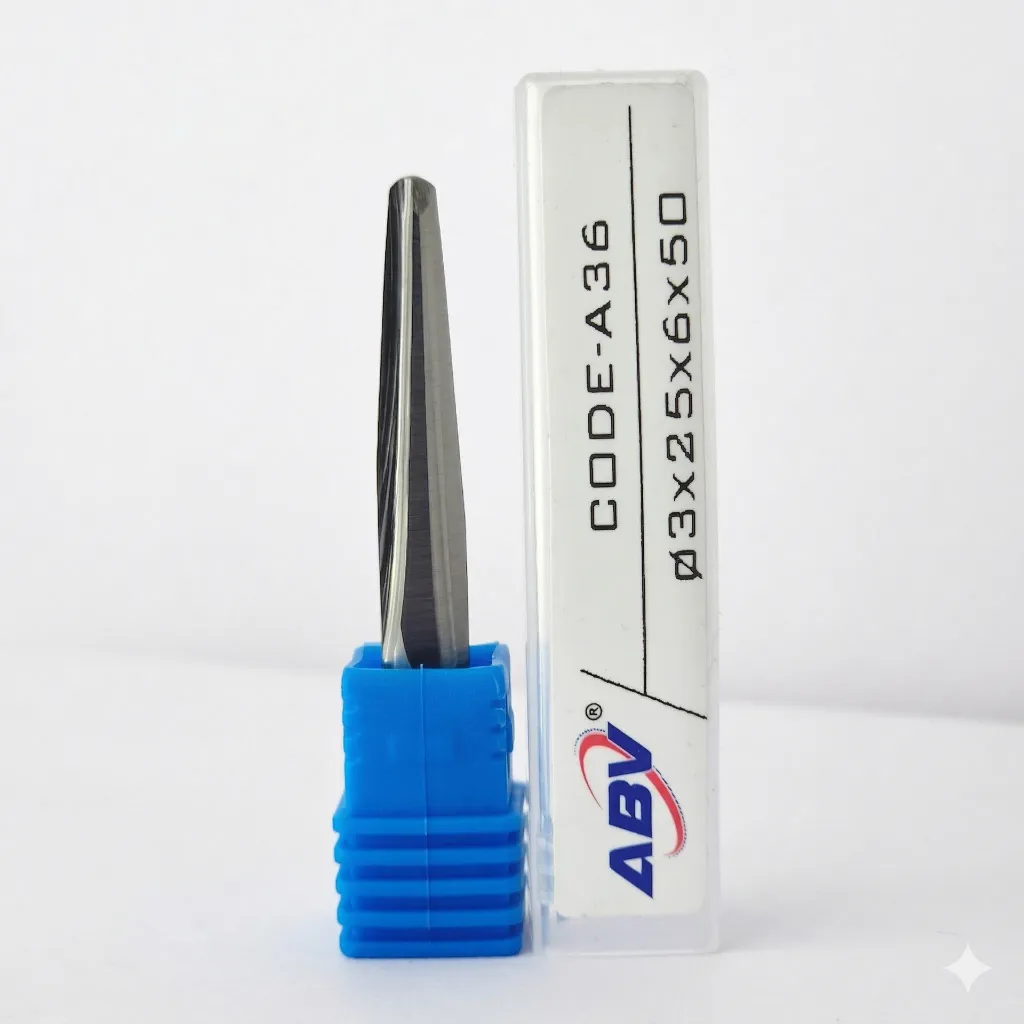
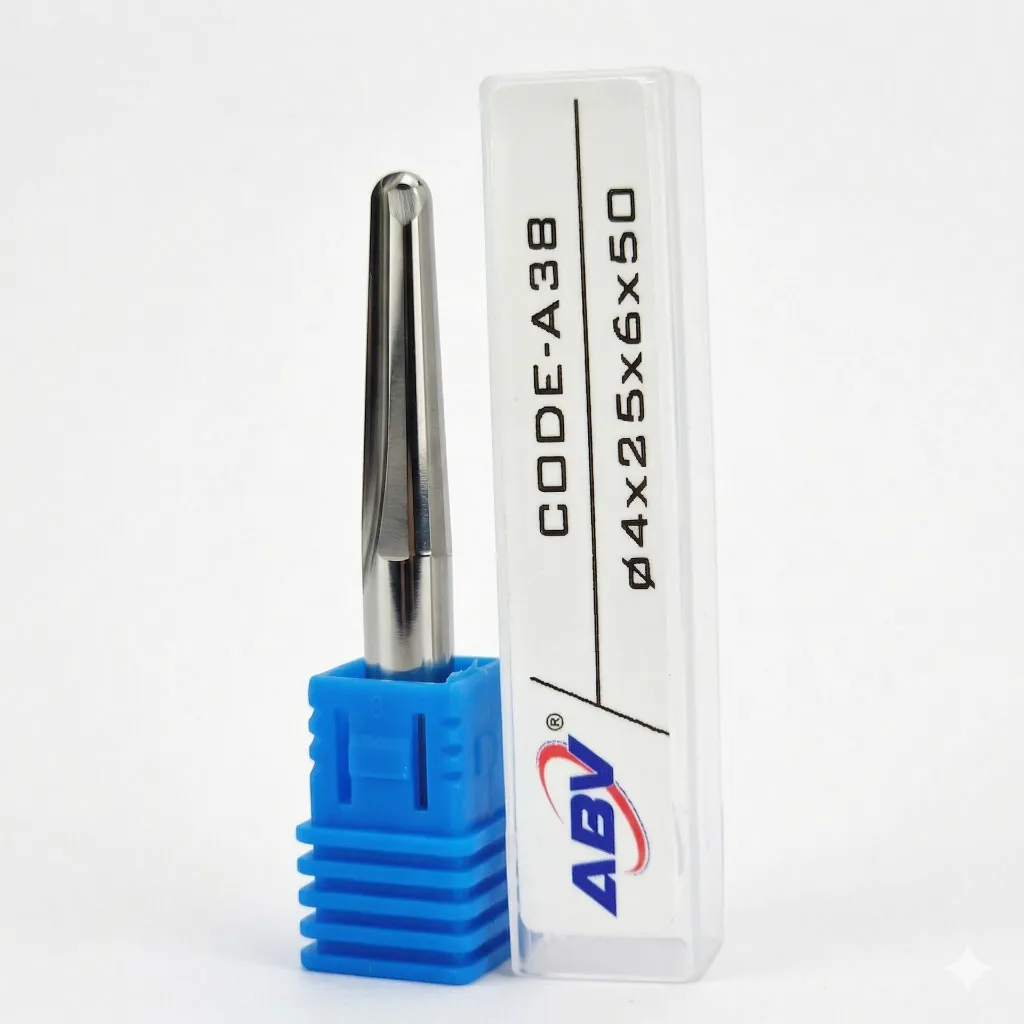
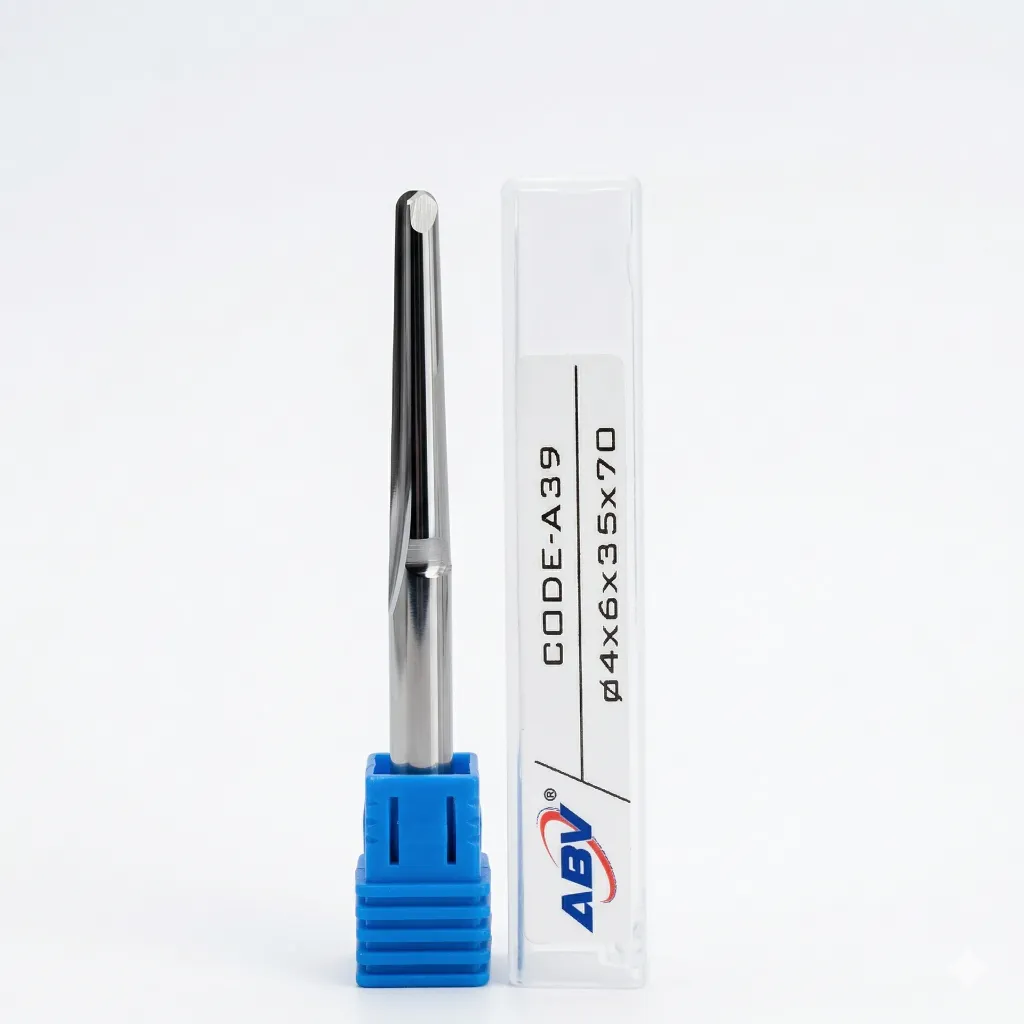
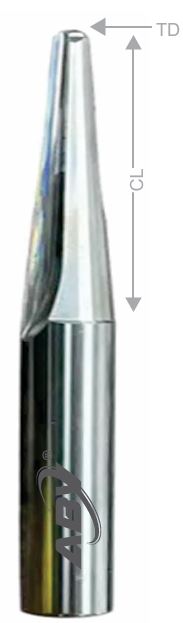
A Straight Taper Ball Nose end mill is a specialized carving bit that features straight flutes (0° helix) on a conical (tapered) body with a rounded tip.
While spiral tapered ball nose bits are more common for wood and aluminum due to their chip-pulling action, the straight-flute version is a specific choice for materials where you want to prevent "lifting" or for heavy-duty industrial carving.
1. The Design Breakdown
Straight Flute (0° Helix): Unlike a spiral bit, the cutting edge is vertical. It shears the material with a "slapping" motion. This provides a neutral cutting force—it doesn't pull the workpiece up or push it down.
Tapered Body: The diameter starts small at the tip and widens toward the shank. This conical shape provides maximum rigidity, drastically reducing tool deflection (bending) compared to a standard straight ball nose.
Ball Nose Tip: The hemispherical end allows for high-detail 3D carving and smooth contouring without leaving sharp "steps."
2. When to Use Straight vs. Spiral Tapered
| Feature | Straight Taper Ball Nose | Spiral Taper Ball Nose |
| Material Force | Neutral (No lifting/pushing). | Pulls chips up (Upcut) or pushes down (Downcut). |
| Surface Finish | Excellent on edges; can "hammer" slightly. | Slicing action; generally smoother on contours. |
| Best For | Plastics, delicate veneers, and stone. | Hardwood, Softwood, and Aluminum. |
| Plunging | Poor (requires ramping). | Excellent (screw-like action). |
3. Key Benefits for Your Customers
Anti-Lifting: Ideal for thin or poorly secured sheets. Since the flutes are straight, there is no upward force trying to pull the material off the vacuum table or clamps.
Precision in Detail: The taper allows for a tiny tip (e.g., 0.5mm) that is incredibly strong. You get the detail of a needle with the strength of a 6mm shank.
Cleaner Edges on Laminates: On pre-laminated boards or thin veneers, a straight flute reduces the "chipping" or "fuzzing" often caused by the upward pull of a spiral bit.
4. Technical Specs for abvtool.store
For the Ahmedabad market, these are the most common configurations you should stock:
Tip Radius: 0.25mm, 0.5mm, 1.0mm.
Side Angle: 3.6°, 5.4°, and 7°. (The 5.4° is the standard "detail carving" angle).
Coating: ZrN (Zirconium Nitride) or DLC is recommended for these bits to reduce friction, as straight flutes generate more heat than spirals.
5. Pro-Tip: Avoid "Deep Plunging"
Because straight flutes do not have a helical path to "screw" chips out of a hole, you should never plunge straight down into the material (Z-axis only). Always use a "Ramp" or "Lead-in" move so the bit enters the material while moving horizontally. This prevents the tip from overheating and burning.