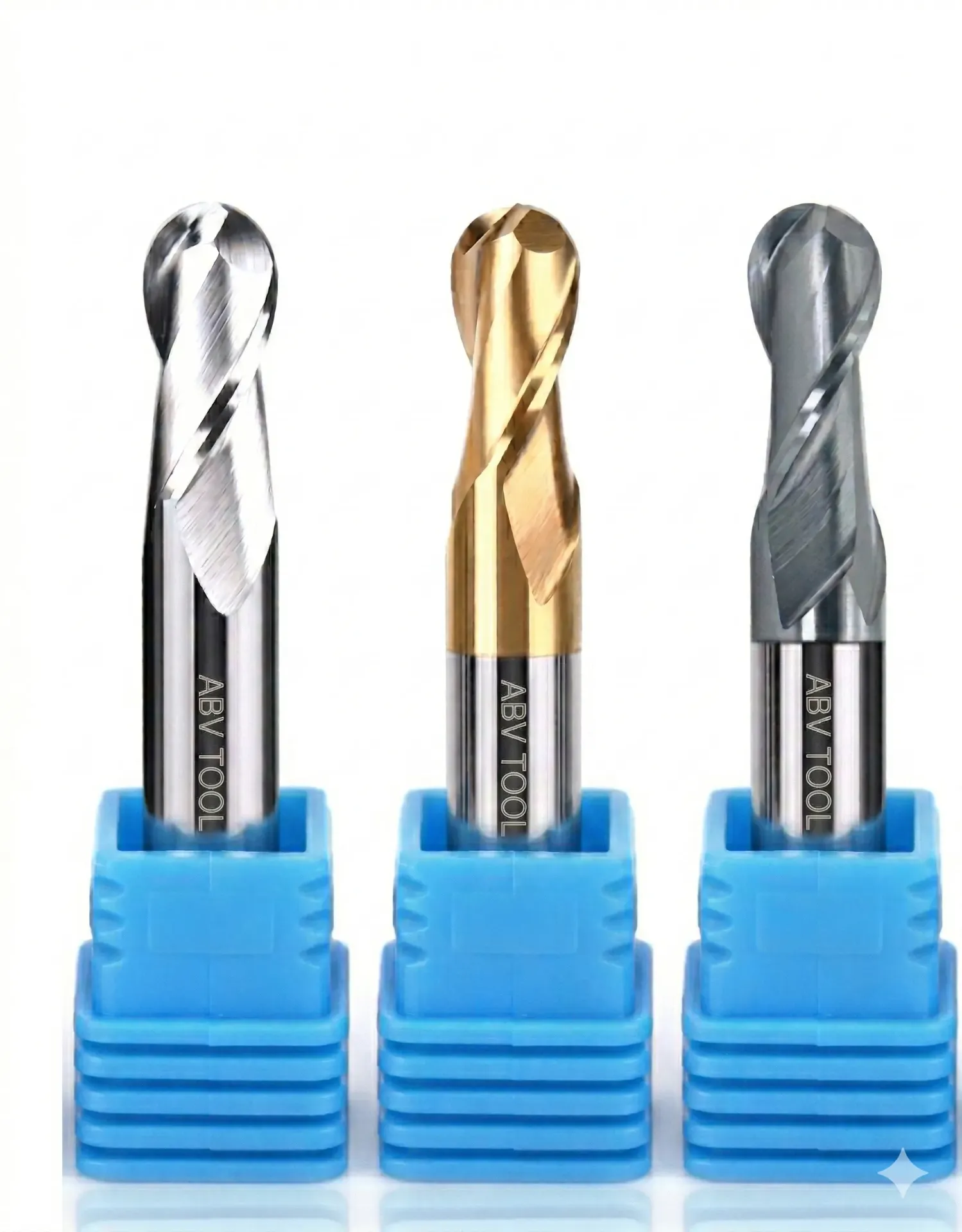
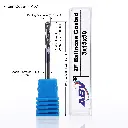
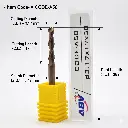
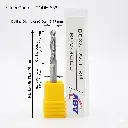
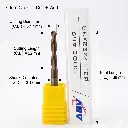
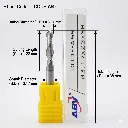
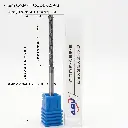
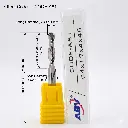
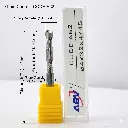
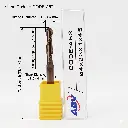
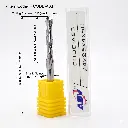
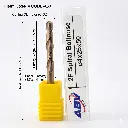
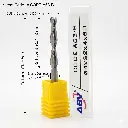
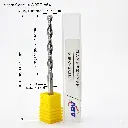
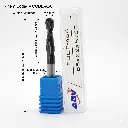
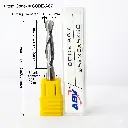
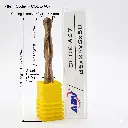
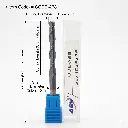
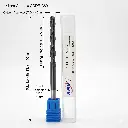
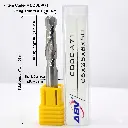
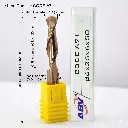
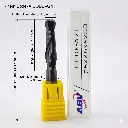
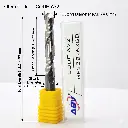
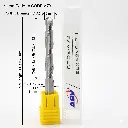
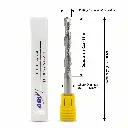
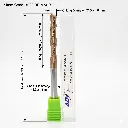
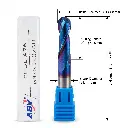
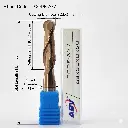
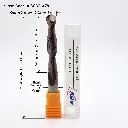
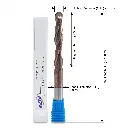
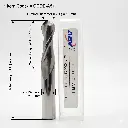
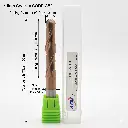
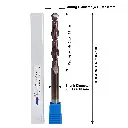
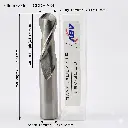
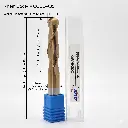
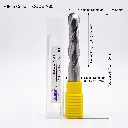
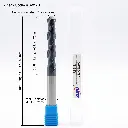
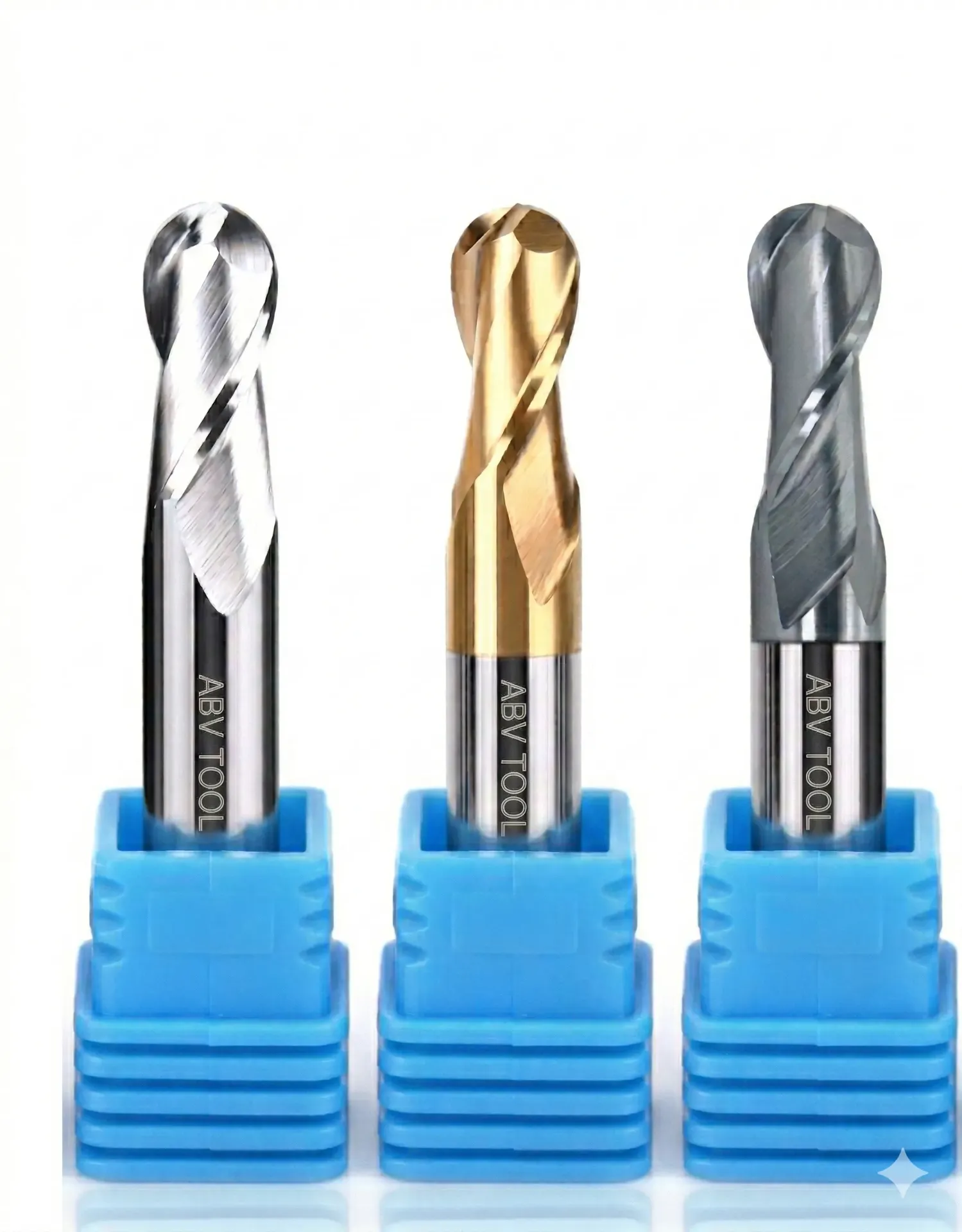
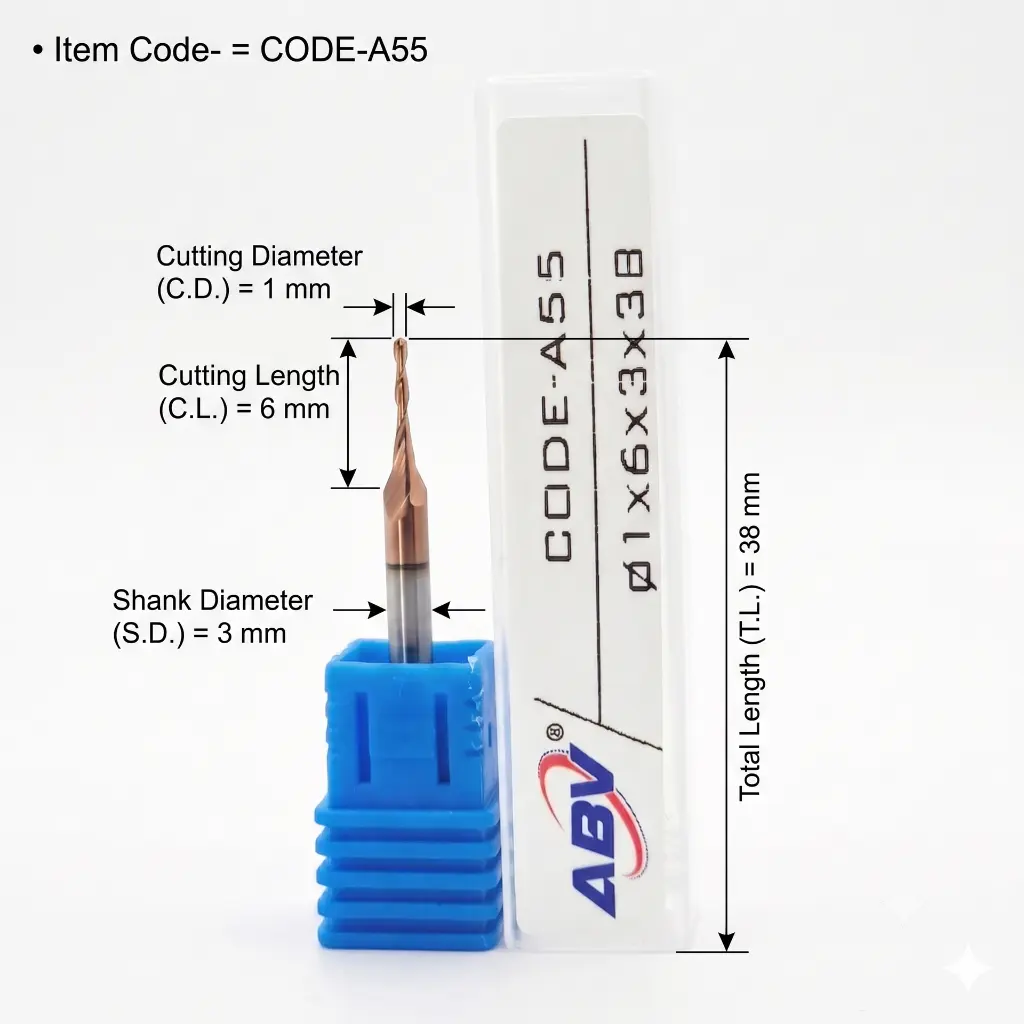
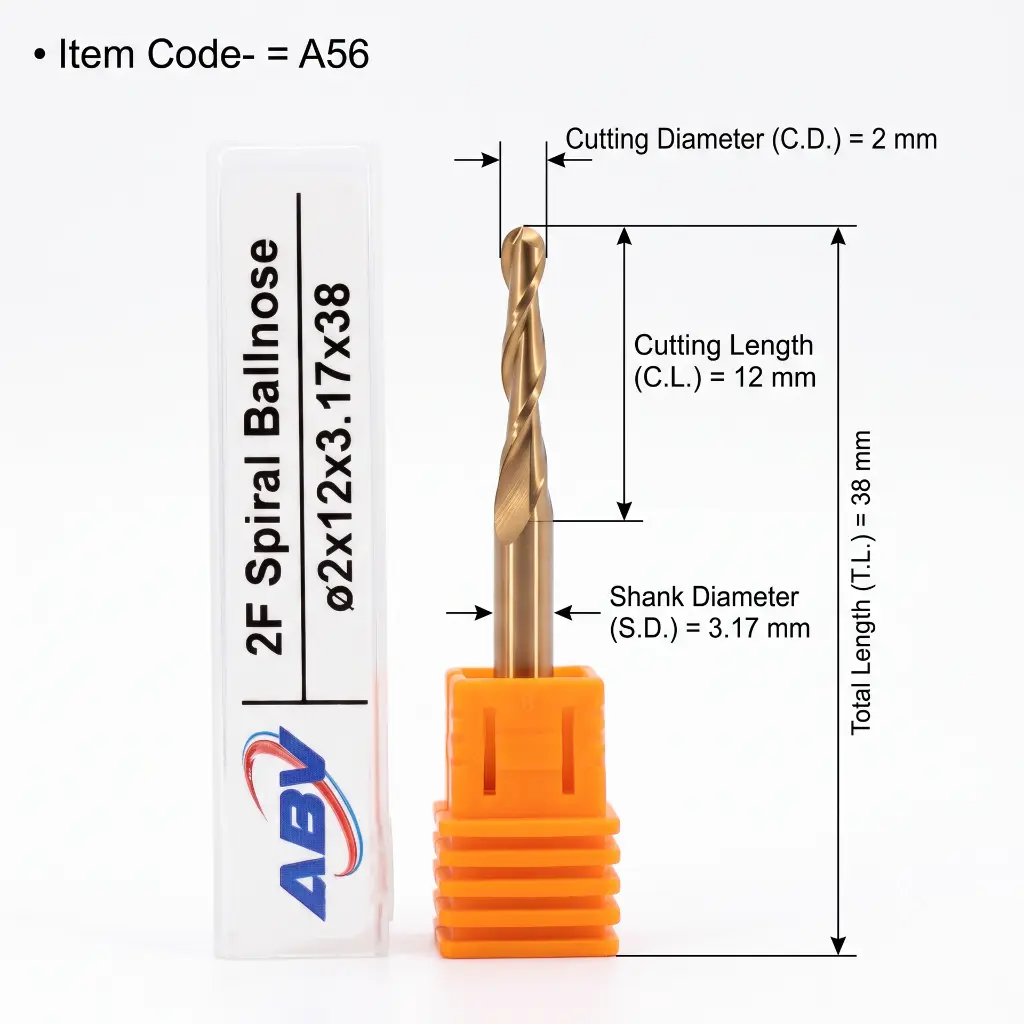
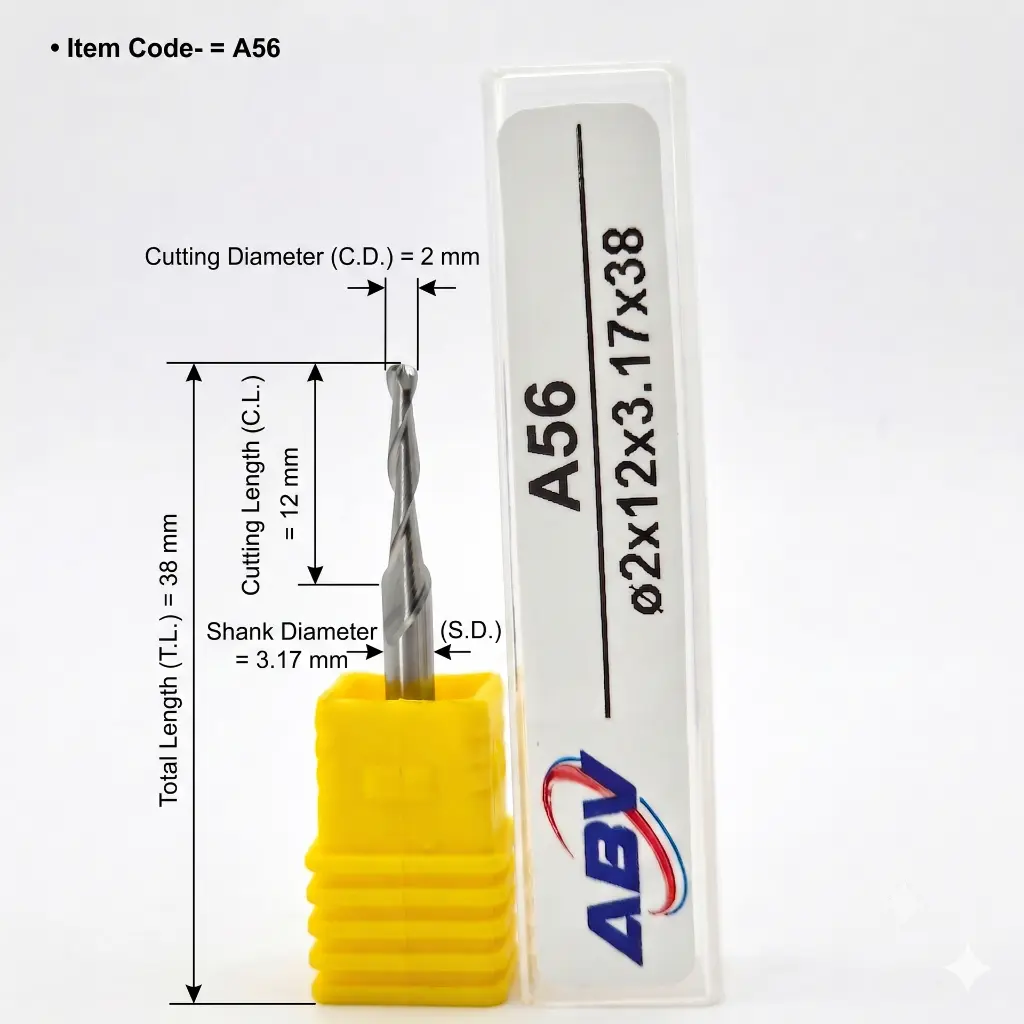
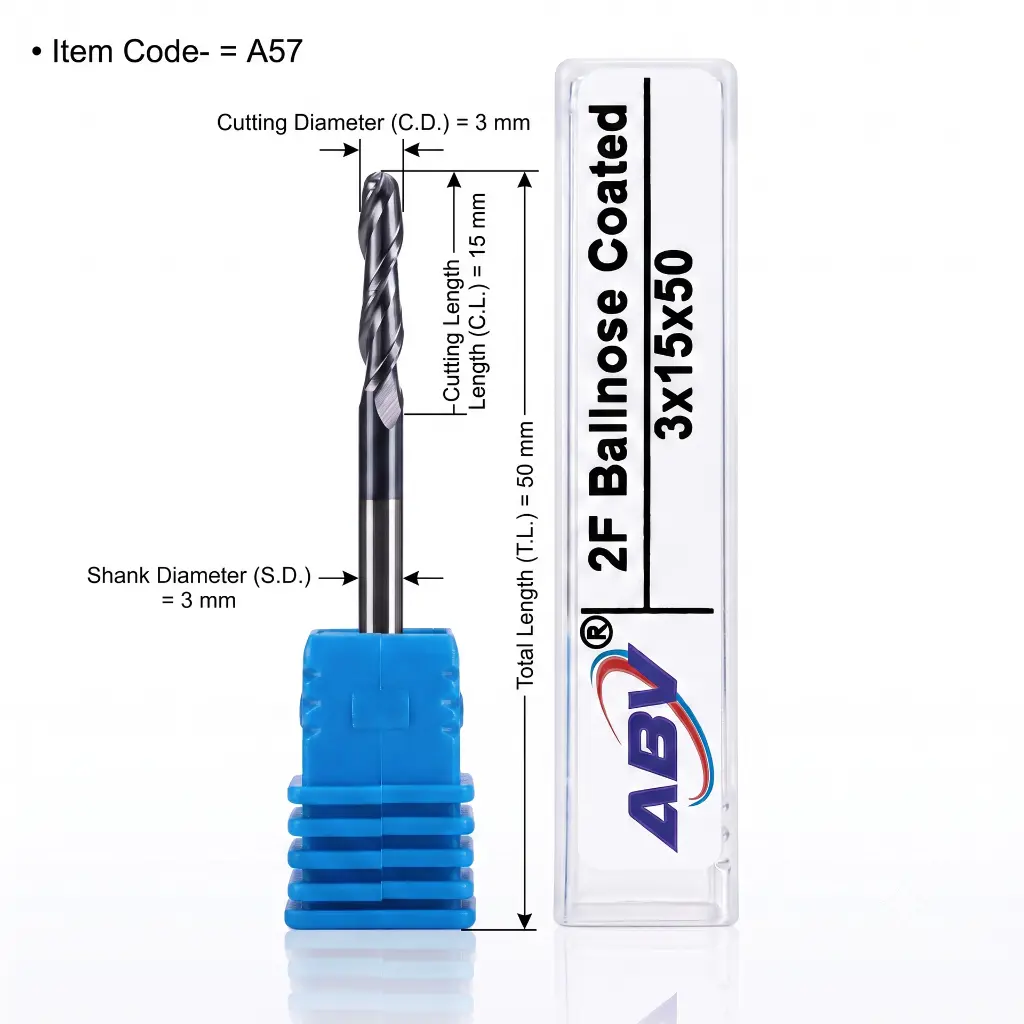
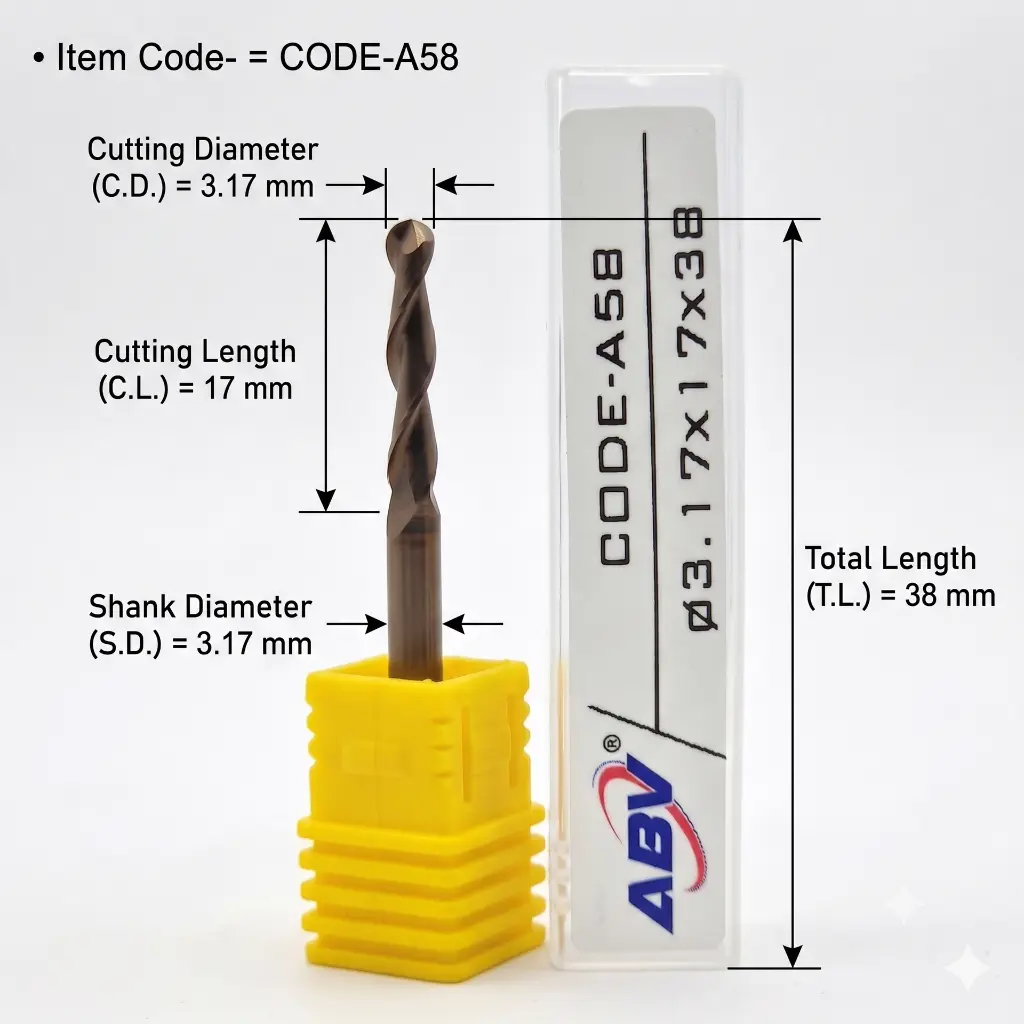
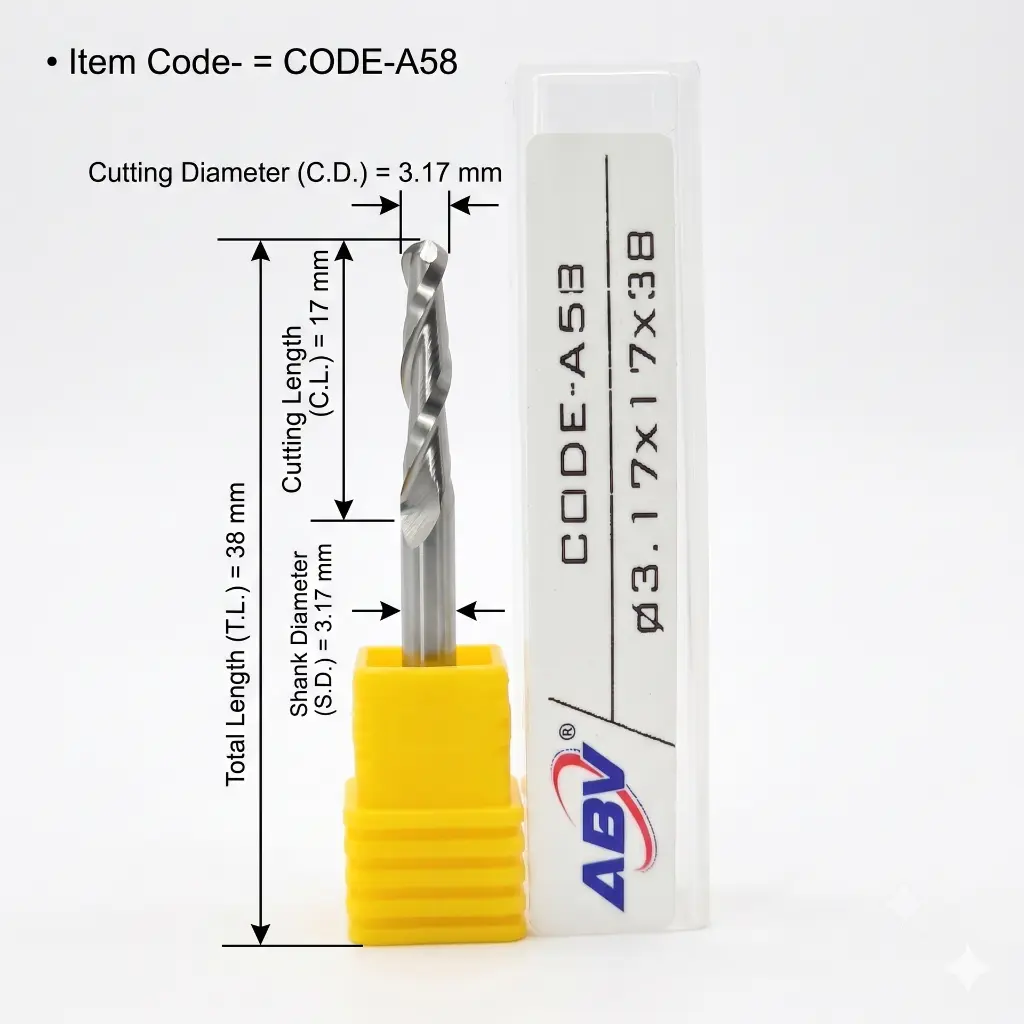
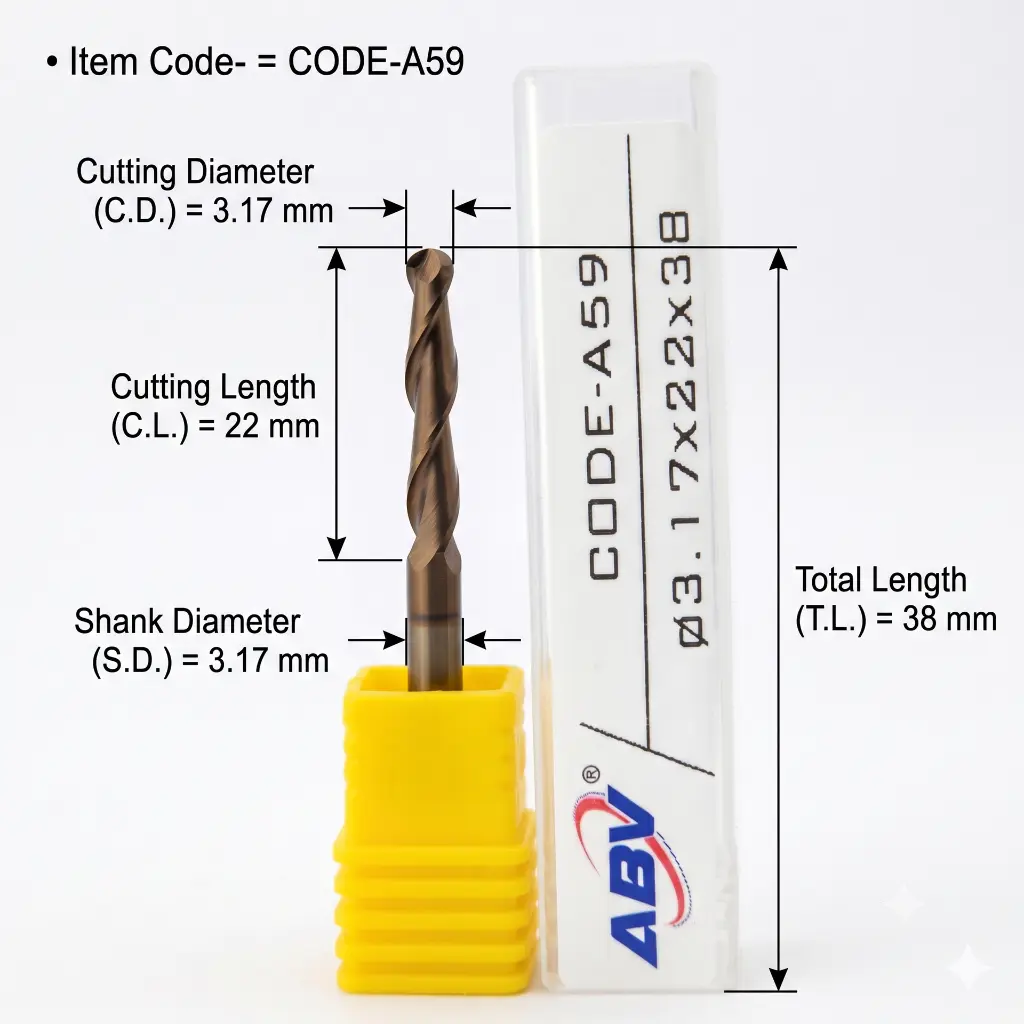
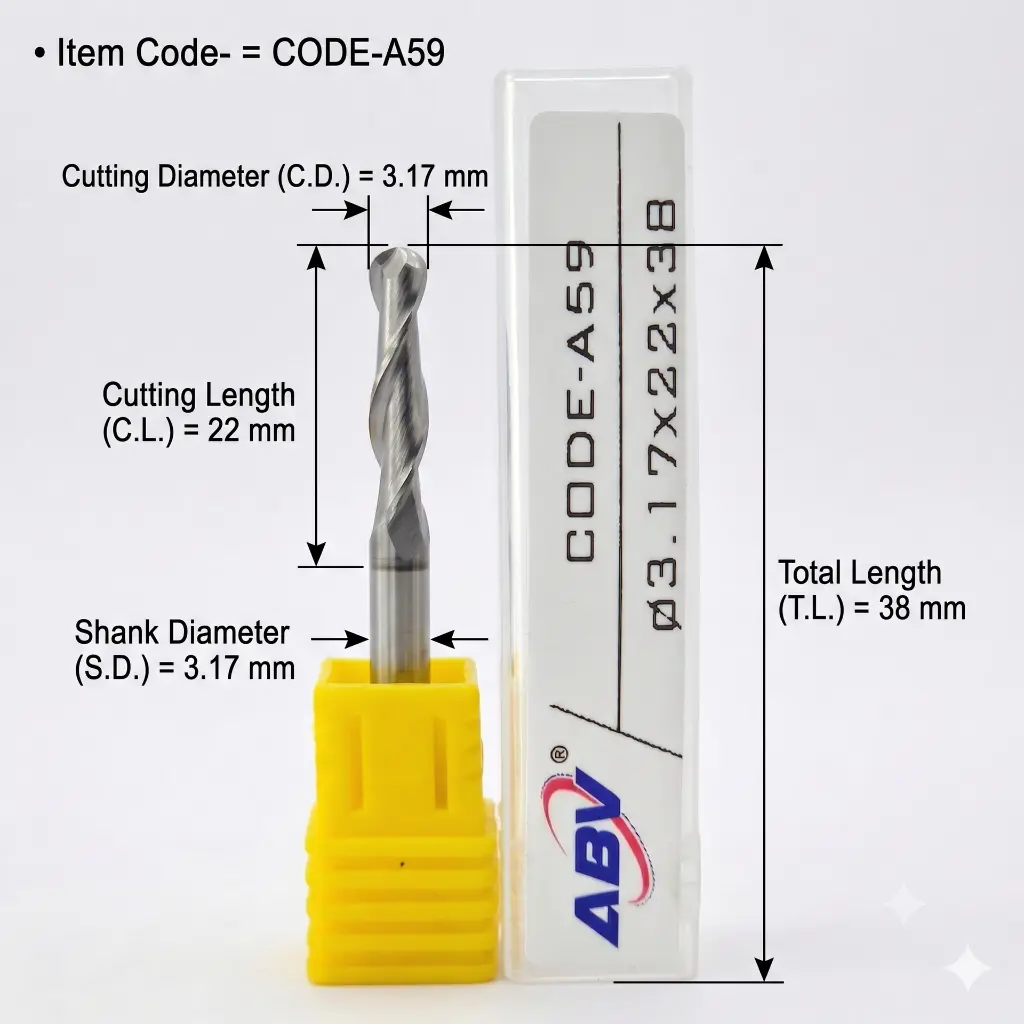
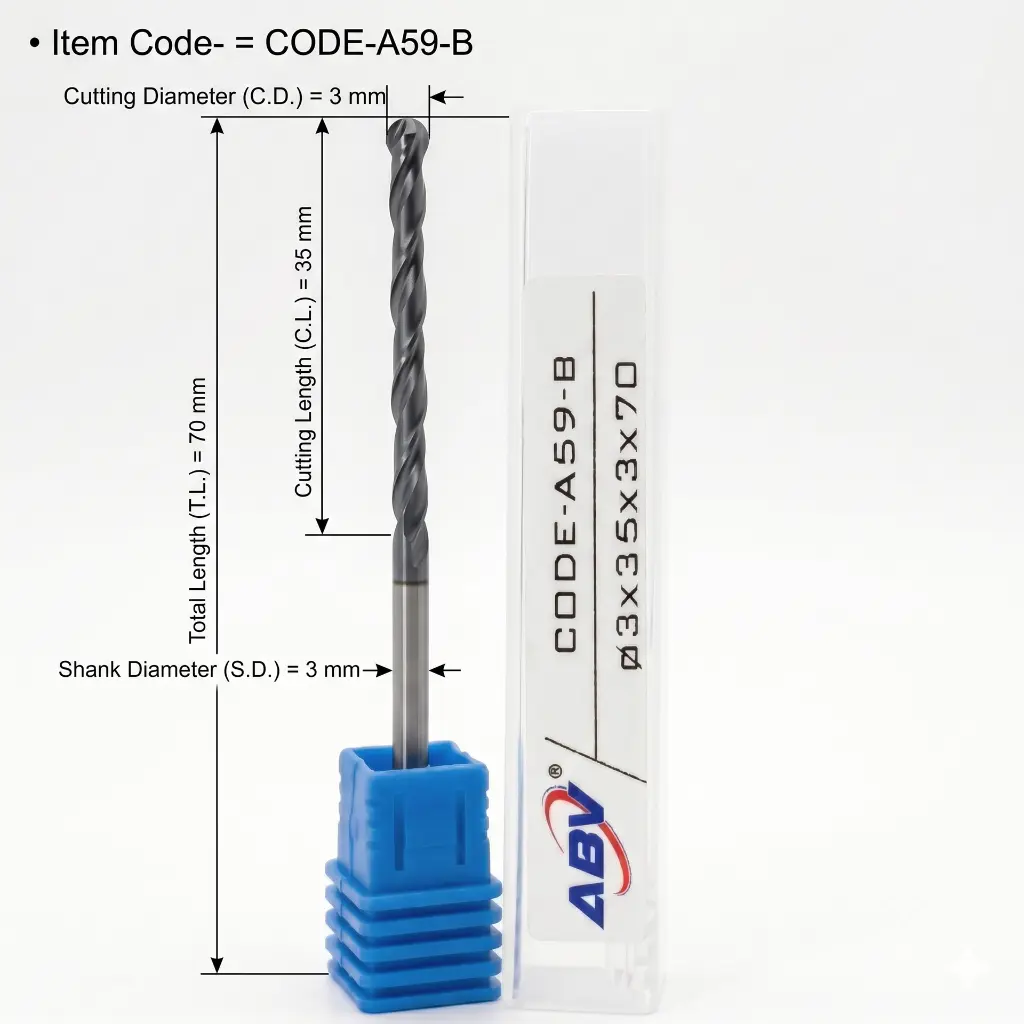
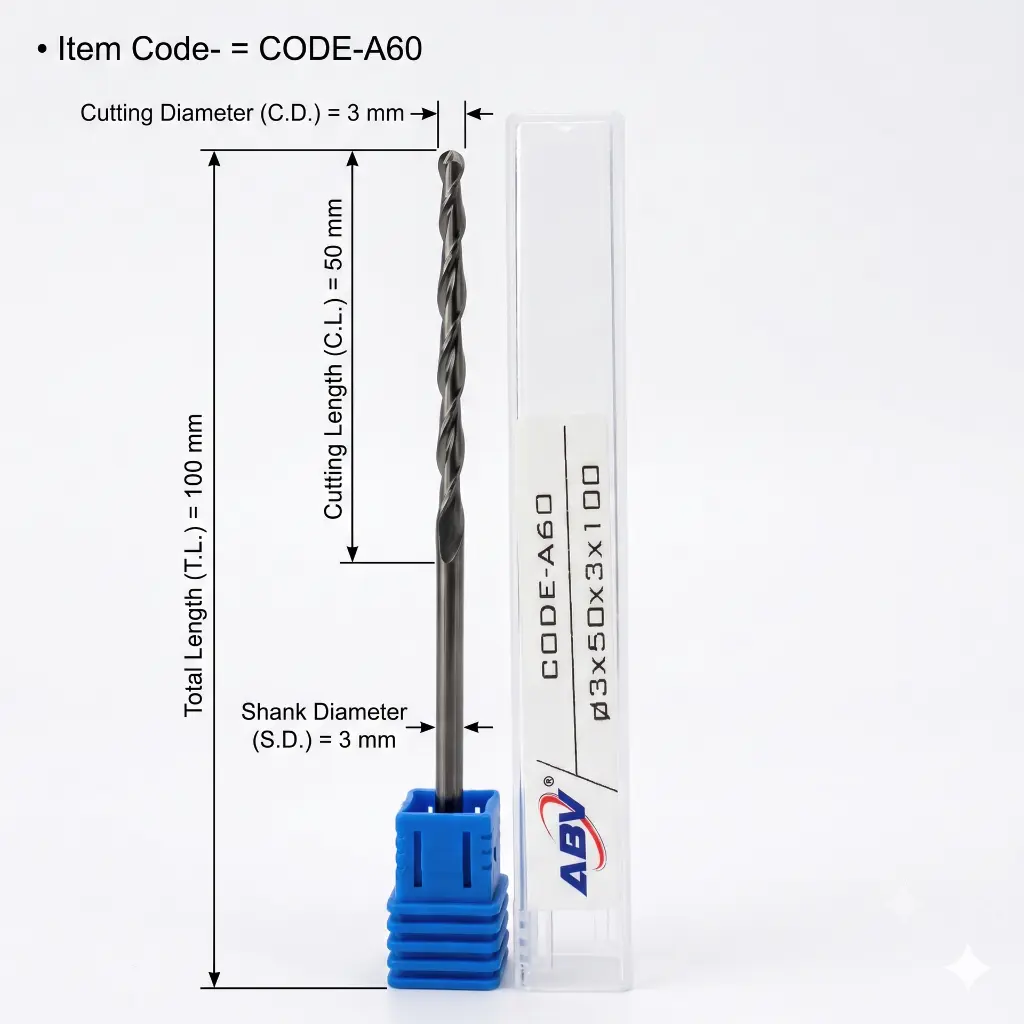
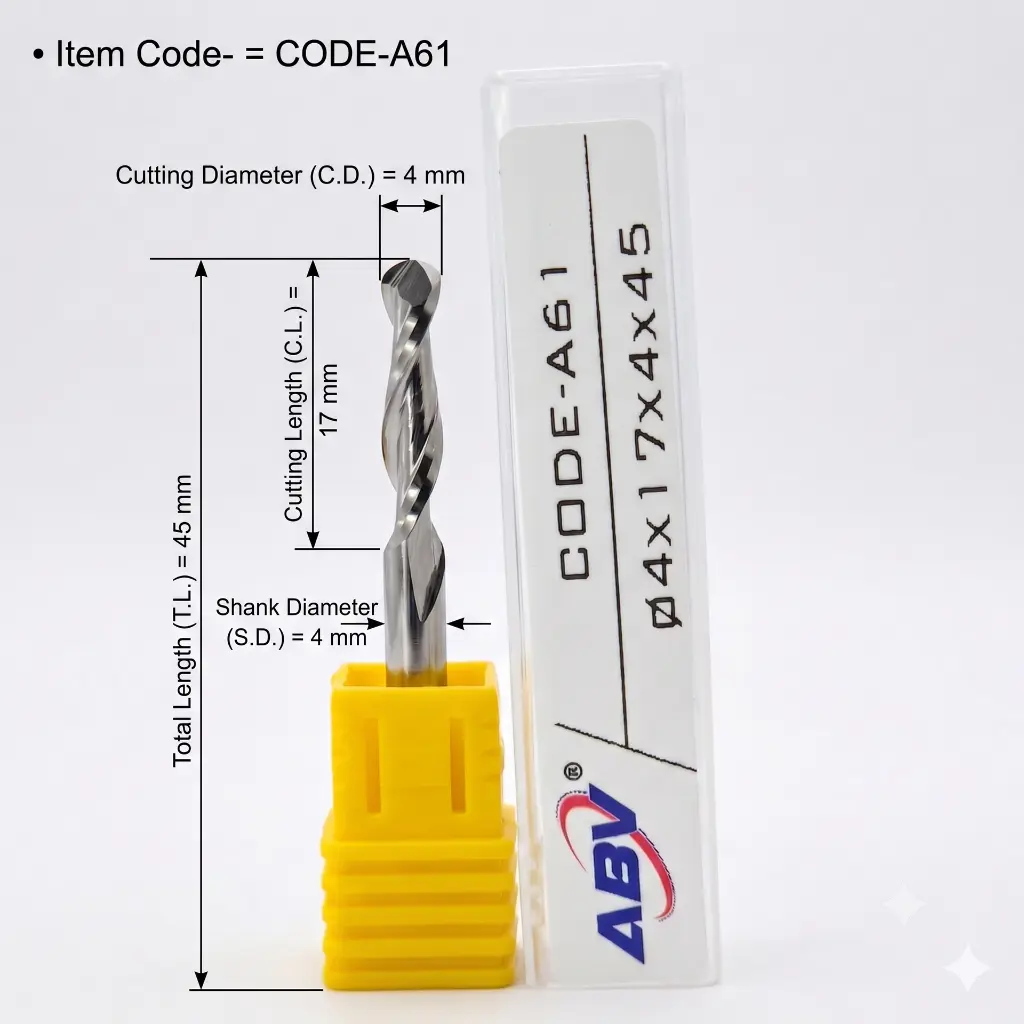
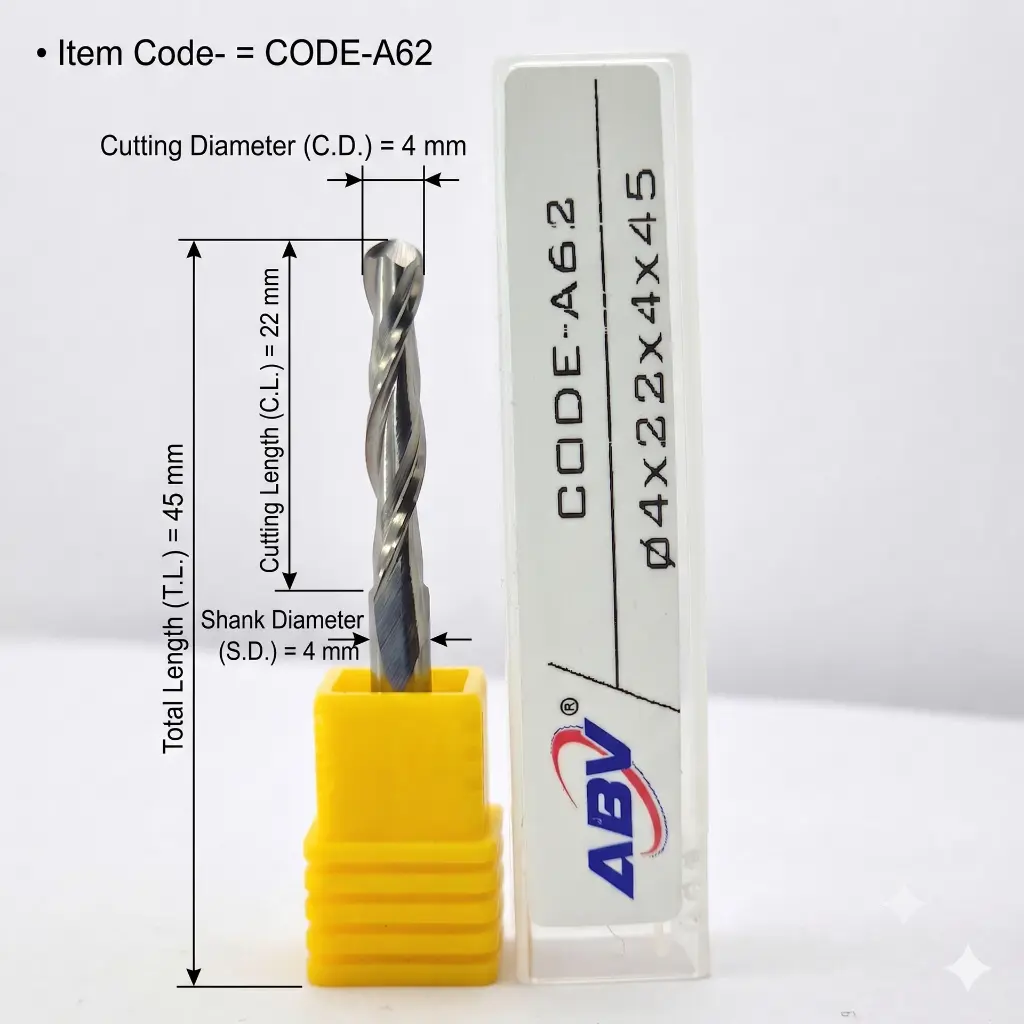
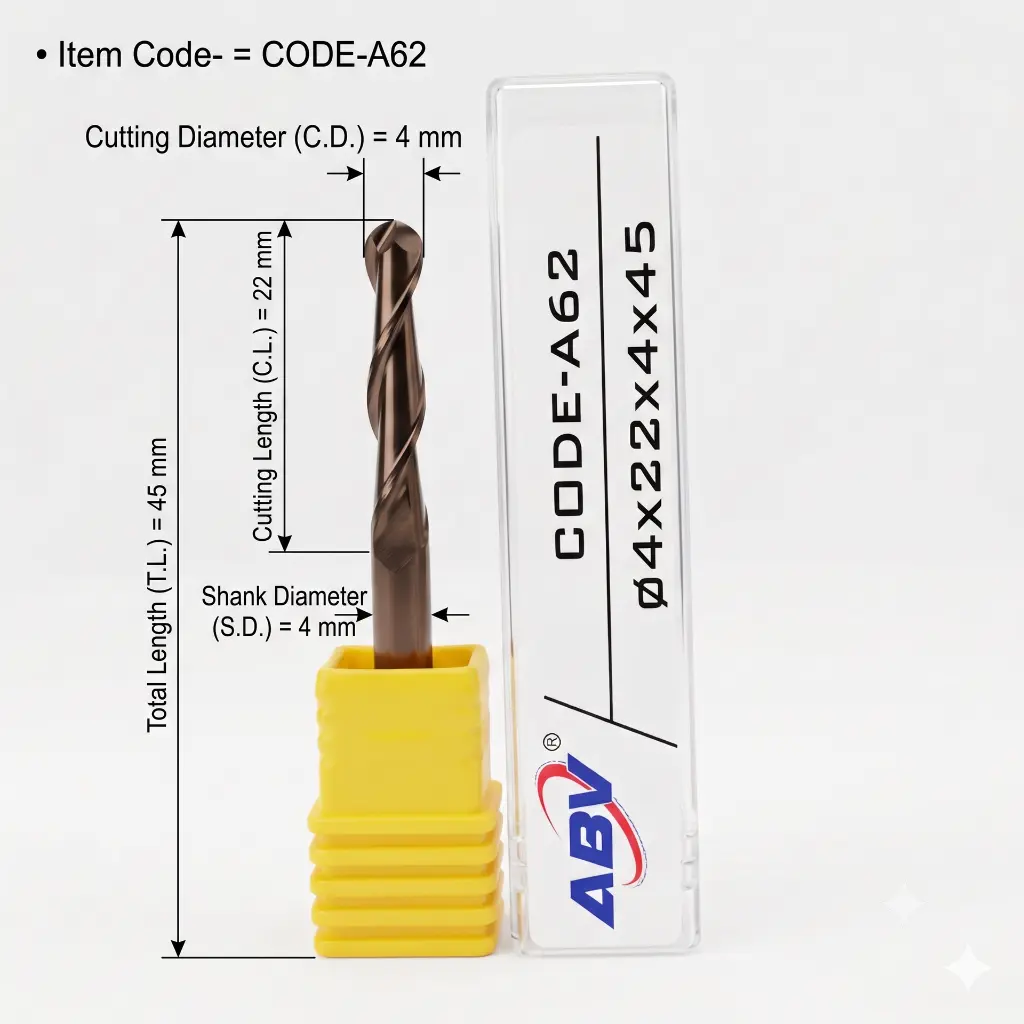
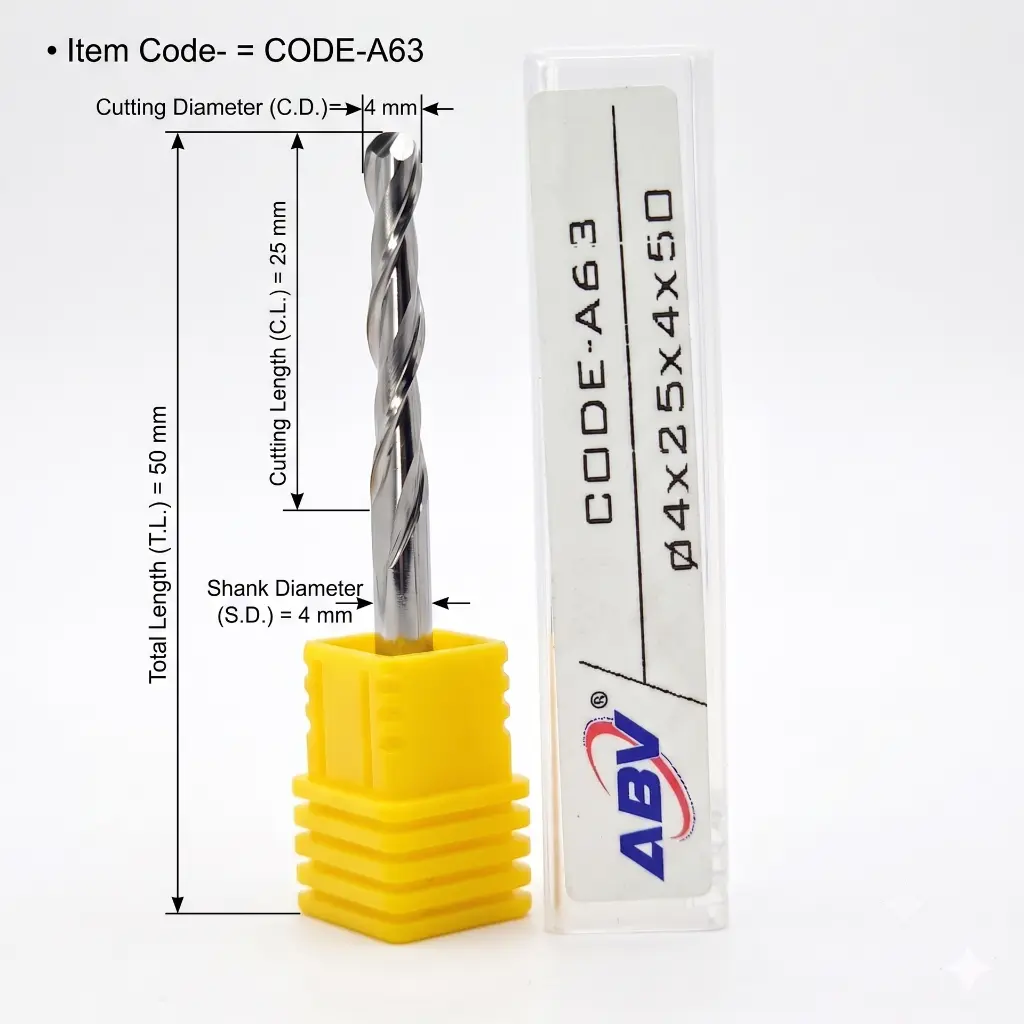
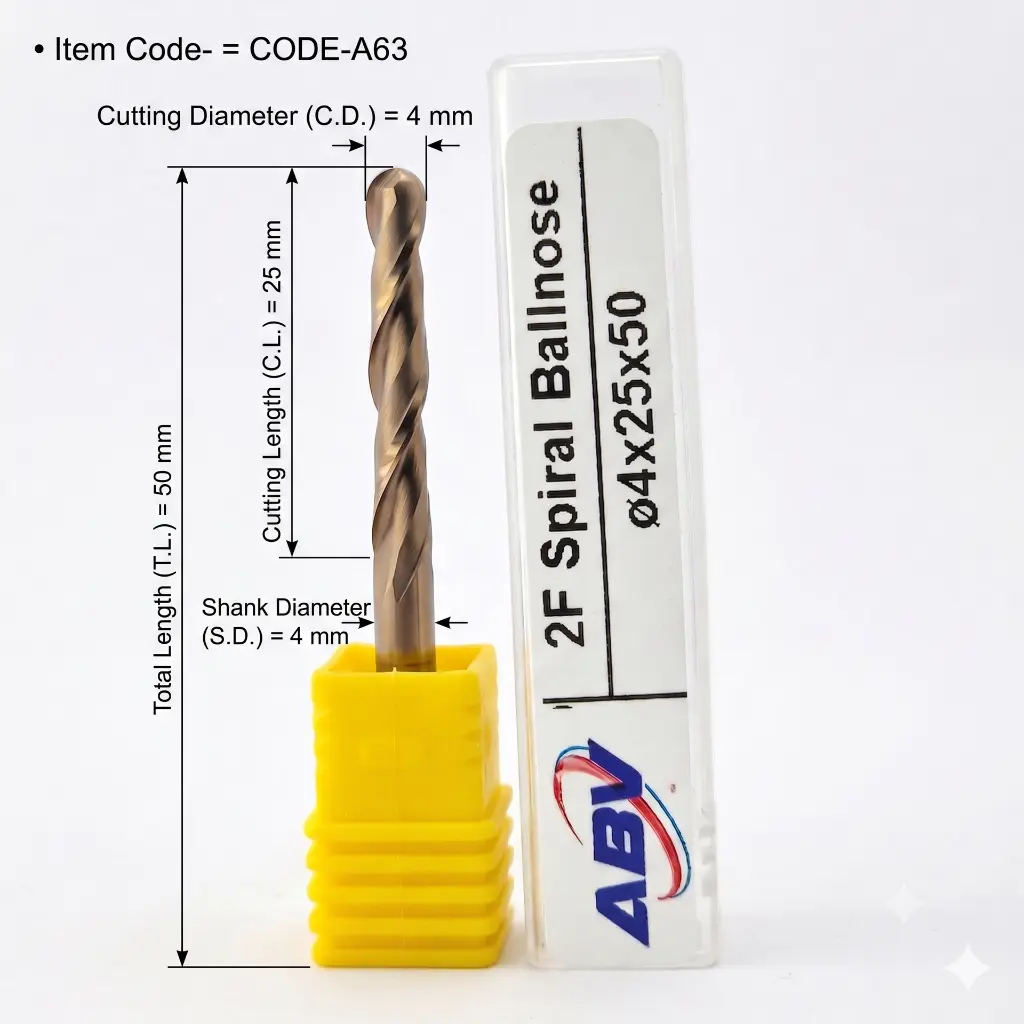
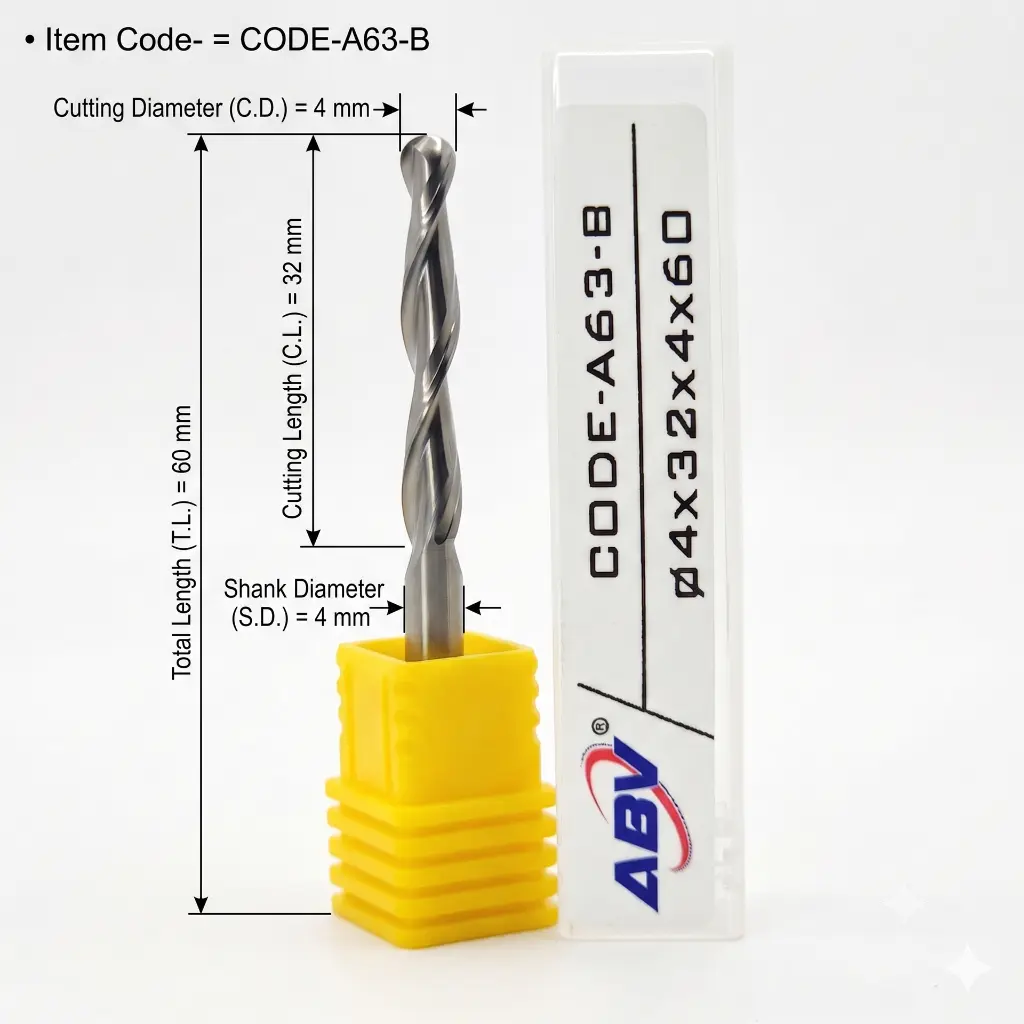
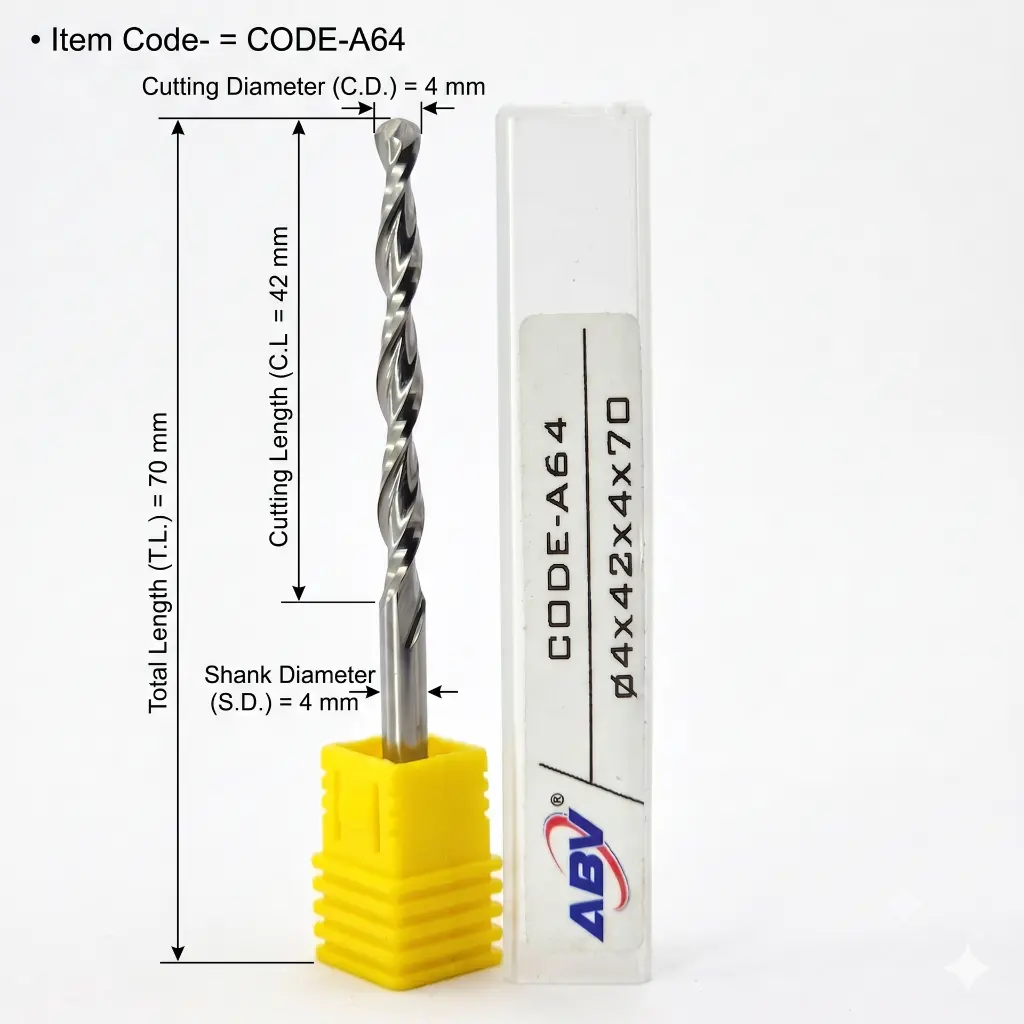
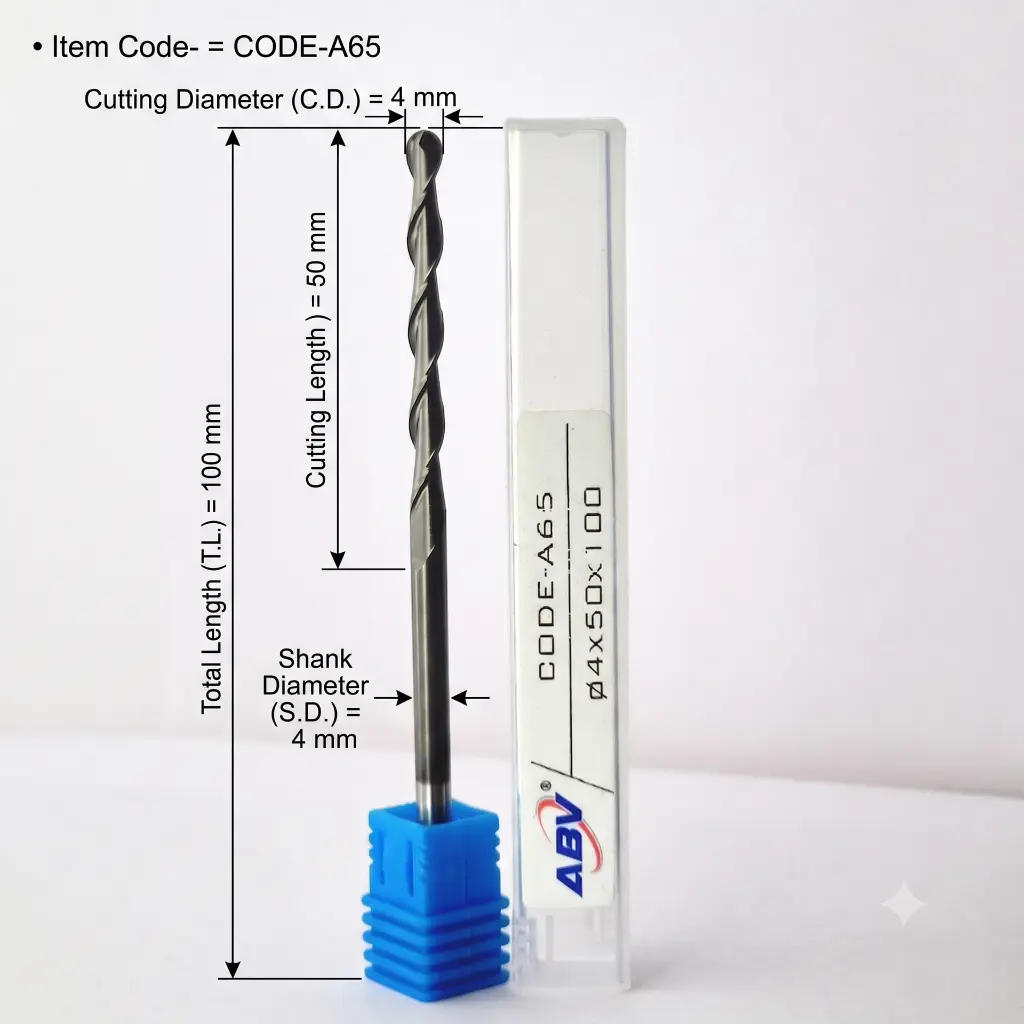
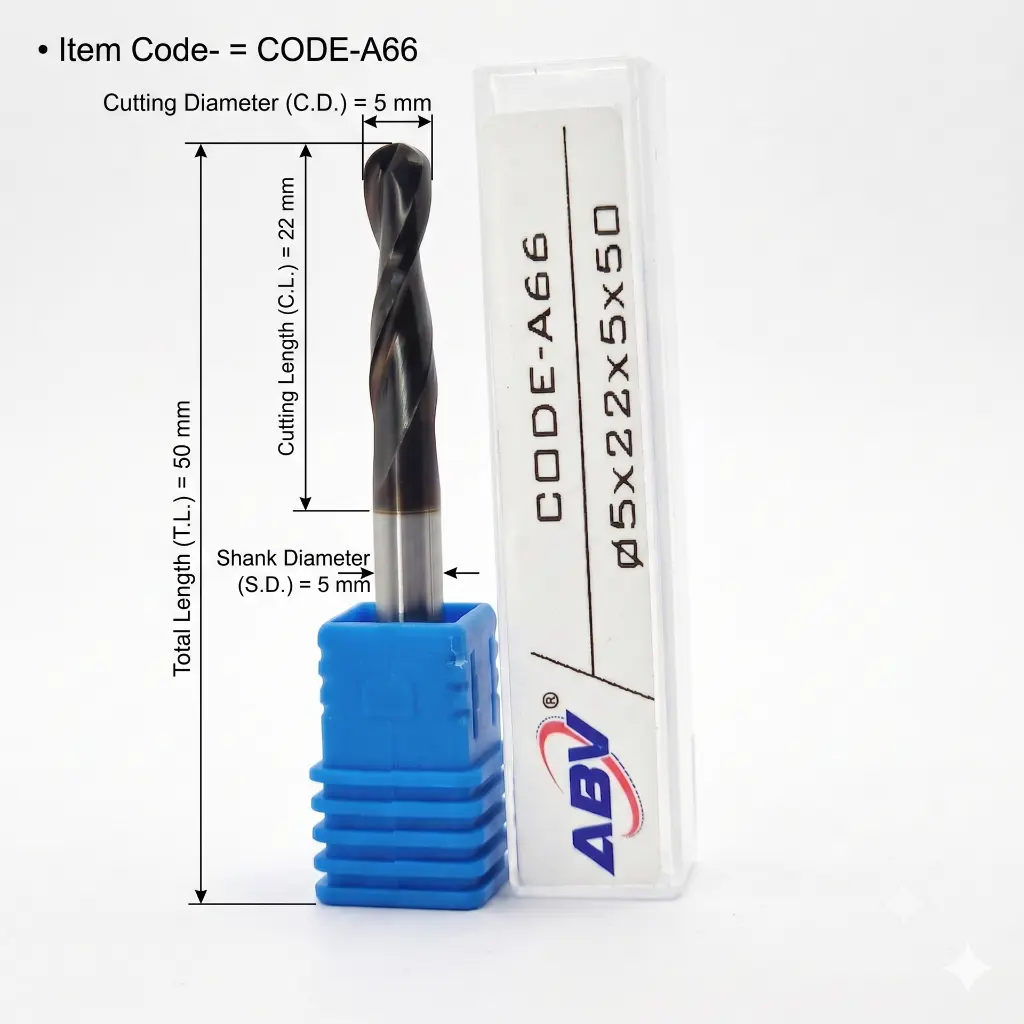
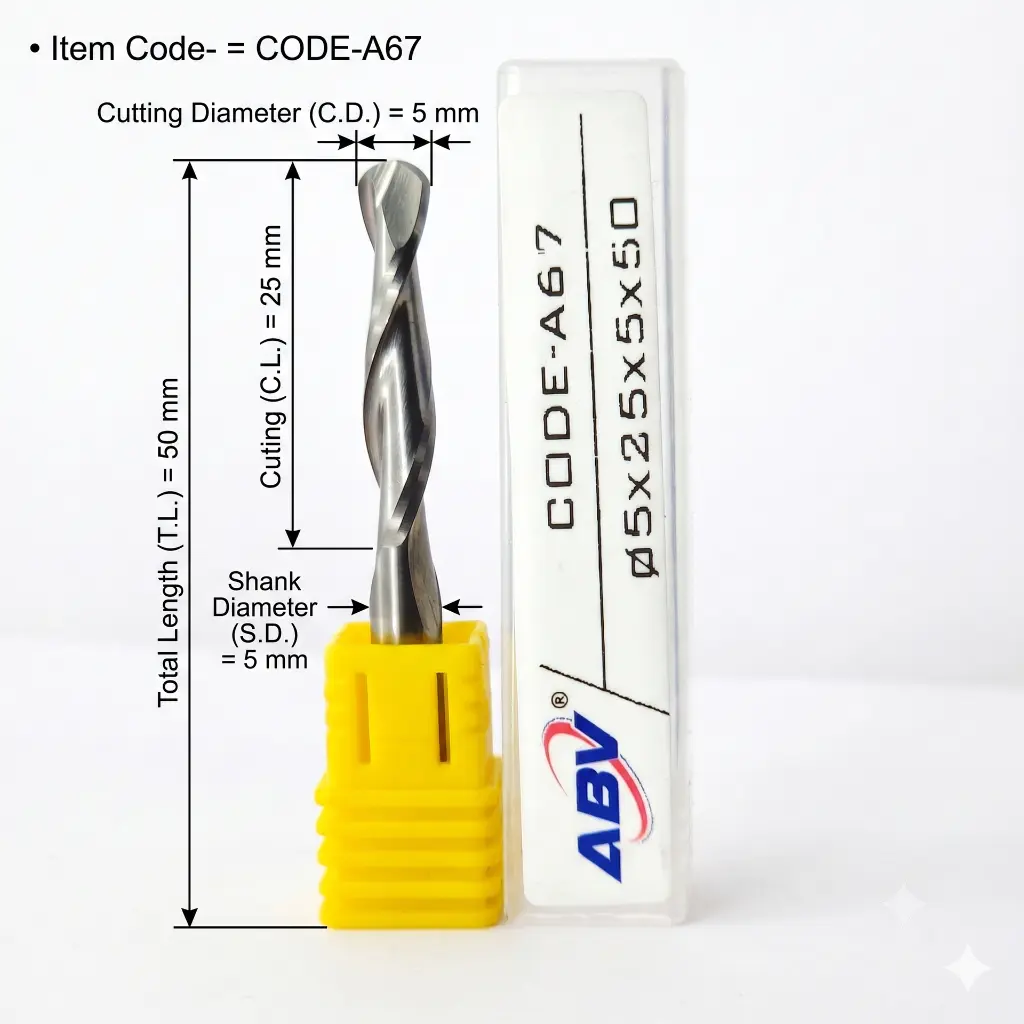
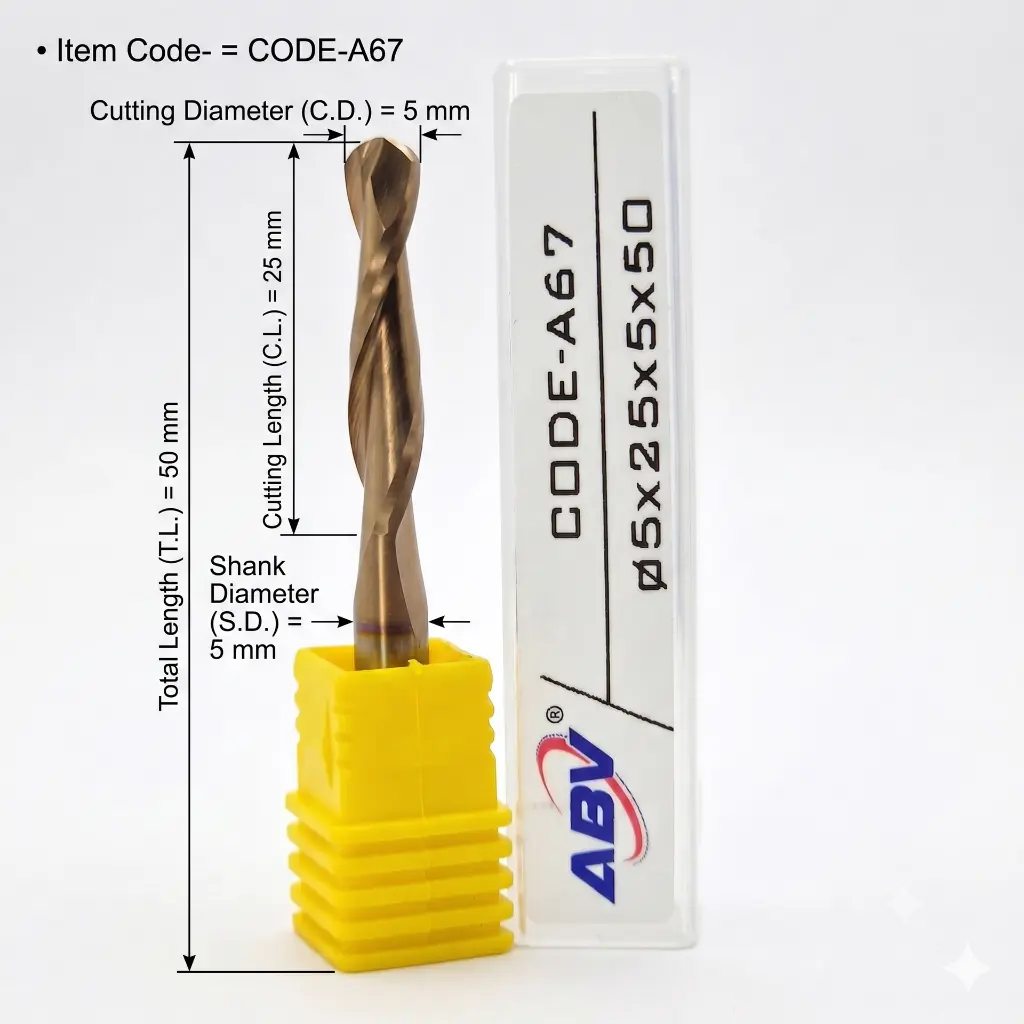
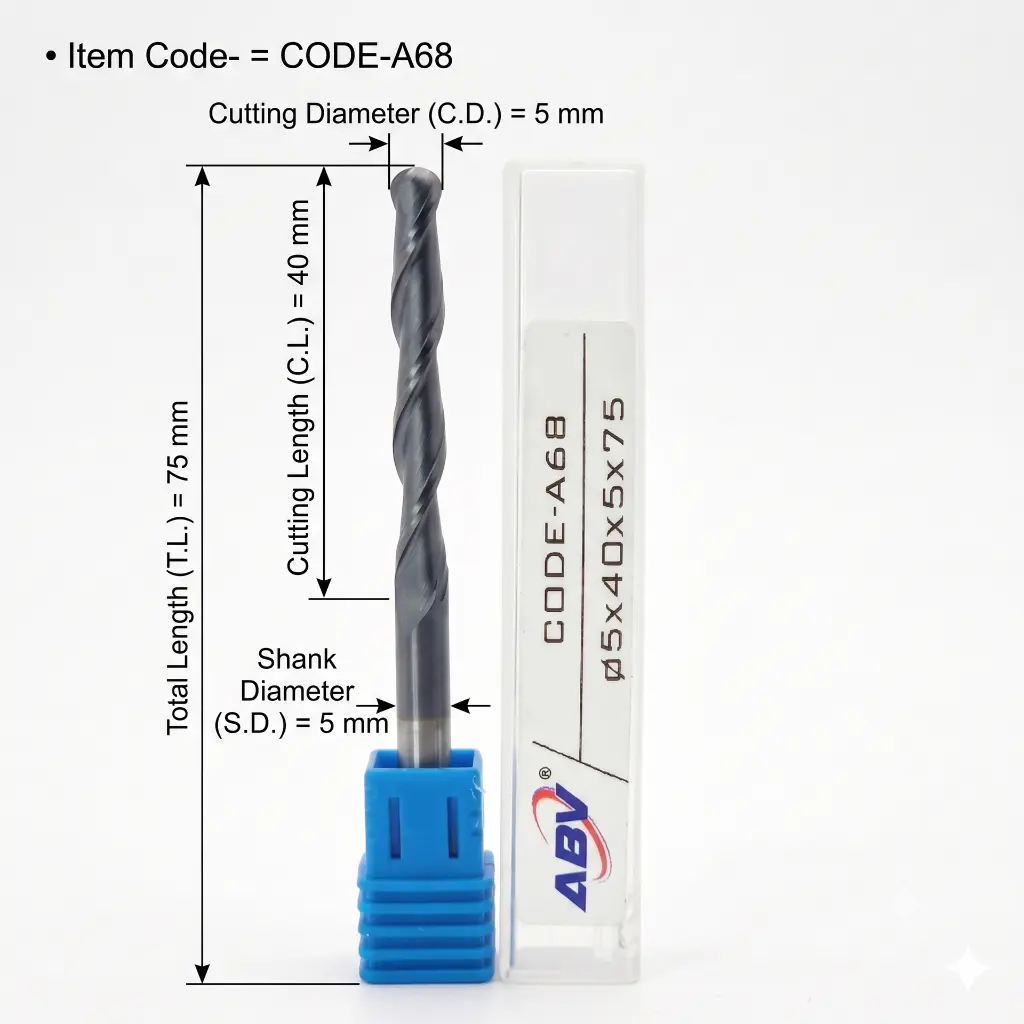
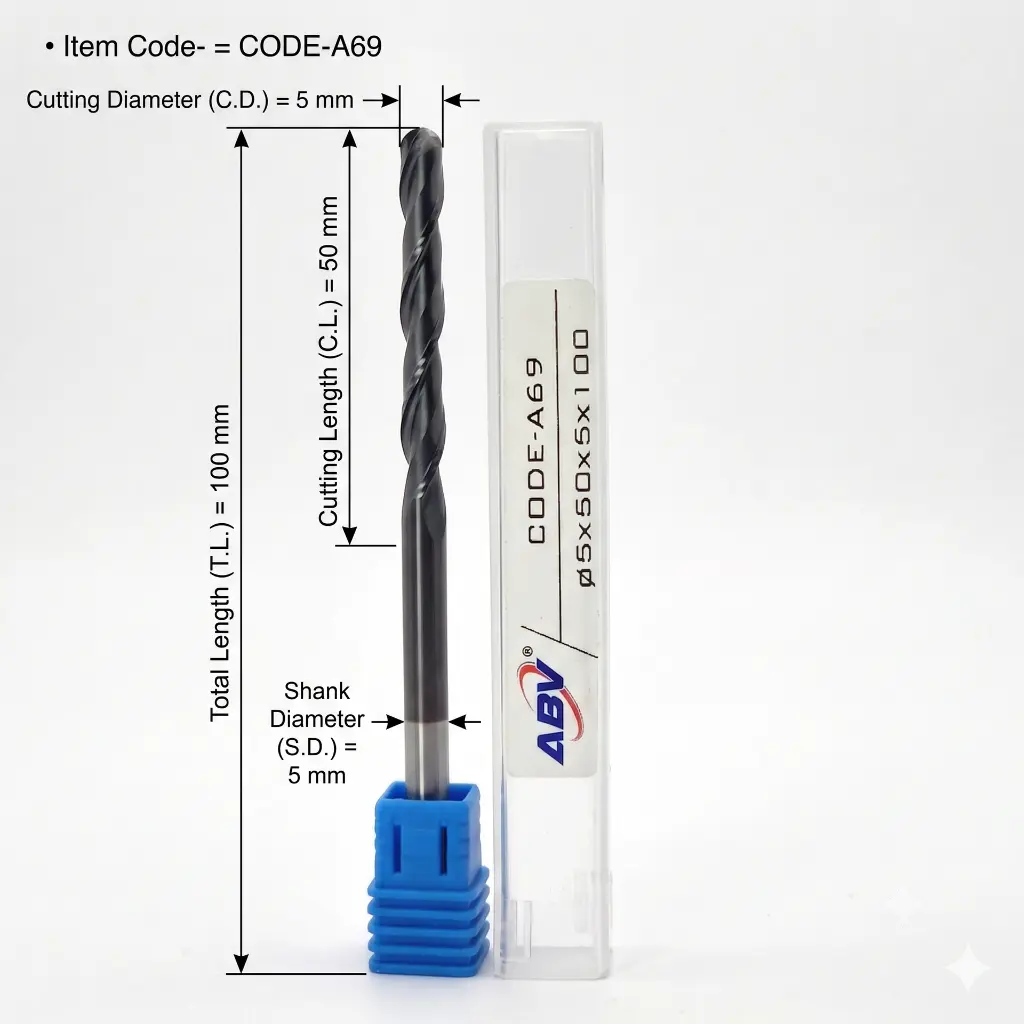
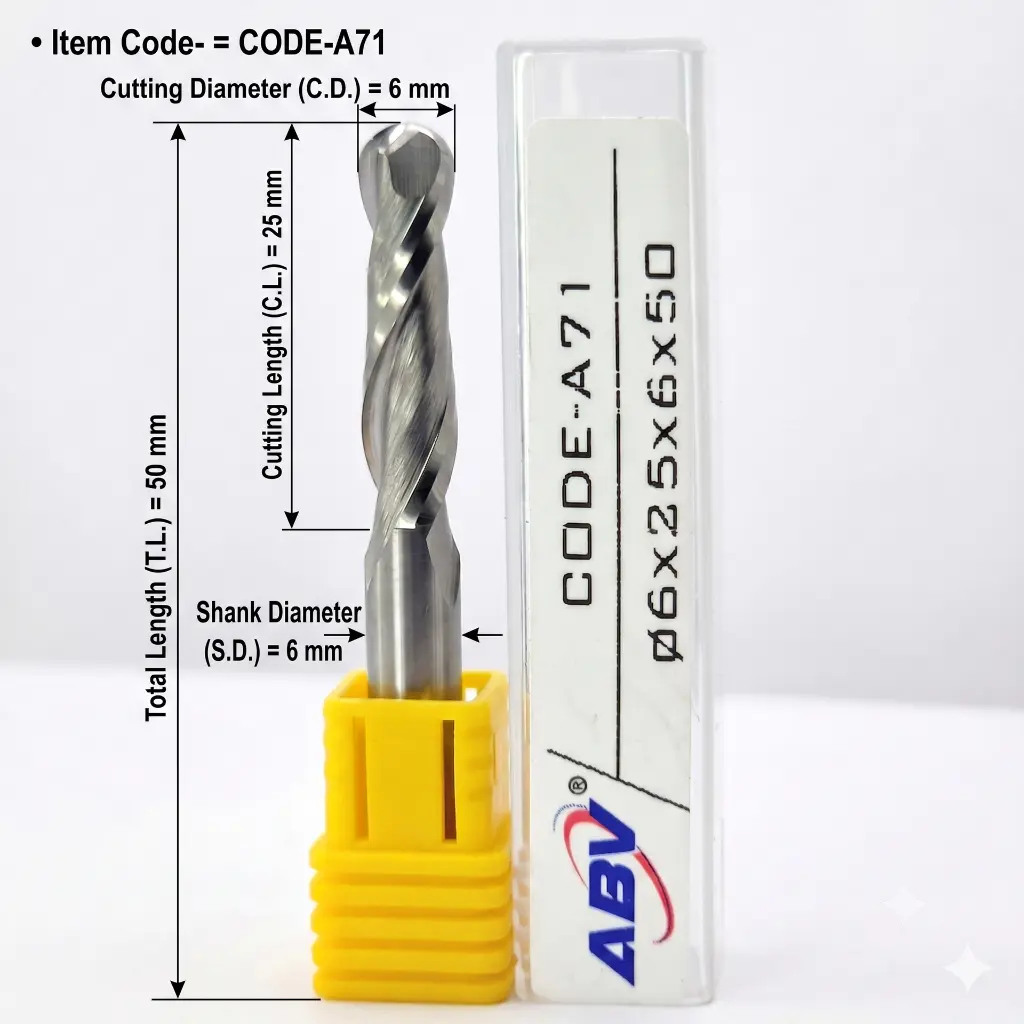
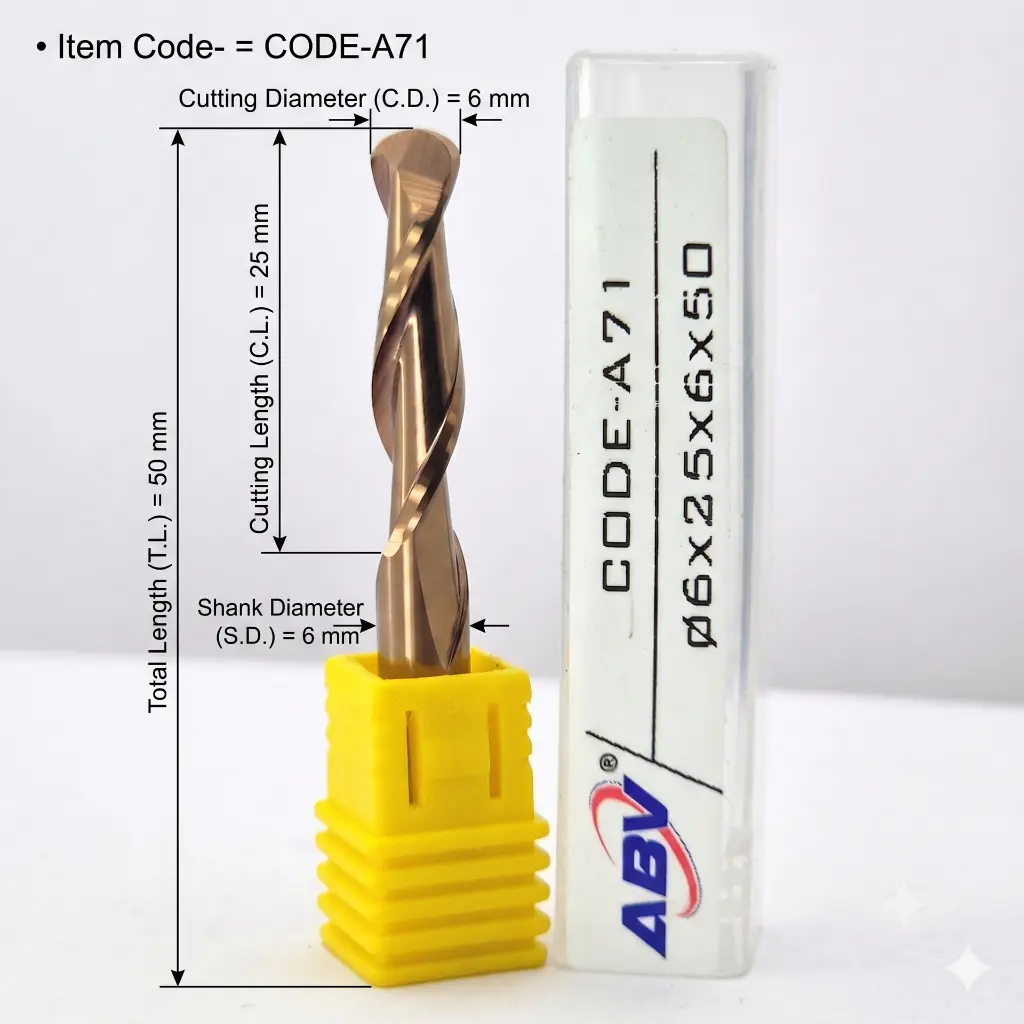
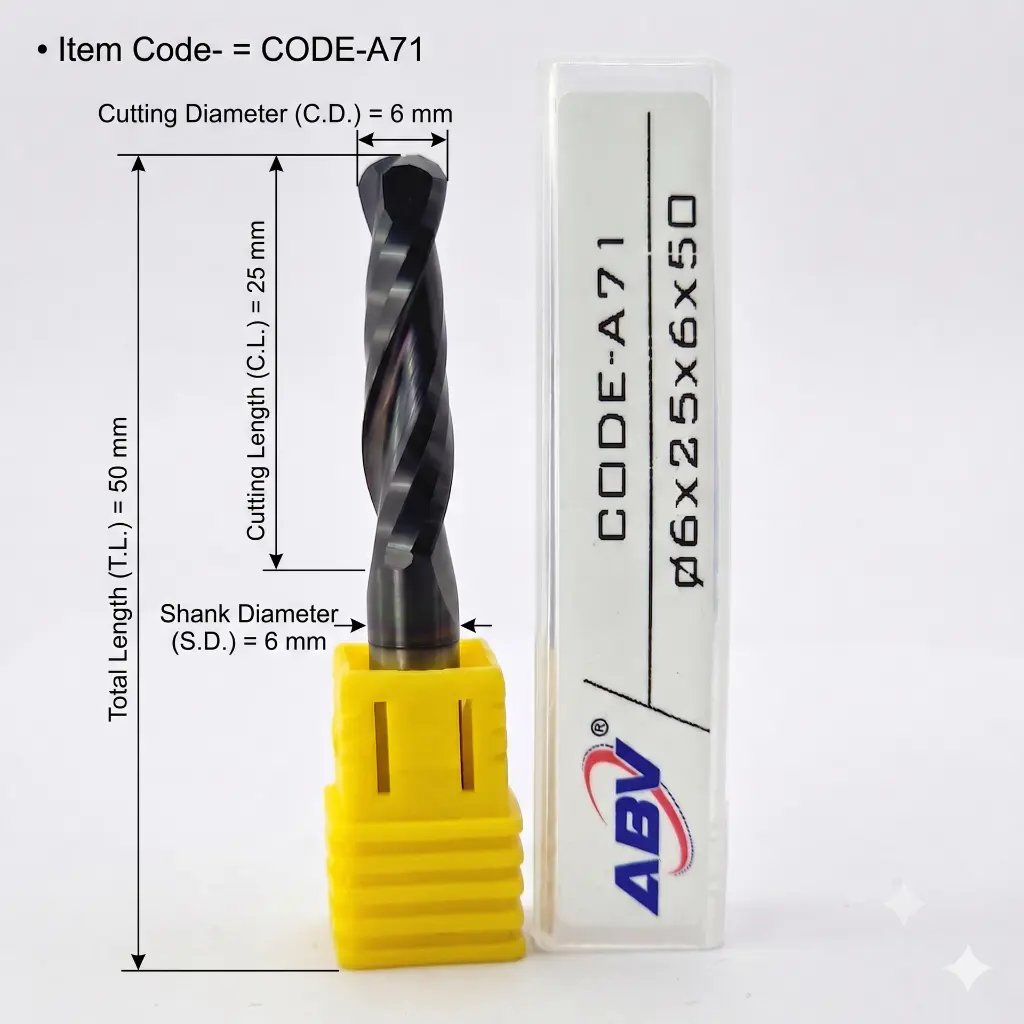
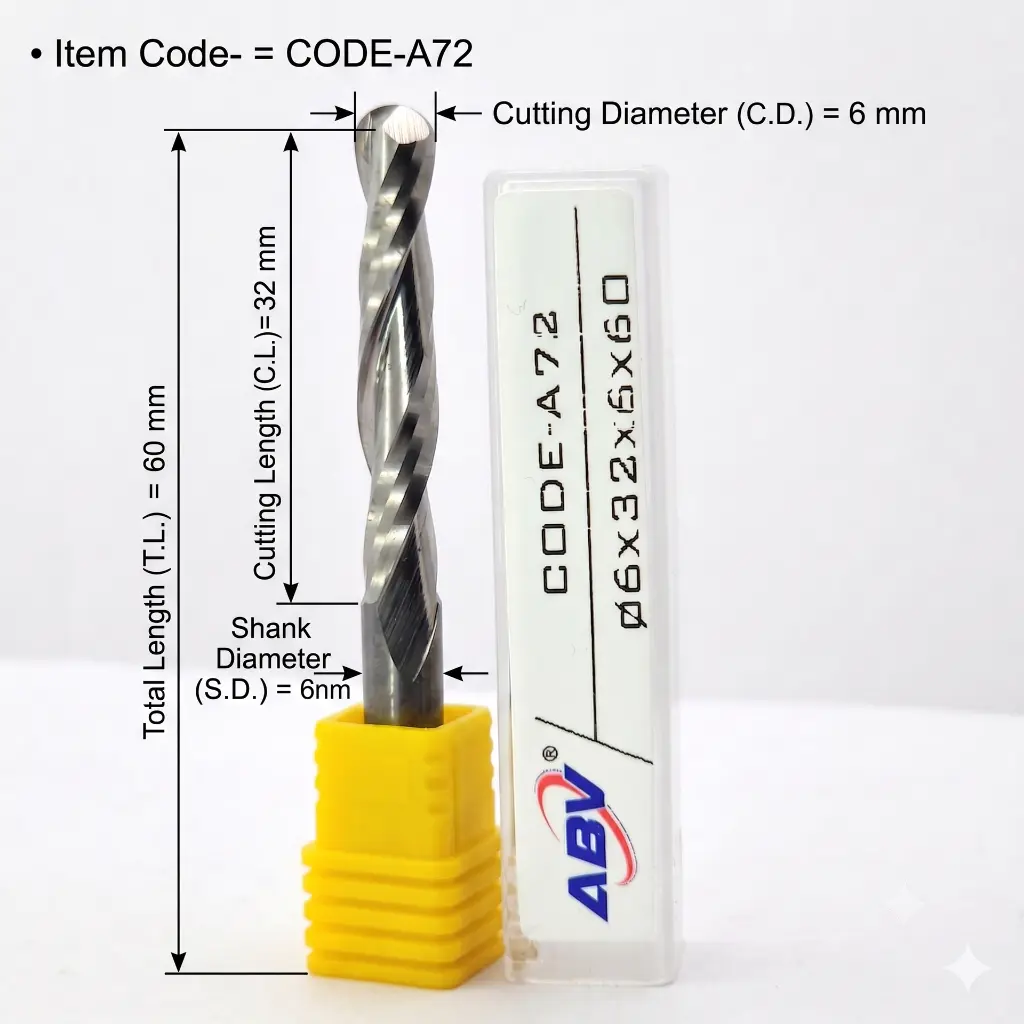
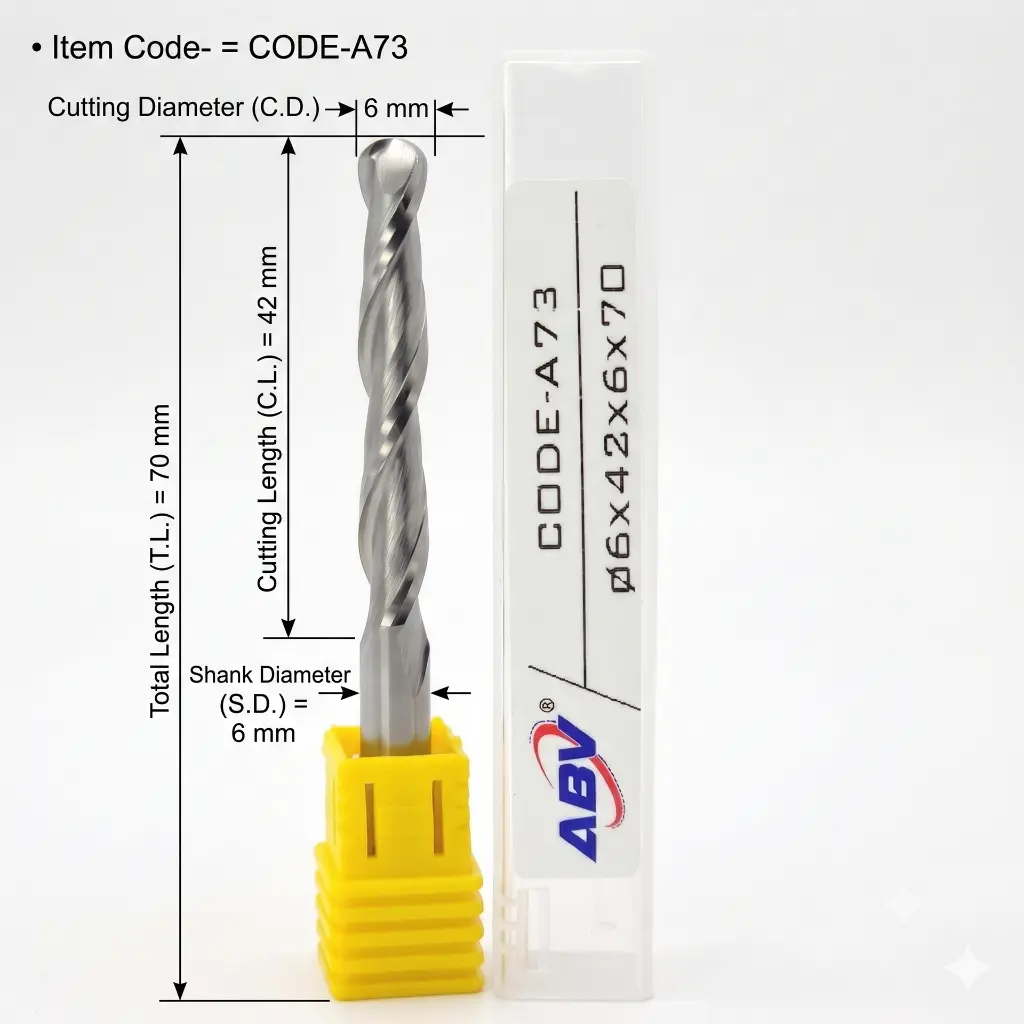
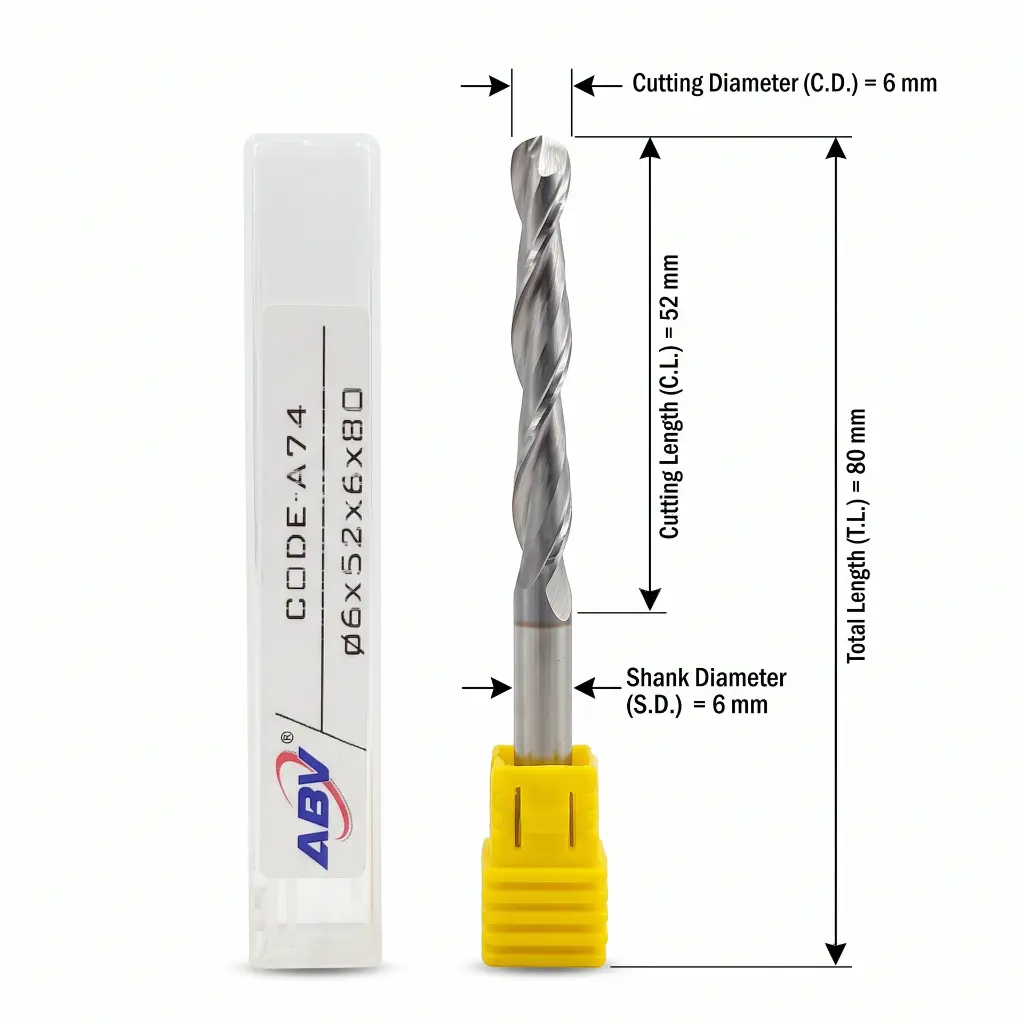
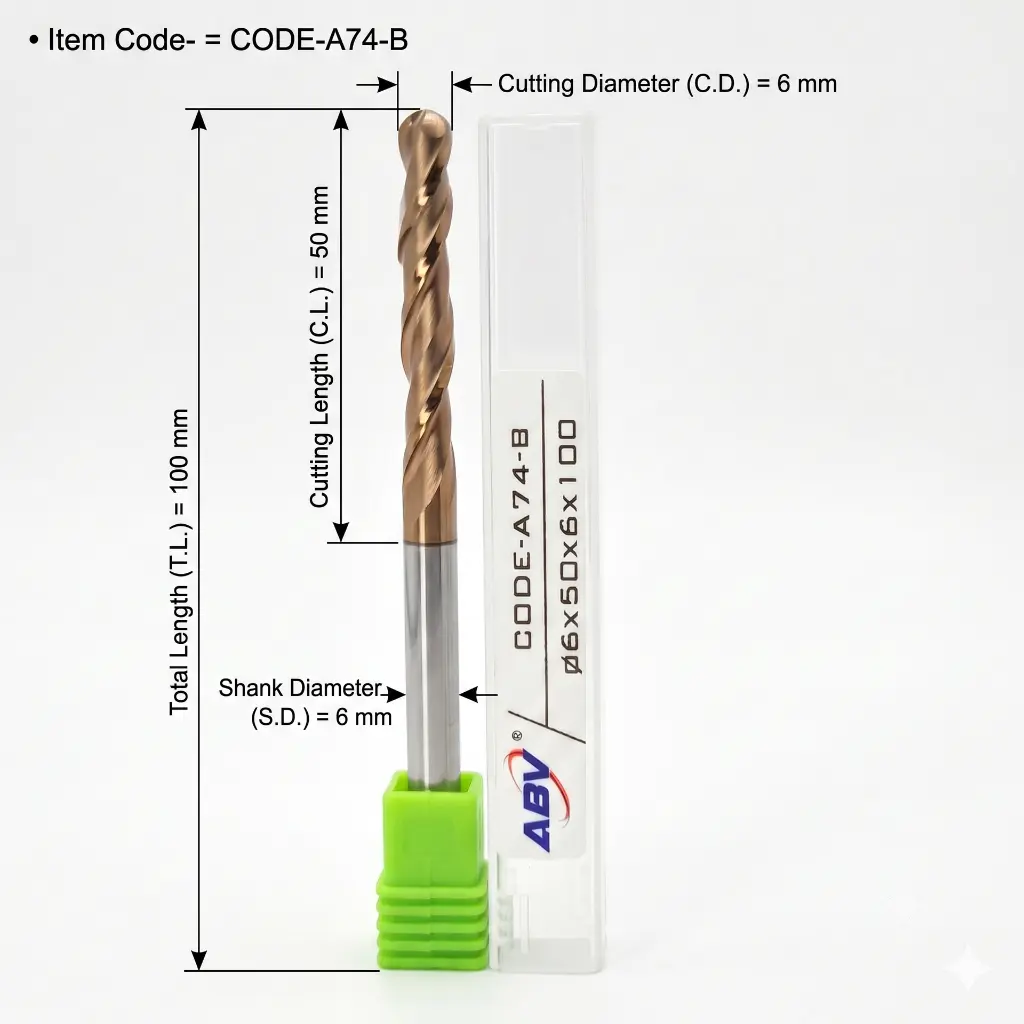
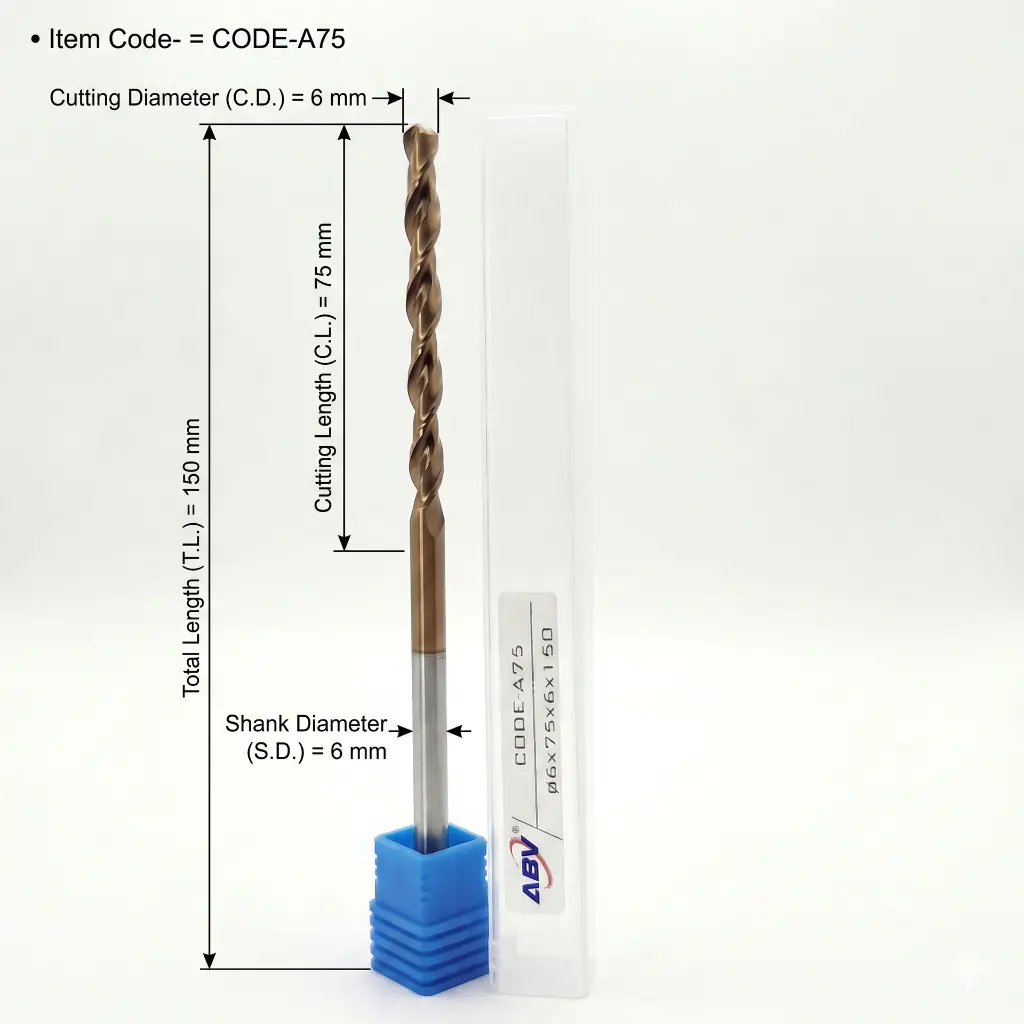
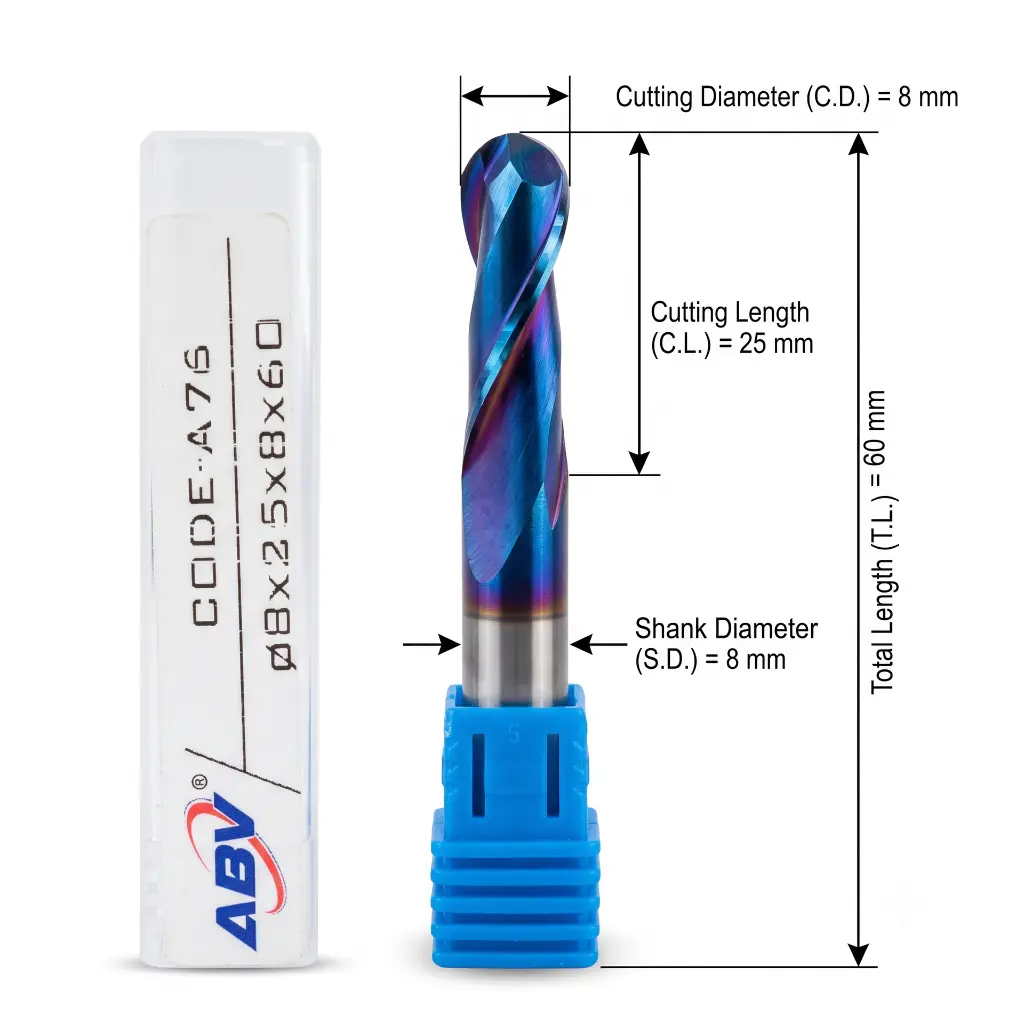
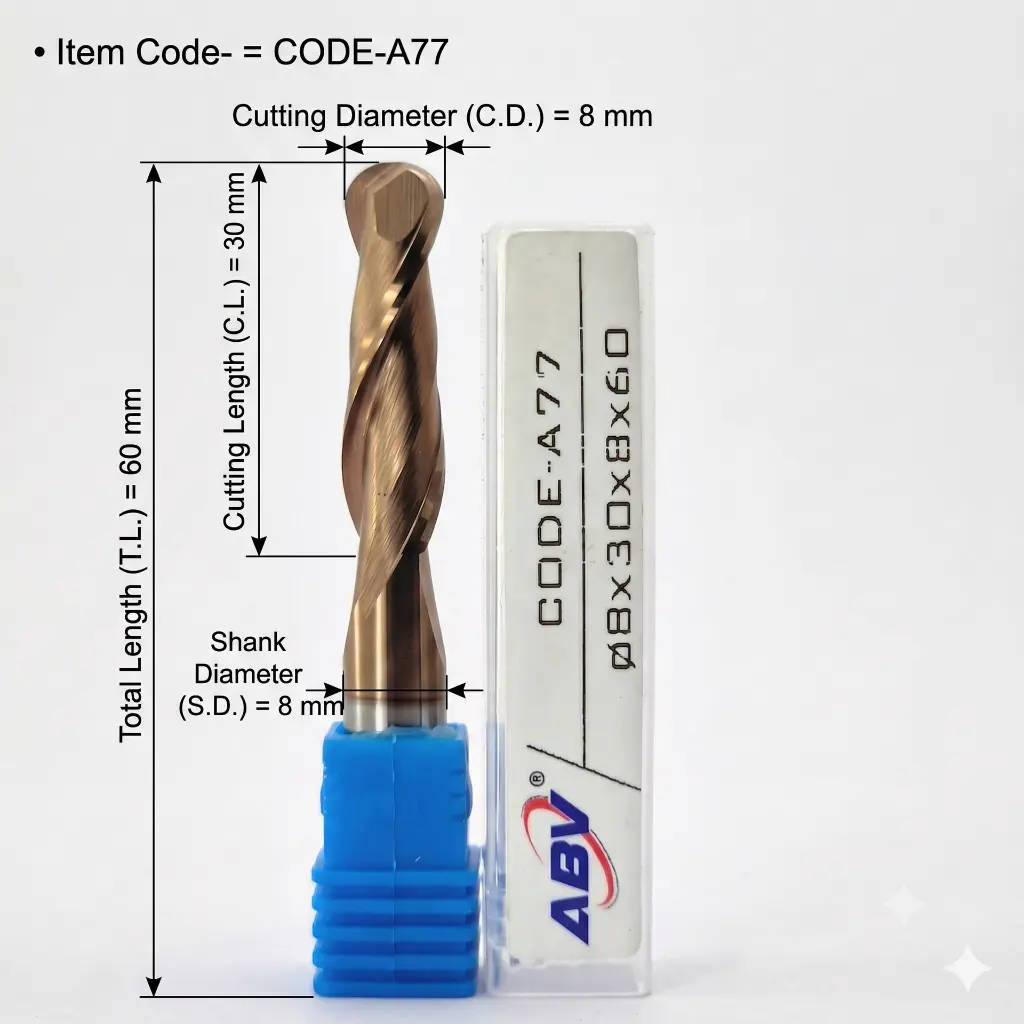
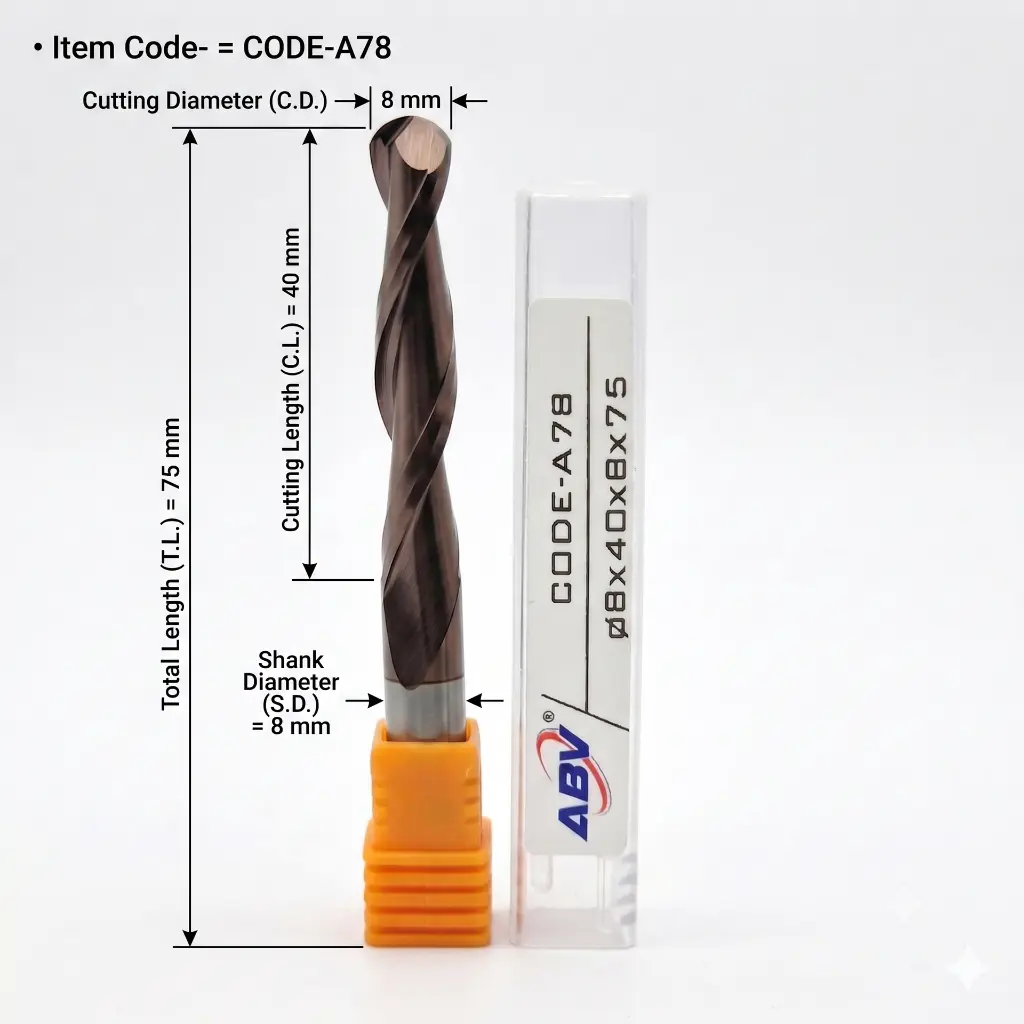
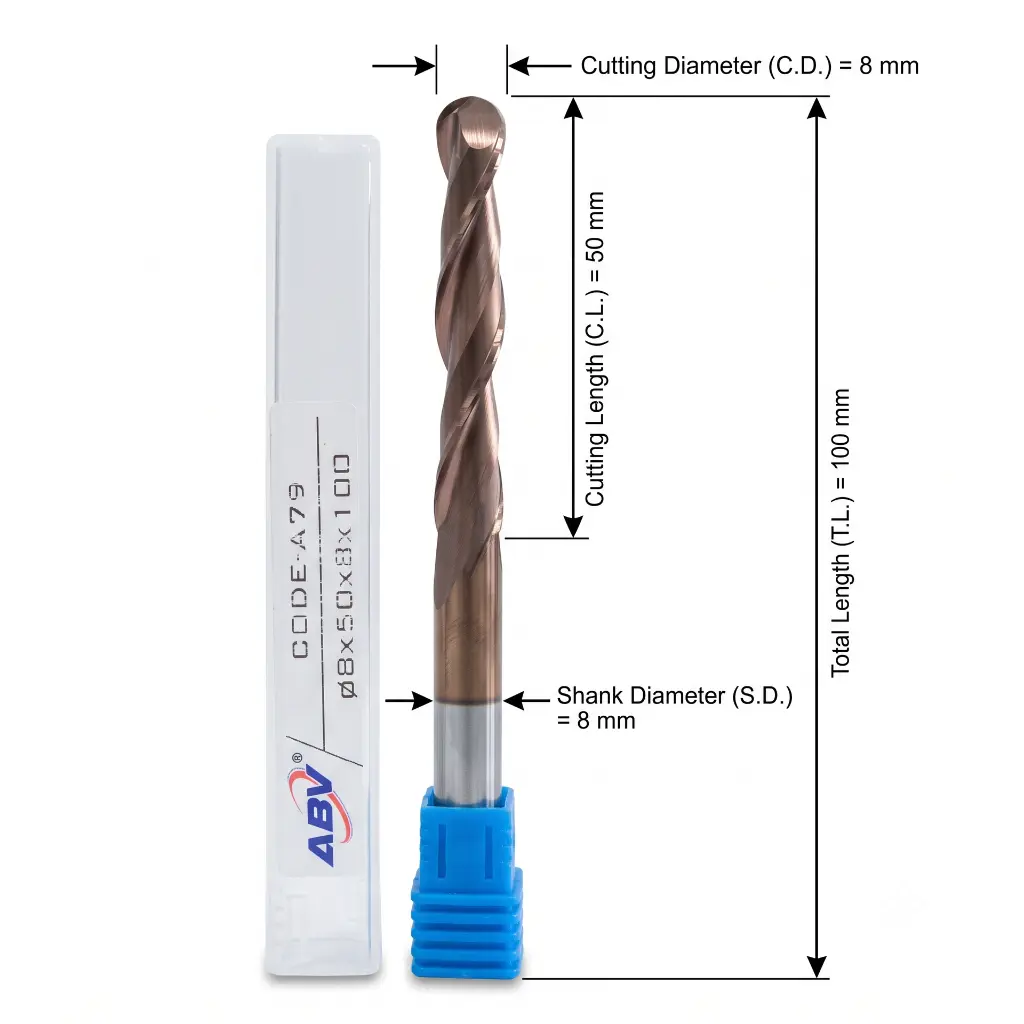
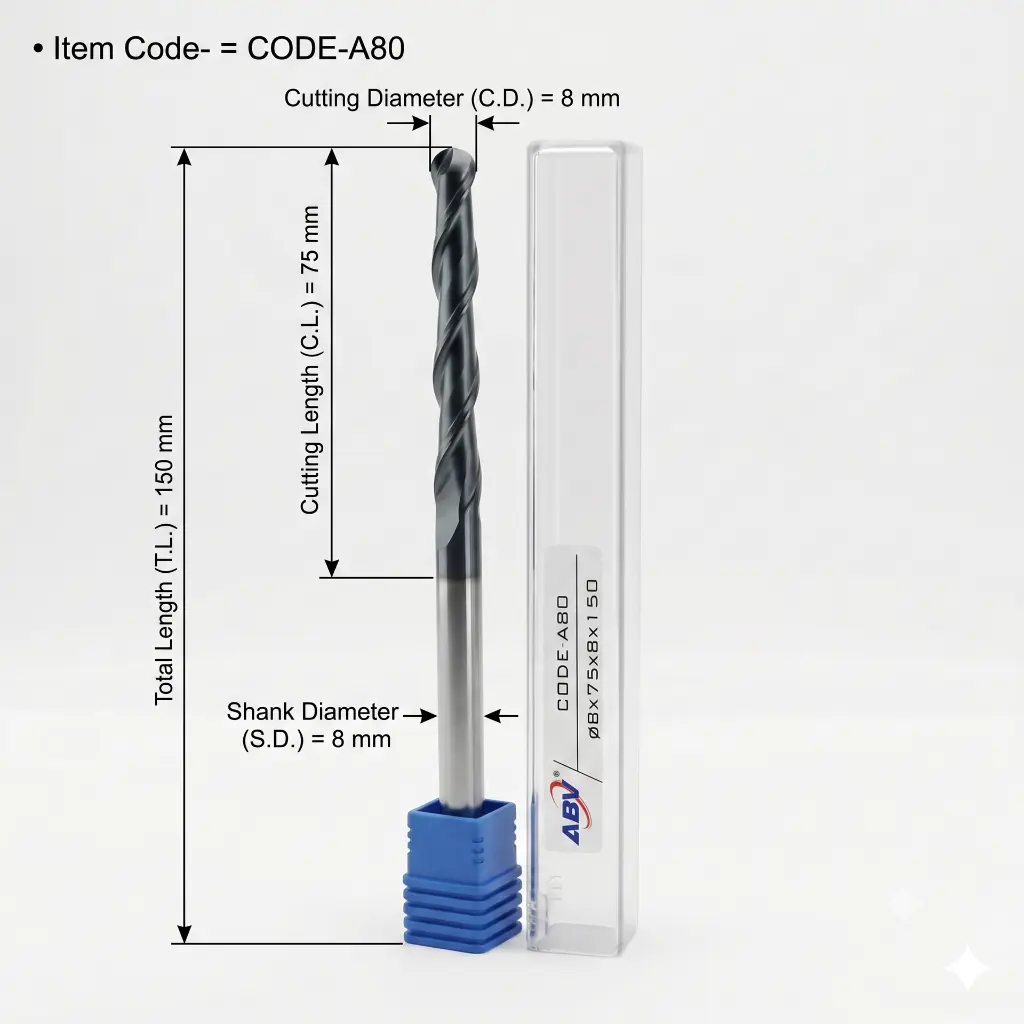
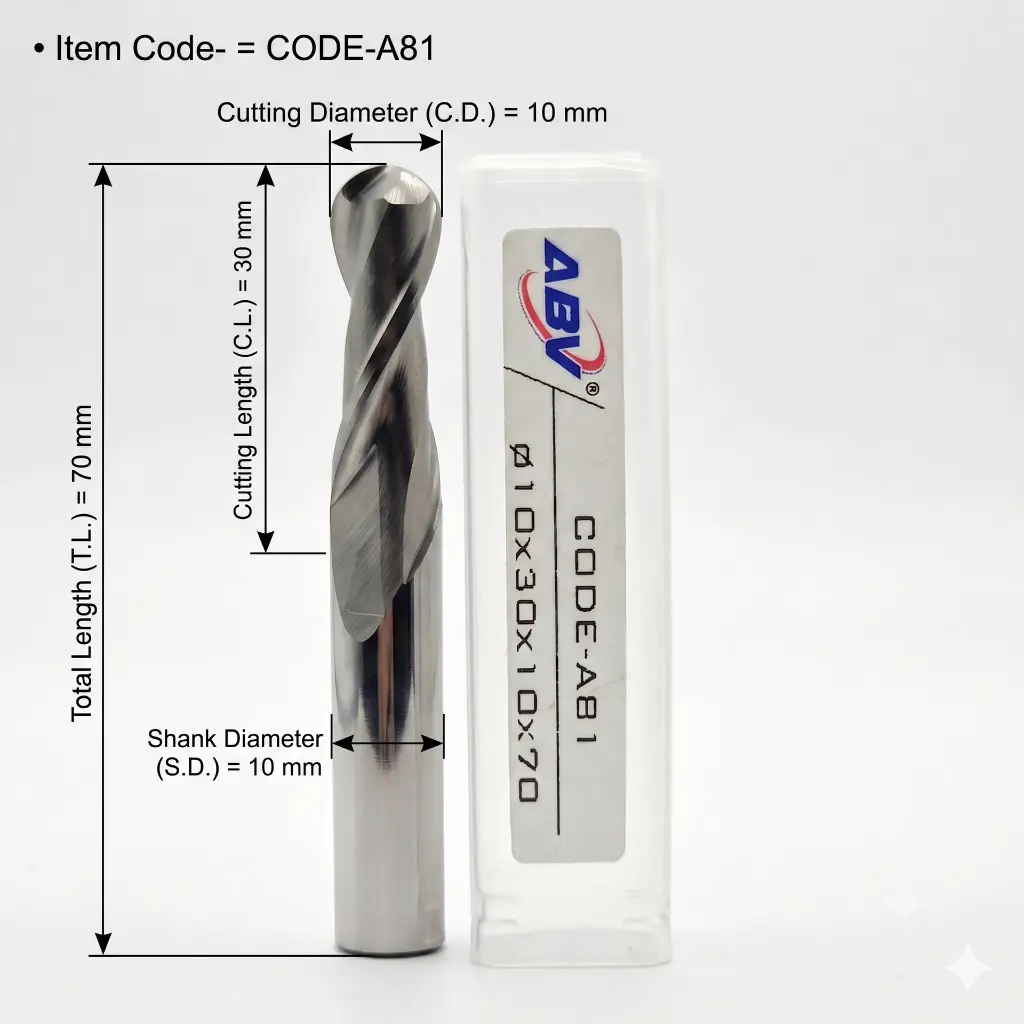
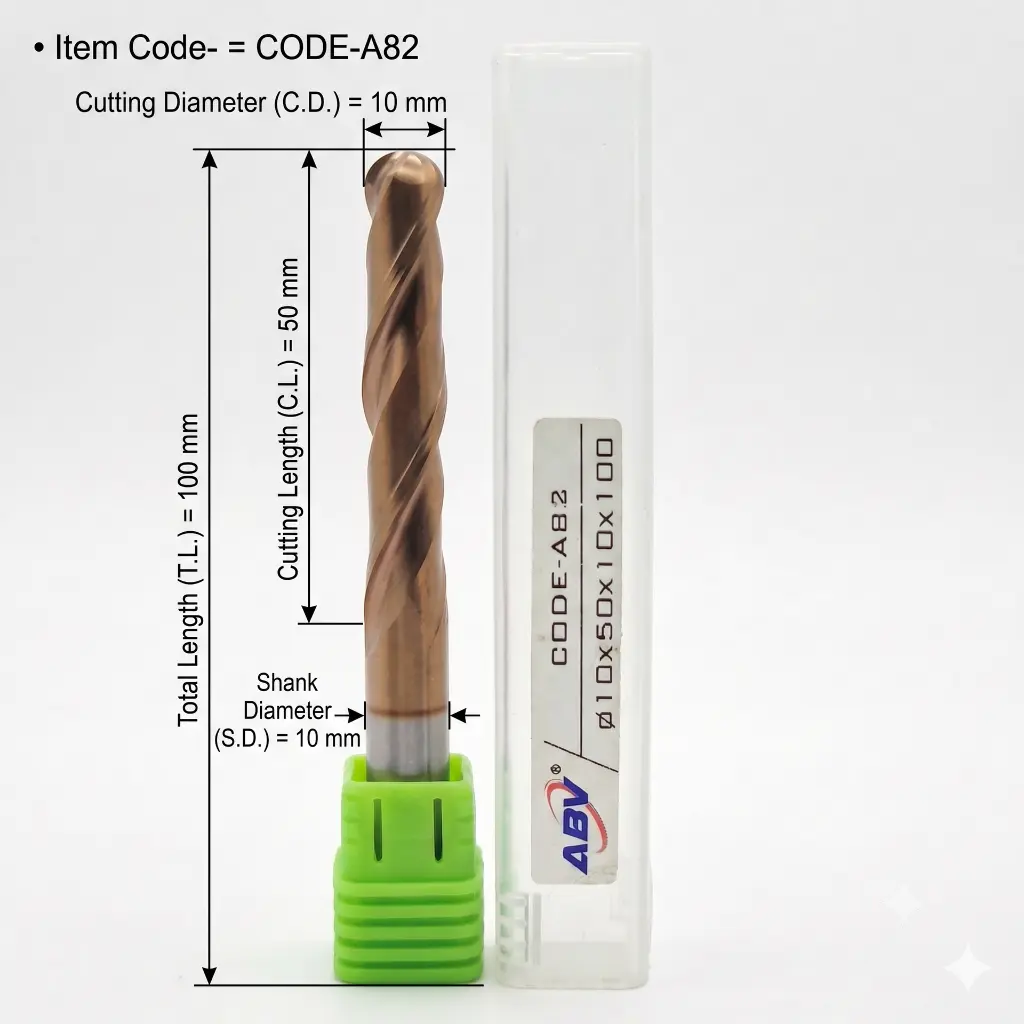
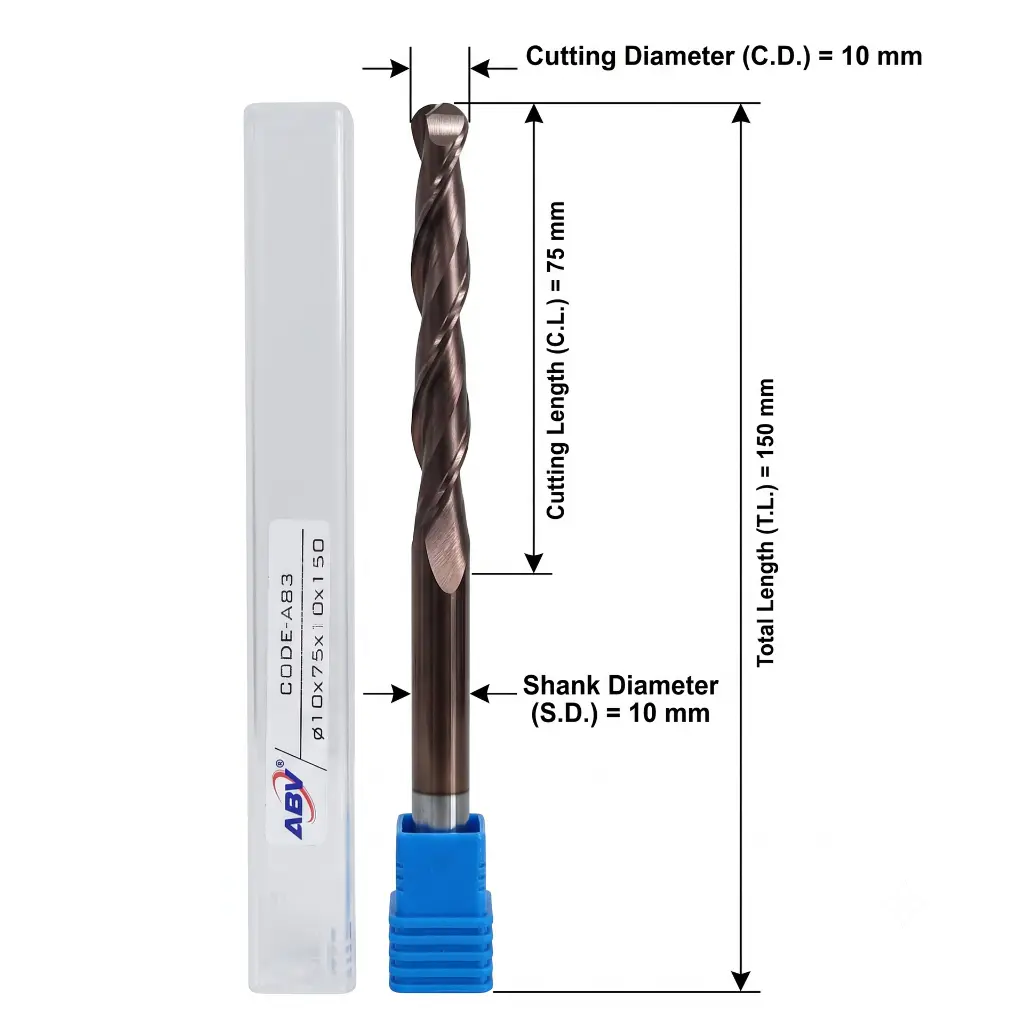
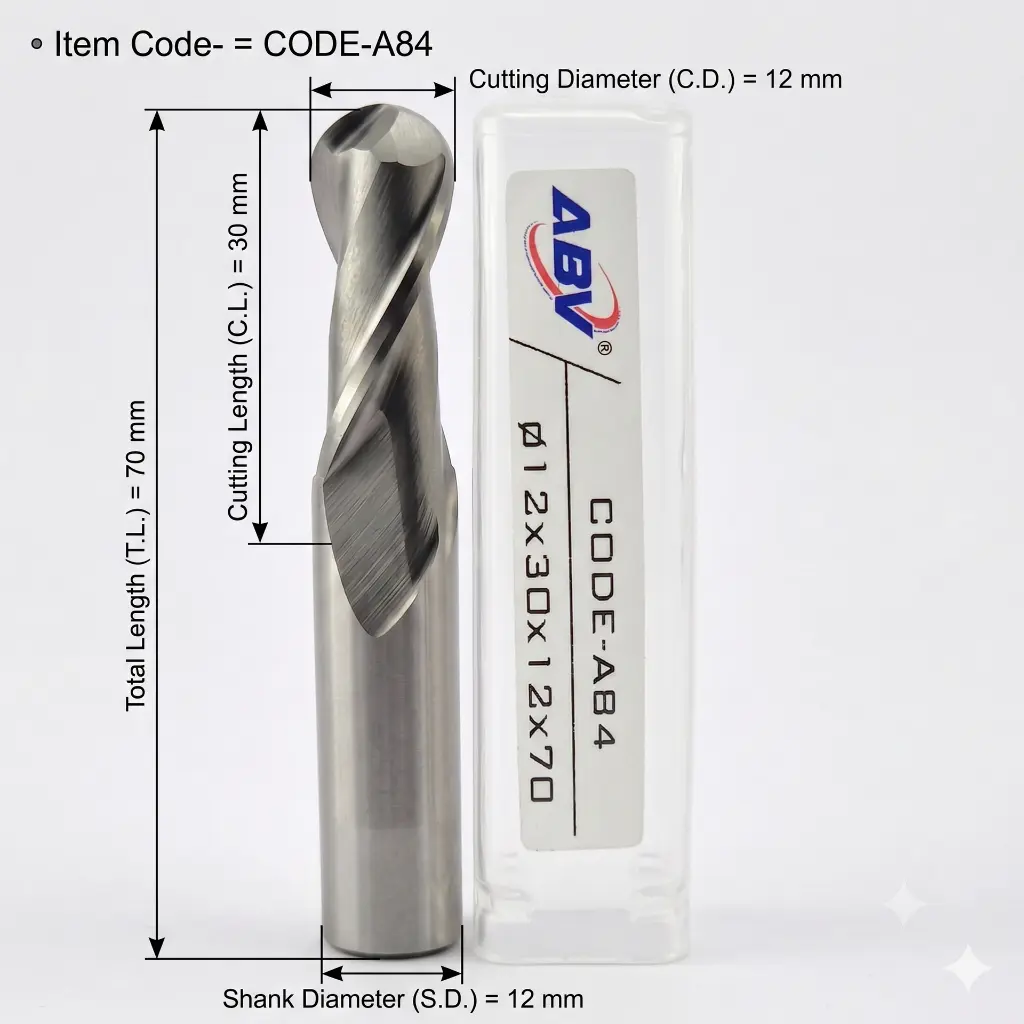
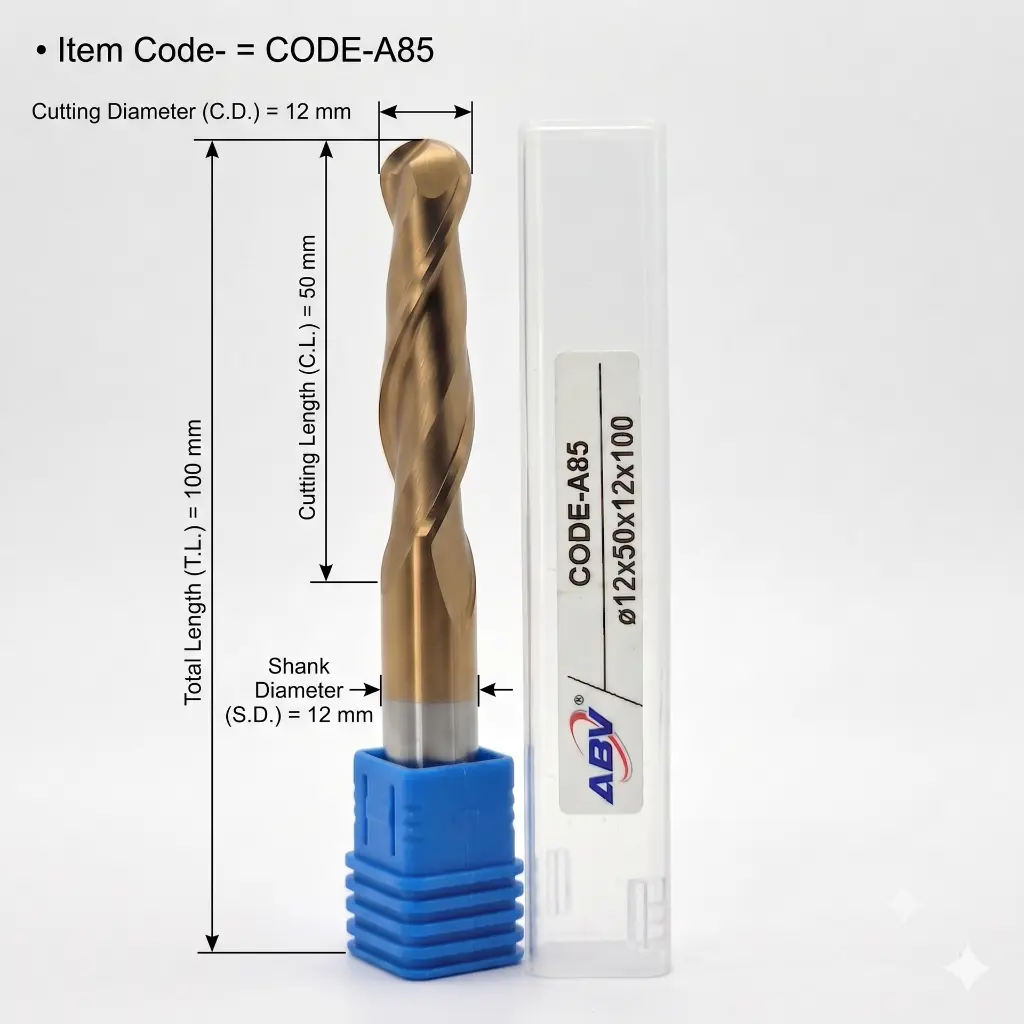
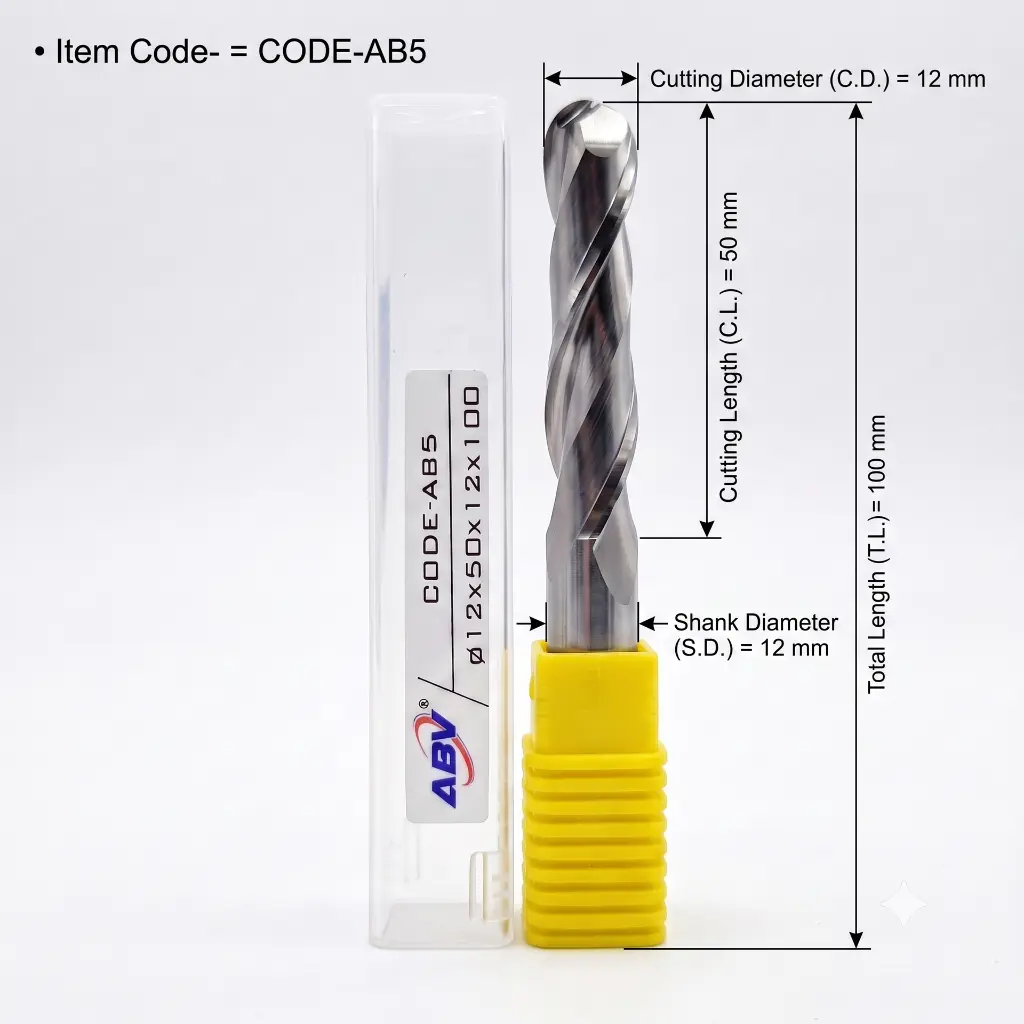
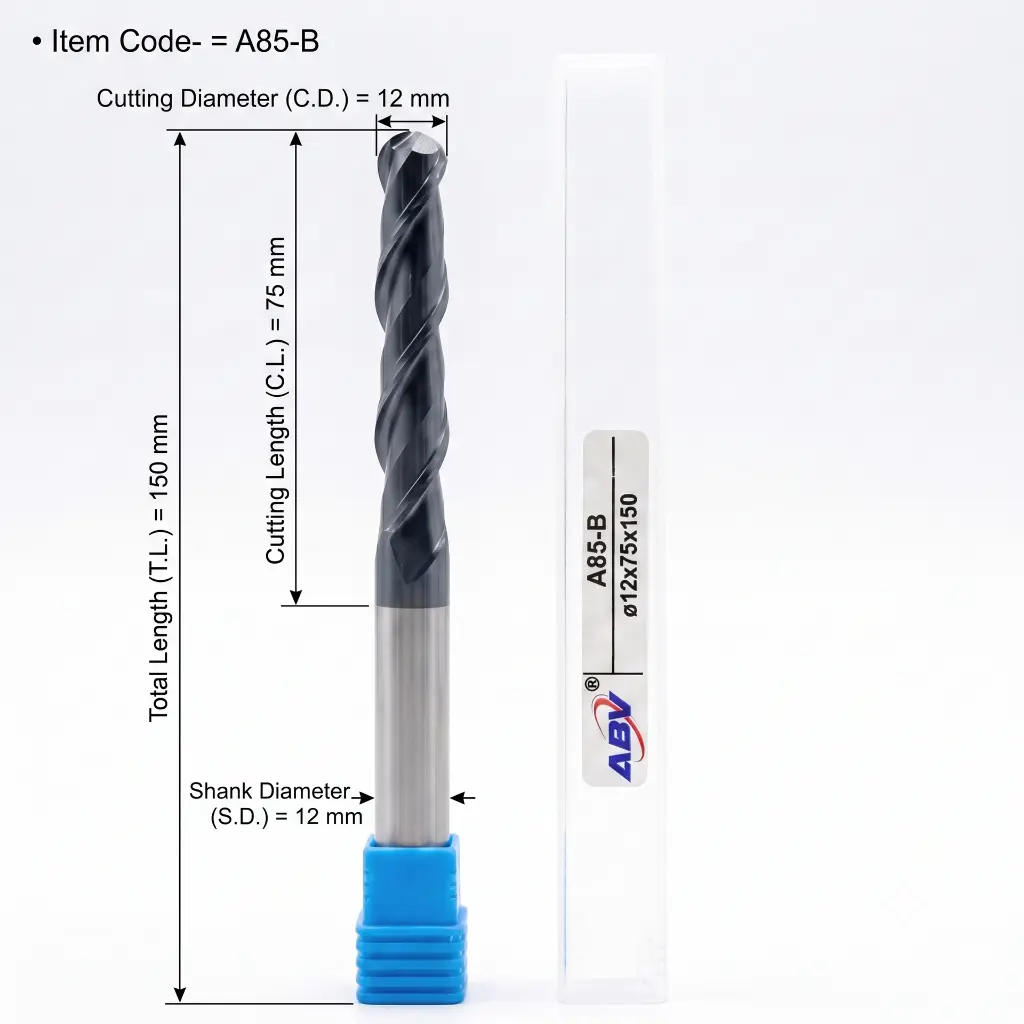
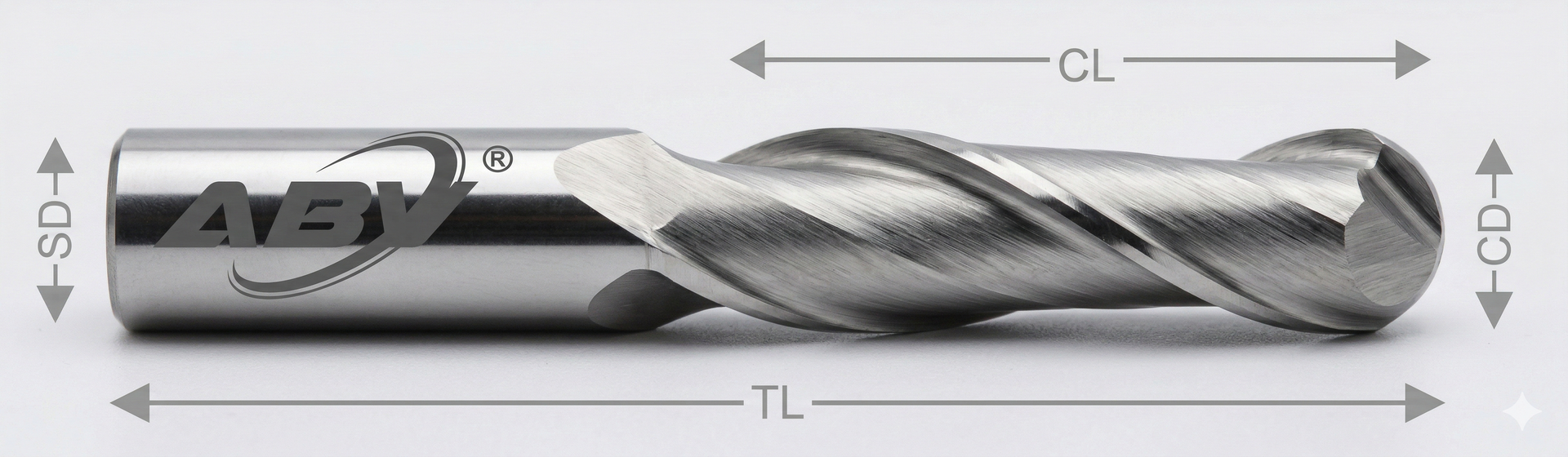
A Two-Flute Carbide Spiral Ball Nose end mill is the industry workhorse for 3D contouring and complex surface machining. While straight bits are for 2D cutouts, the rounded tip (ball) of this bit allows the CNC to "sculpt" smooth curves and gradients.
The "Spiral" geometry (usually an upcut helix) ensures that chips are pulled out of deep 3D pockets, preventing heat buildup and tool breakage.
1. Key Performance Characteristics
The "Point" of Contact: Because the tip is hemispherical, the bit can carve at various depths without leaving sharp steps, provided your step-over is small enough.
Spiral Action: The 30° or 45° helix angle slices the material at an angle rather than "slapping" it, which results in much lower vibration and a smoother finish compared to straight bits.
Solid Carbide Strength: Provides the rigidity needed for high-speed 3D carving where the tool is constantly changing direction and depth.
2. Best Applications
| Material | Use Case |
| Wood / MDF | 3D bas-relief carvings, textured wall panels, and curved furniture legs. |
| Plastics / Acrylic | Smooth molds, vacuum-forming plugs, and rounded edge profiles. |
| Aluminum | Finishing passes on curved parts (often requires a specialized coating). |
| Wax / Foam | Rapid prototyping of complex 3D shapes. |
3. The Secret to a Smooth Finish: Step-over
The most critical setting for a Ball Nose bit is the Step-over (the horizontal distance between passes).
Roughing Pass: Use a large step-over (40-50%) with a flat-bottom bit to remove bulk material.
Finishing Pass: Use the Ball Nose with a tiny step-over (8-12%). This minimizes "scalloping"—the small ridges left between passes—resulting in a surface that feels sanded.
4. Technical Comparison: Ball Nose vs. Tapered Ball Nose
| Feature | Standard Ball Nose | Tapered Ball Nose |
| Shank | Same as cutting diameter. | Larger than the tip (e.g., 1/4" shank to 1mm tip). |
| Strength | Good for general 3D work. | Extremely Strong for deep, fine-detail carving. |
| Detail | Limited by diameter. | Can achieve "needle-like" detail. |
5. Pro-Tips for ABV Tool Customers
Avoid "Bottoming Out": The very center of a ball nose bit has a "zero" cutting speed (the dead center doesn't spin). To get a better finish, it is often better to tilt the spindle or use a strategy that cuts with the sides of the ball rather than just the very tip.
Upcut Warning: Since these are usually upcut spirals, they can splinter the top grain of delicate plywood. For 3D work in plywood, a high RPM and light finishing pass are required.
Speeds & Feeds: Ball nose bits can usually handle higher feed rates during finishing passes because the amount of material being removed is very small.