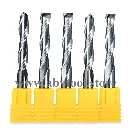
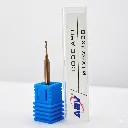
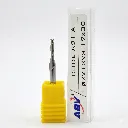
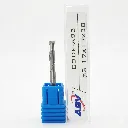
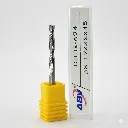
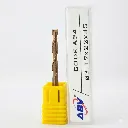
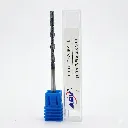
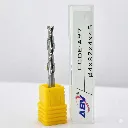
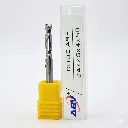
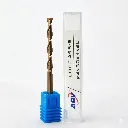
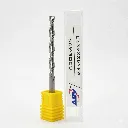
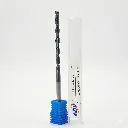
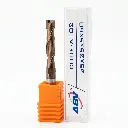
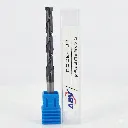
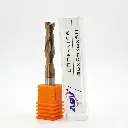
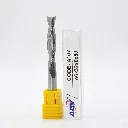
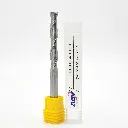
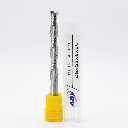
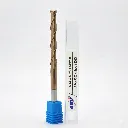
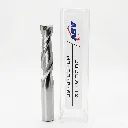
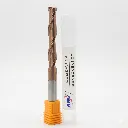
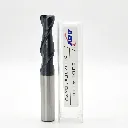
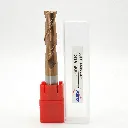
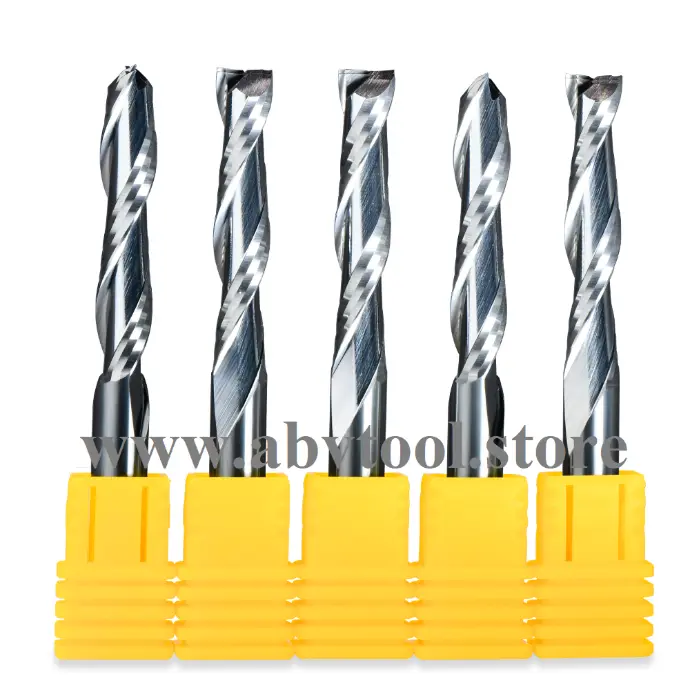
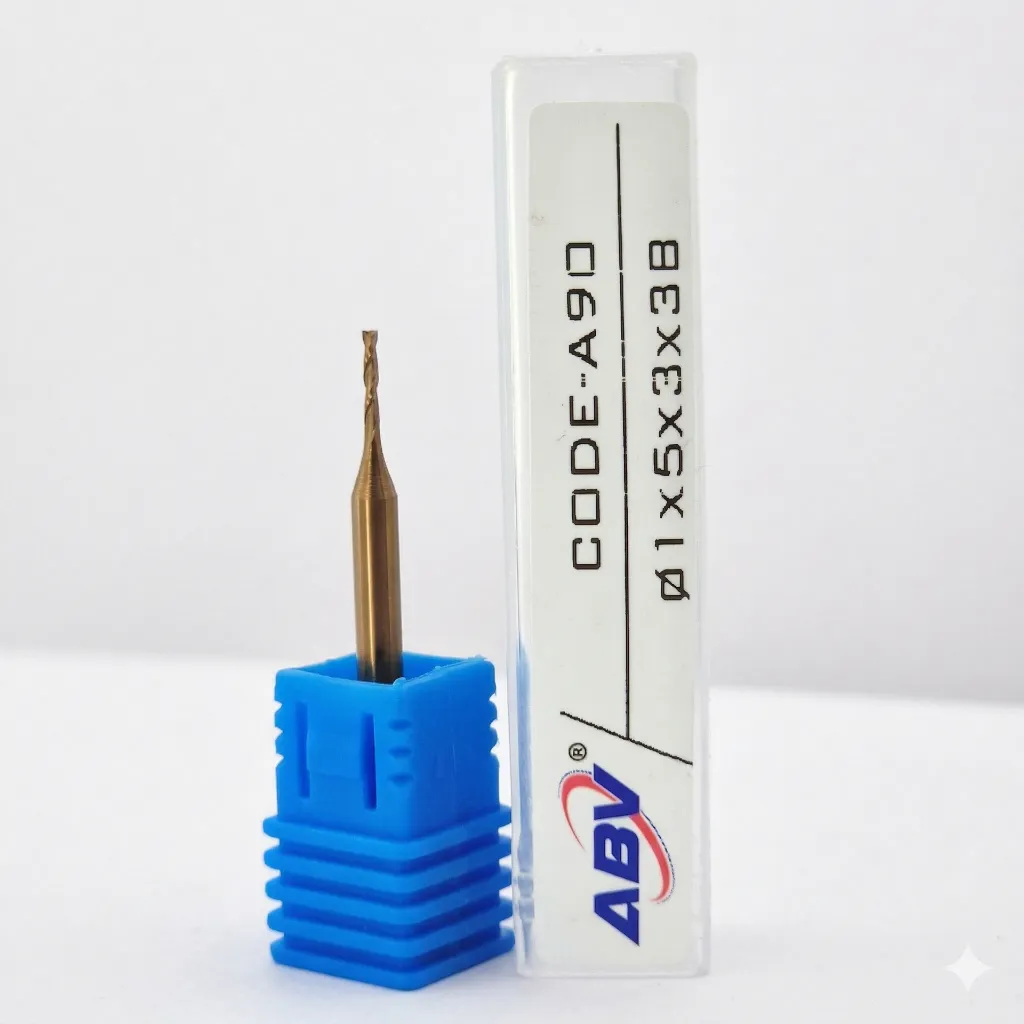
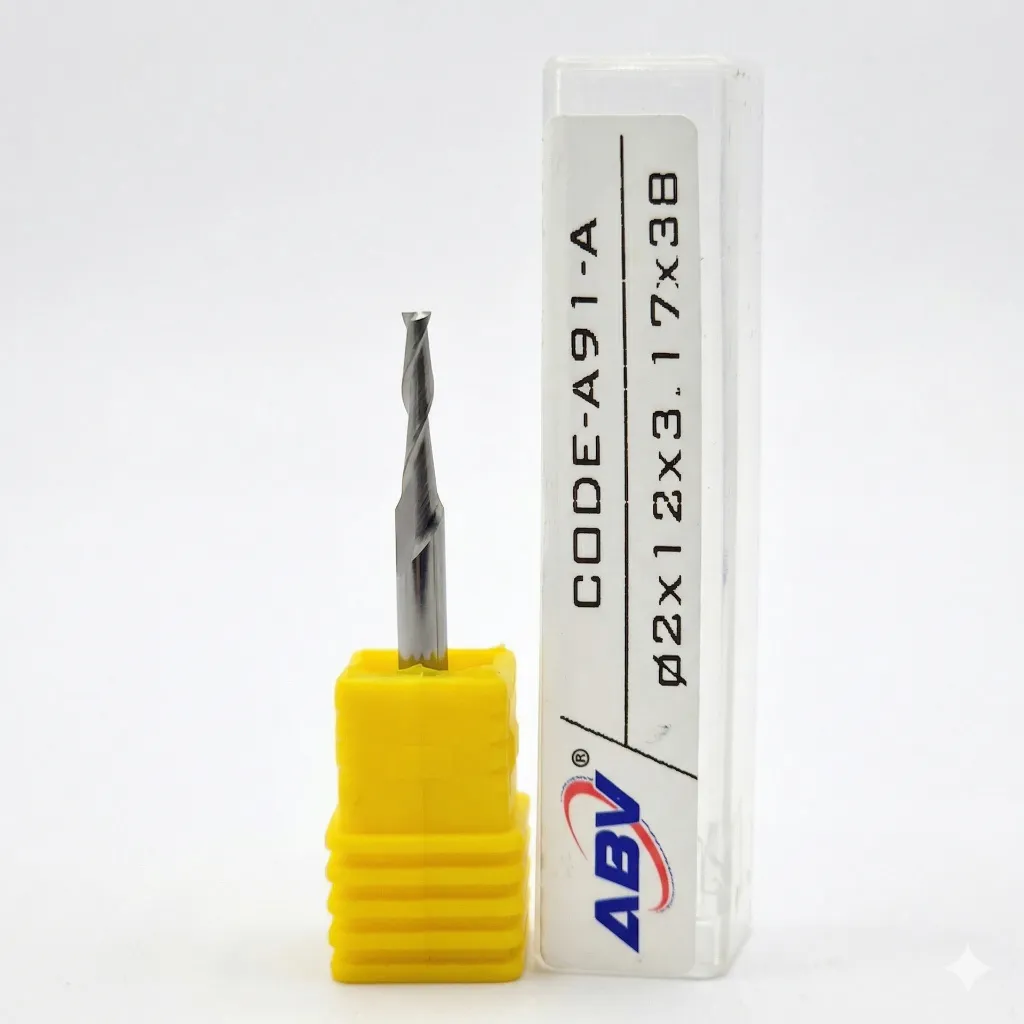
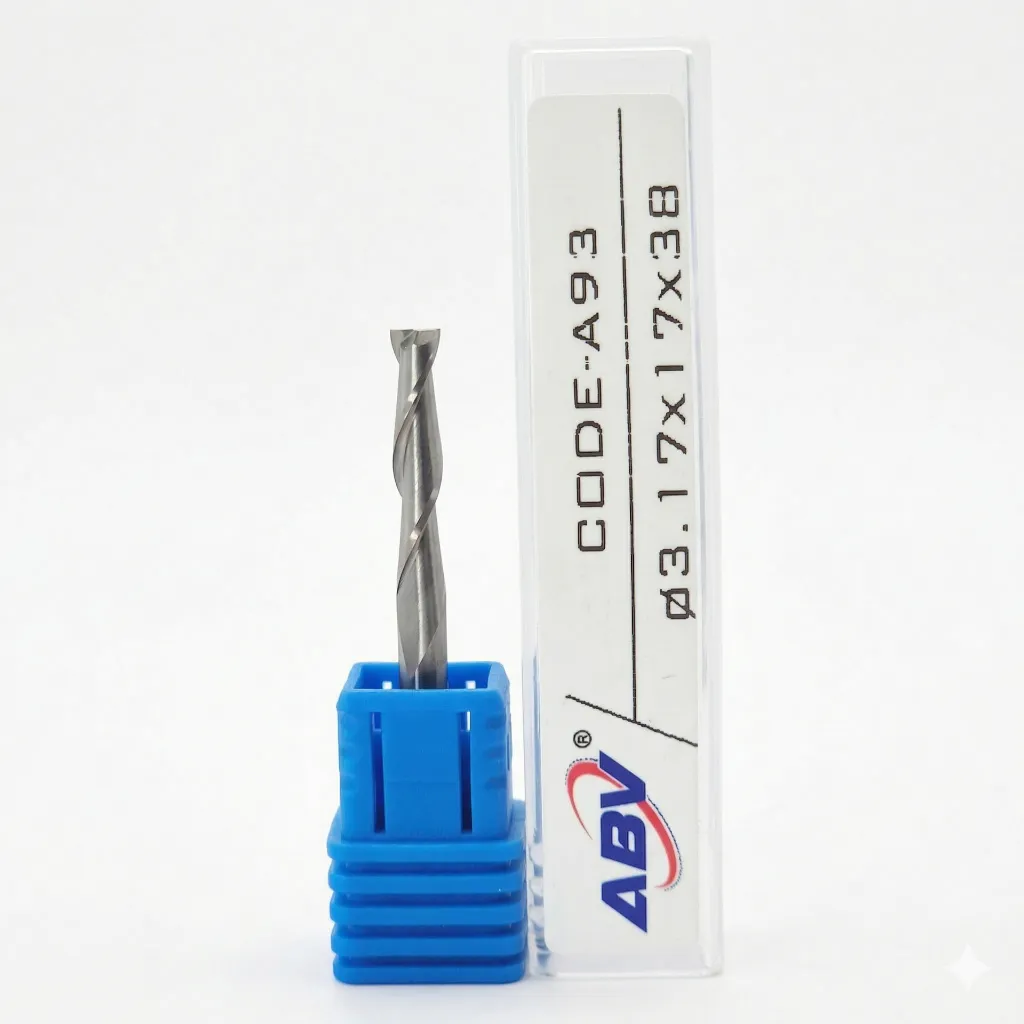
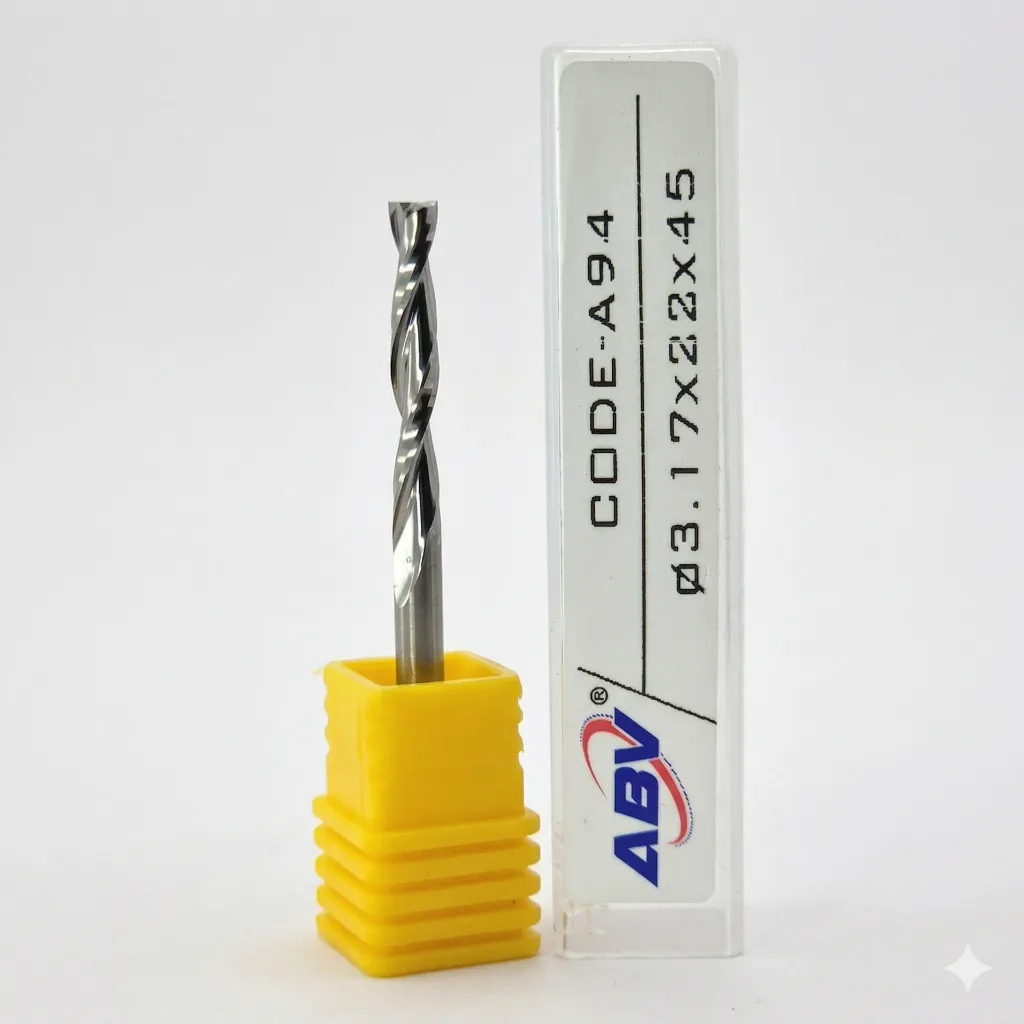
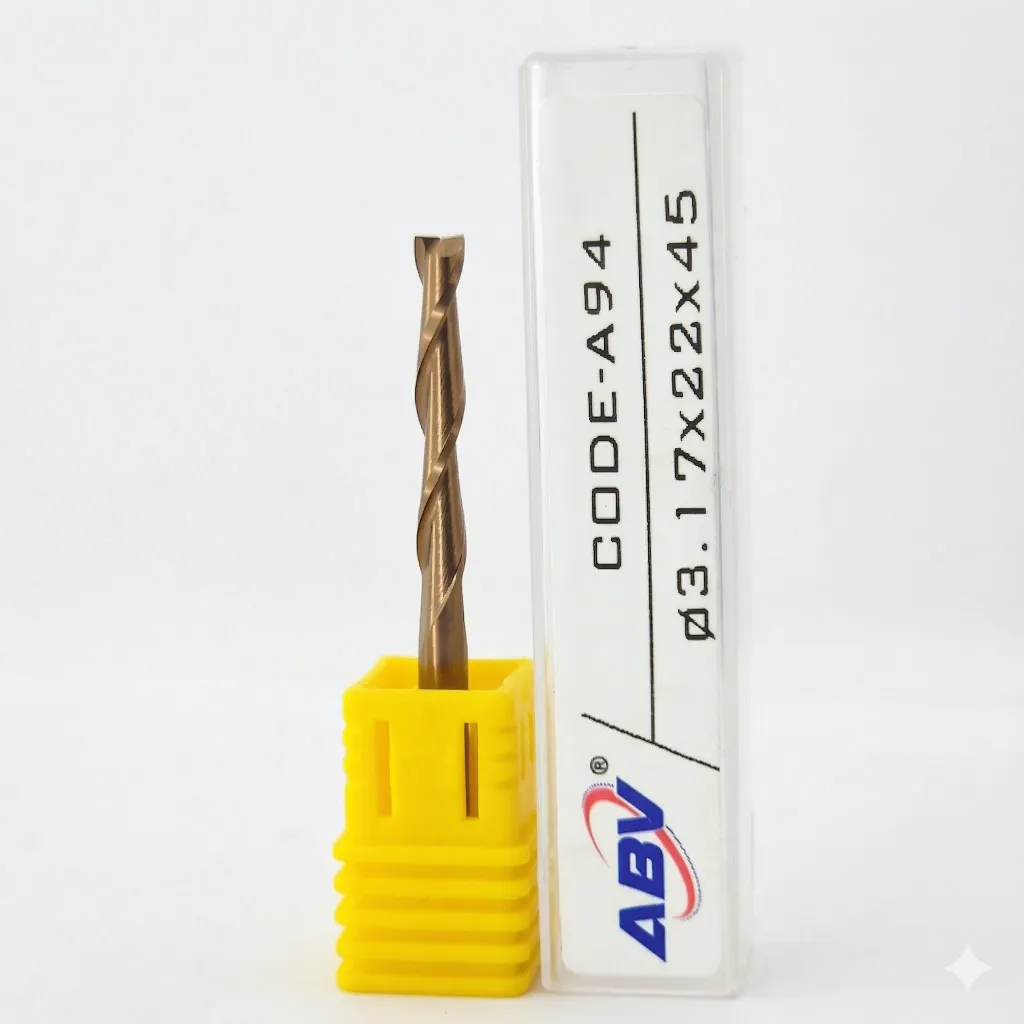
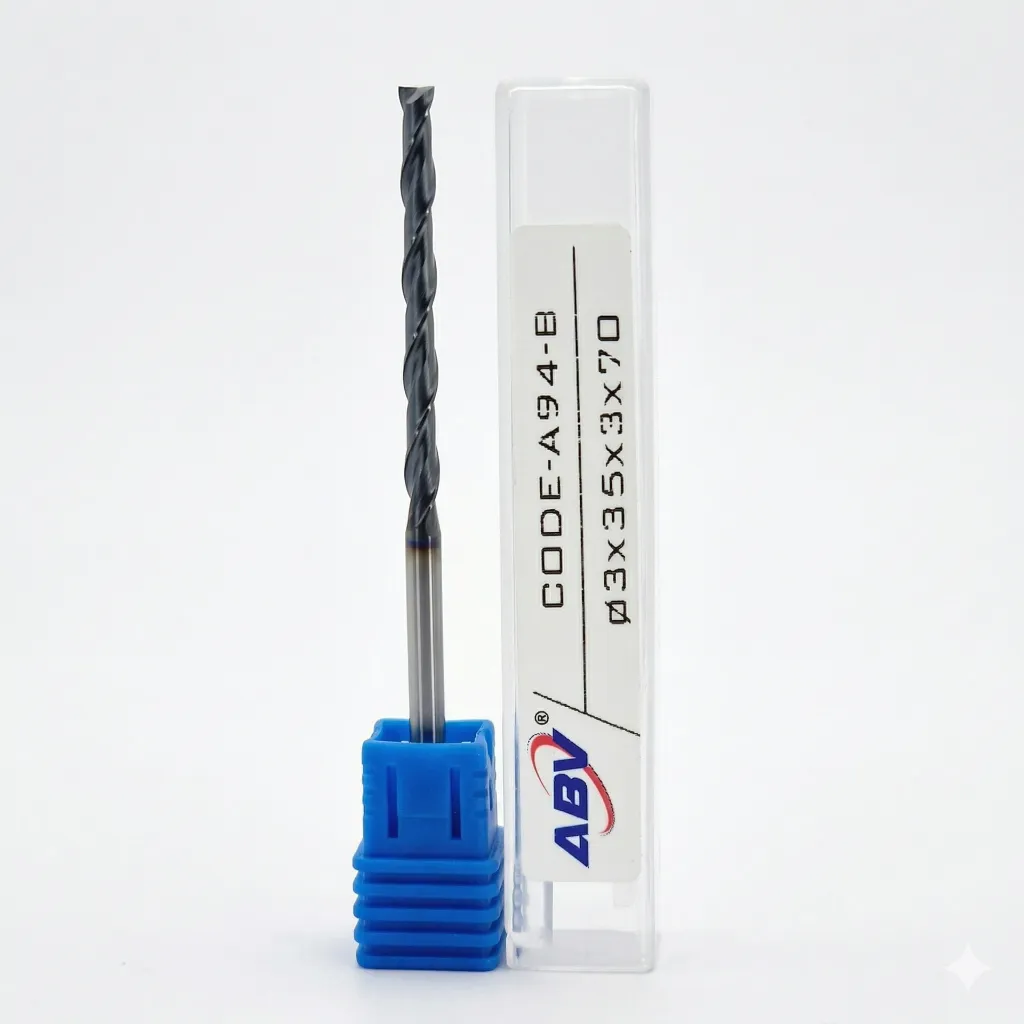
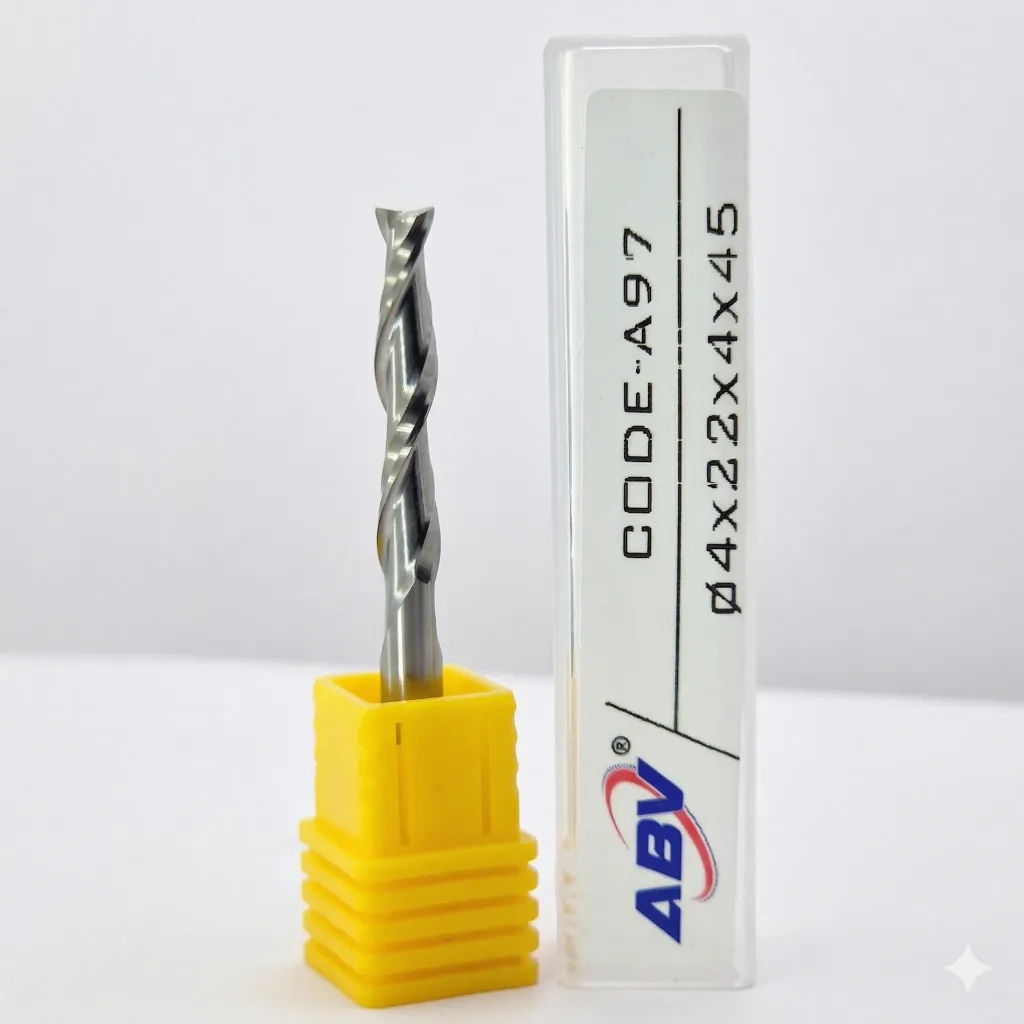
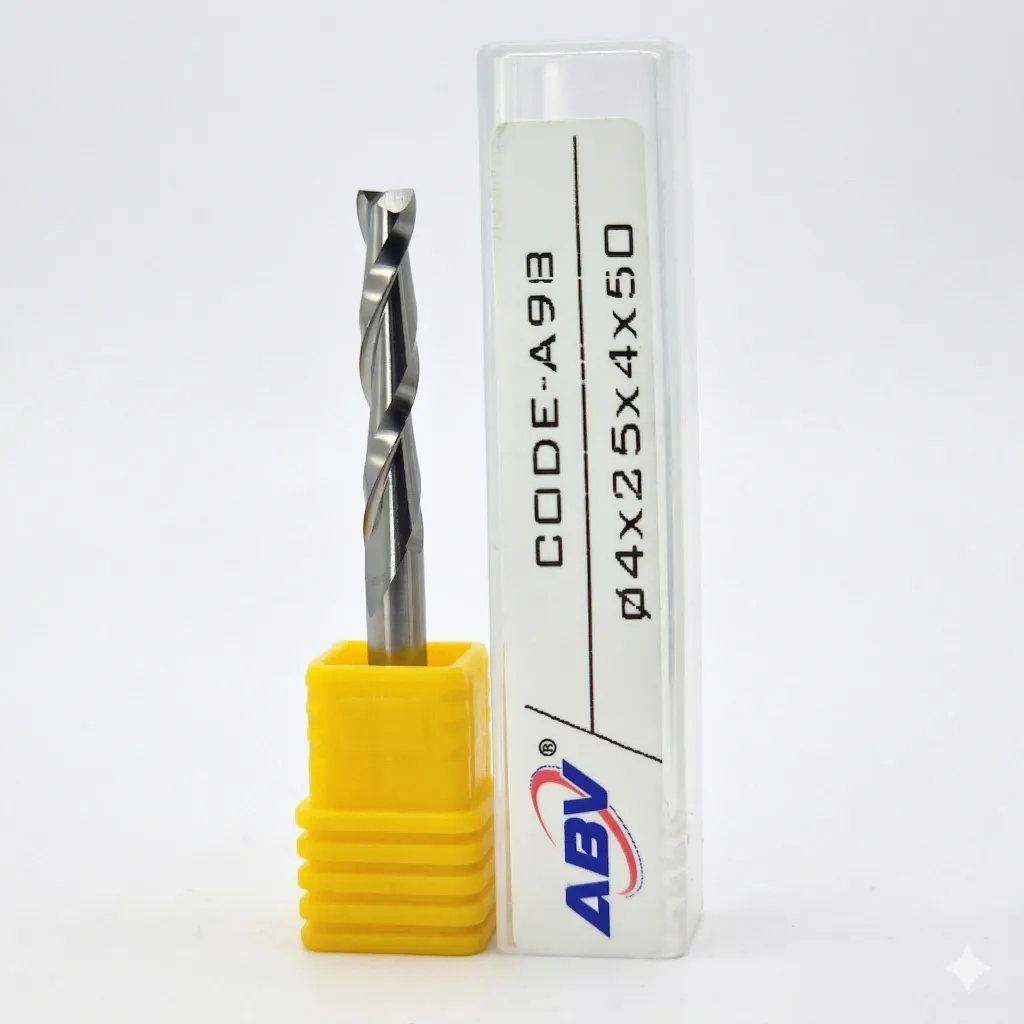
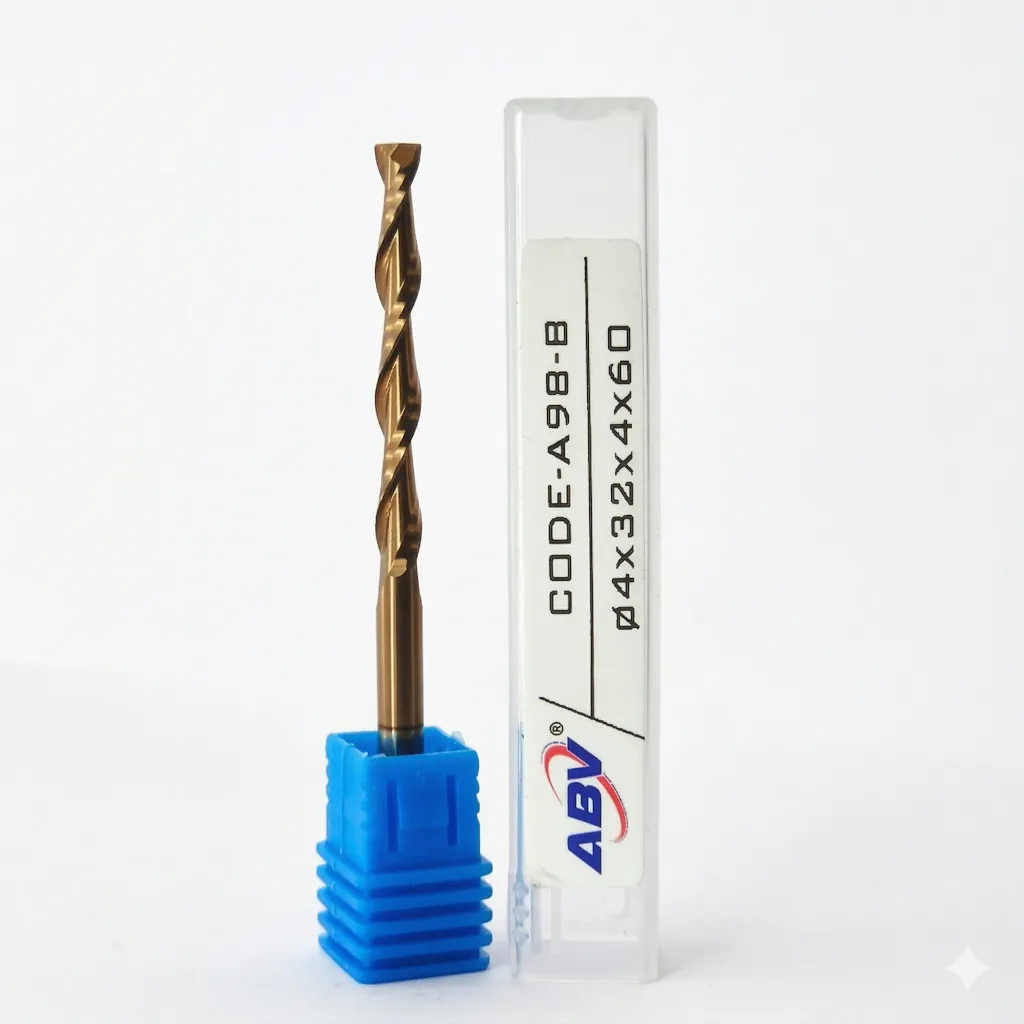
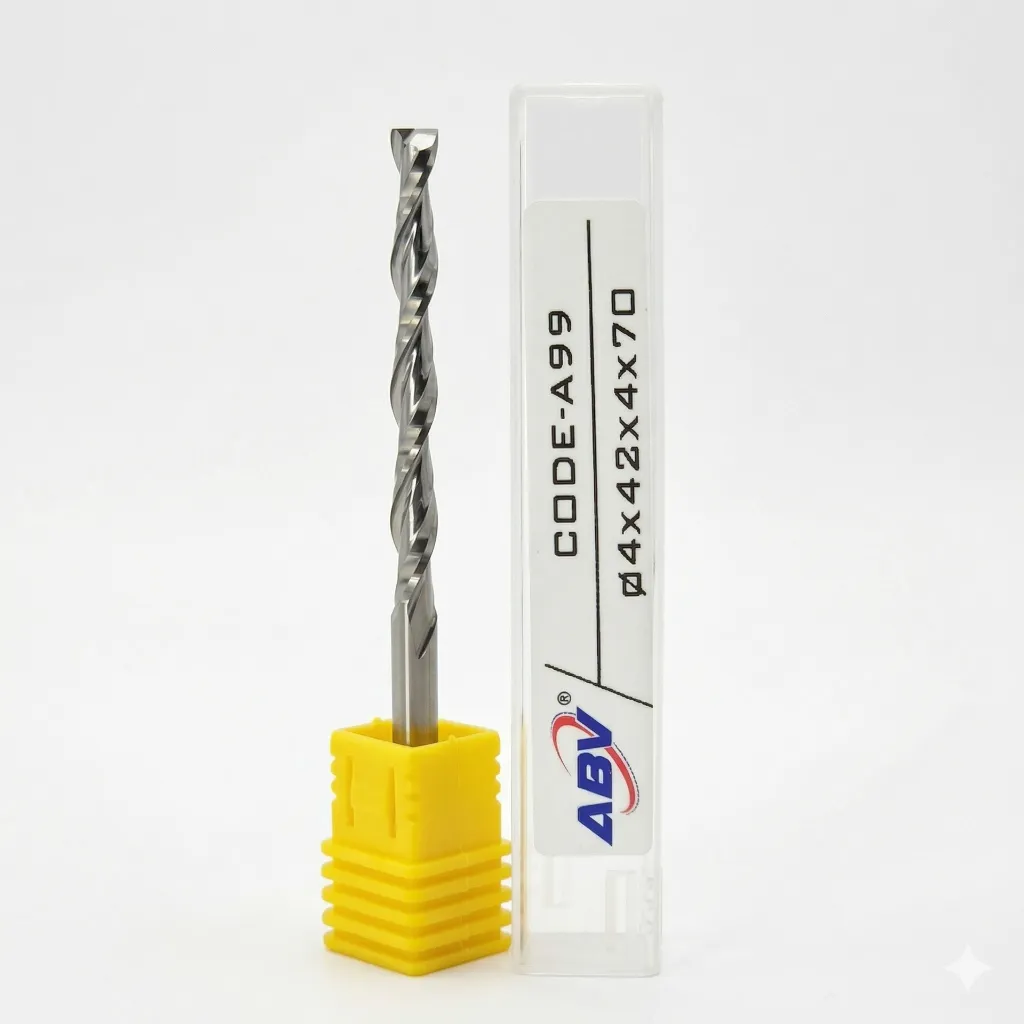
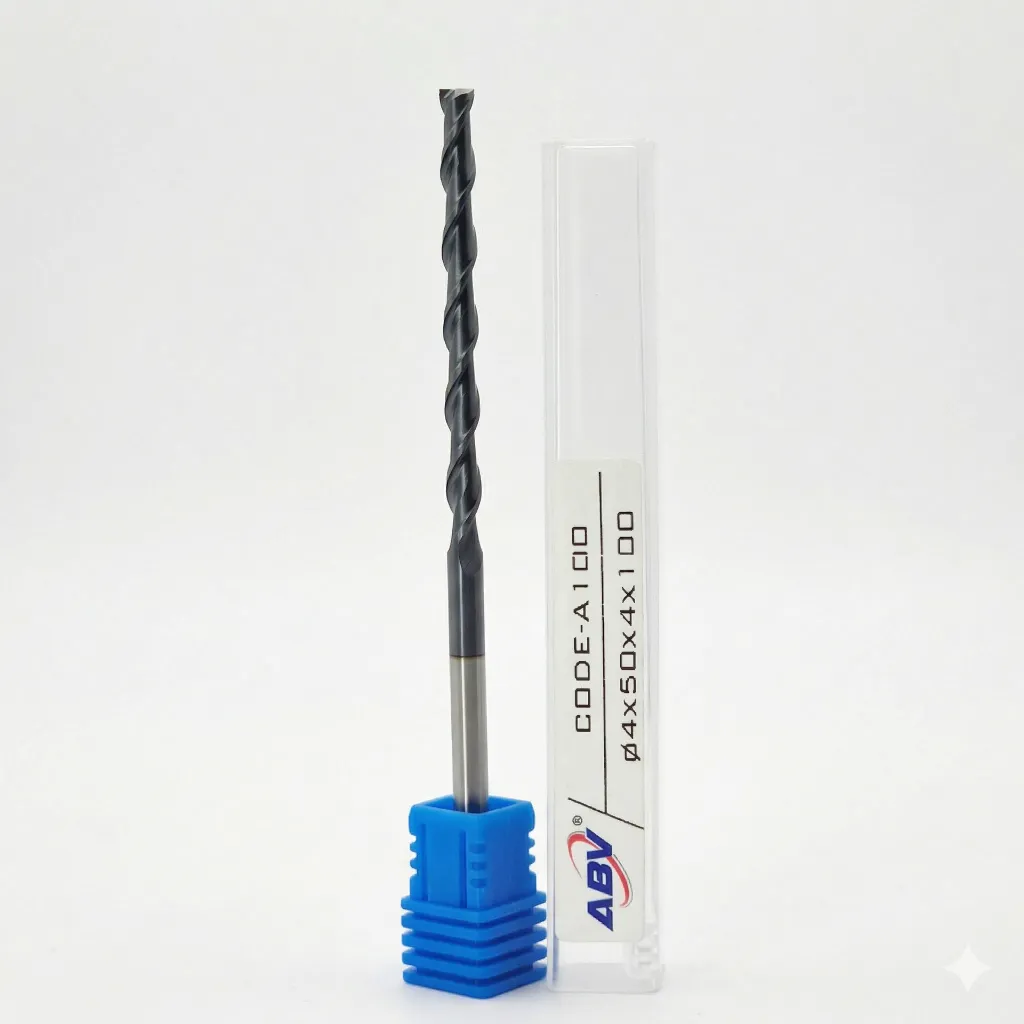
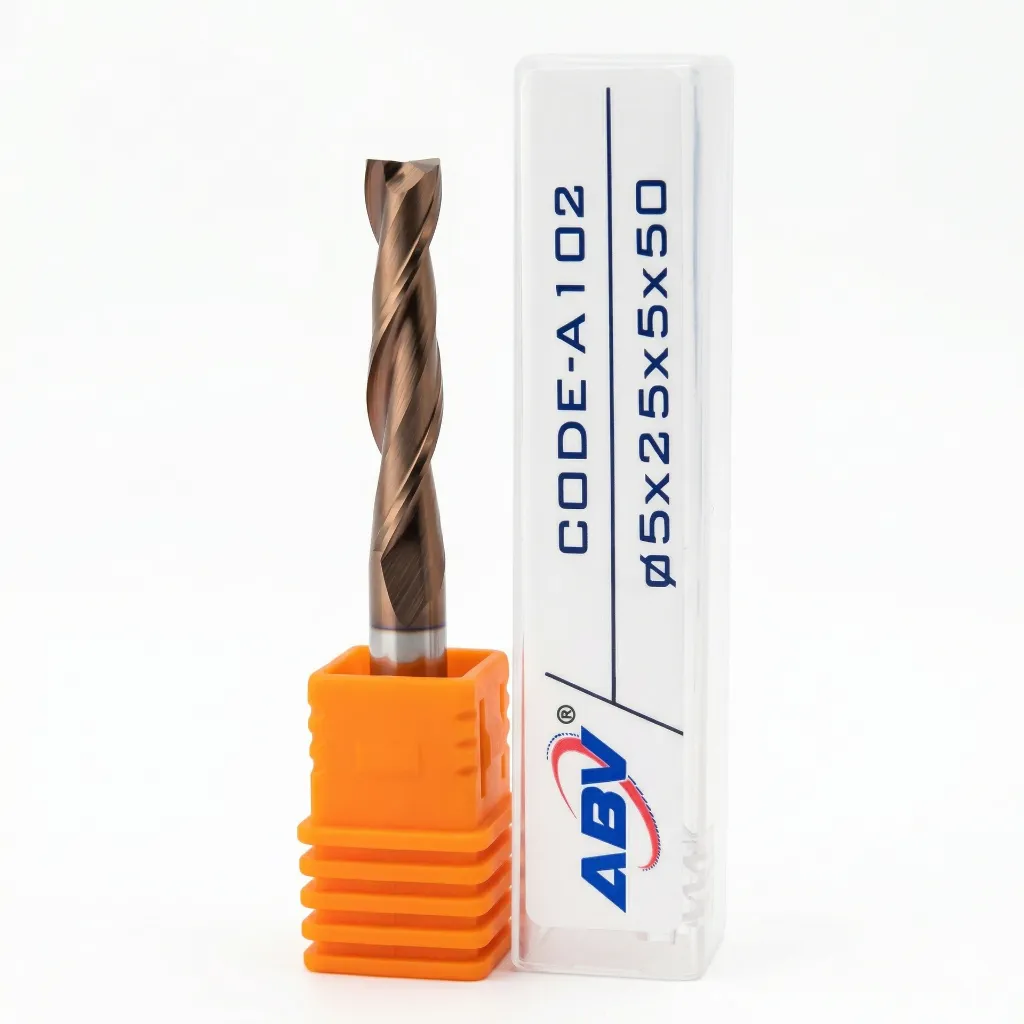
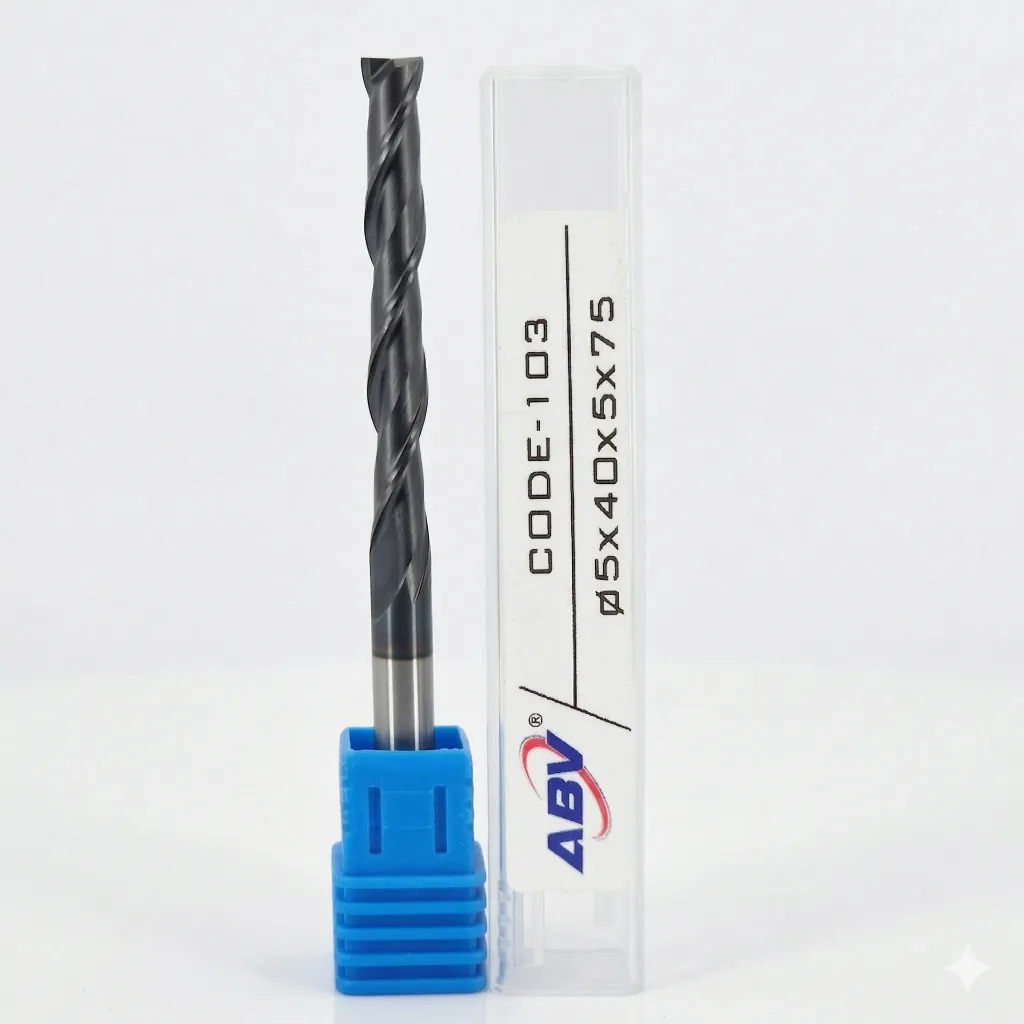
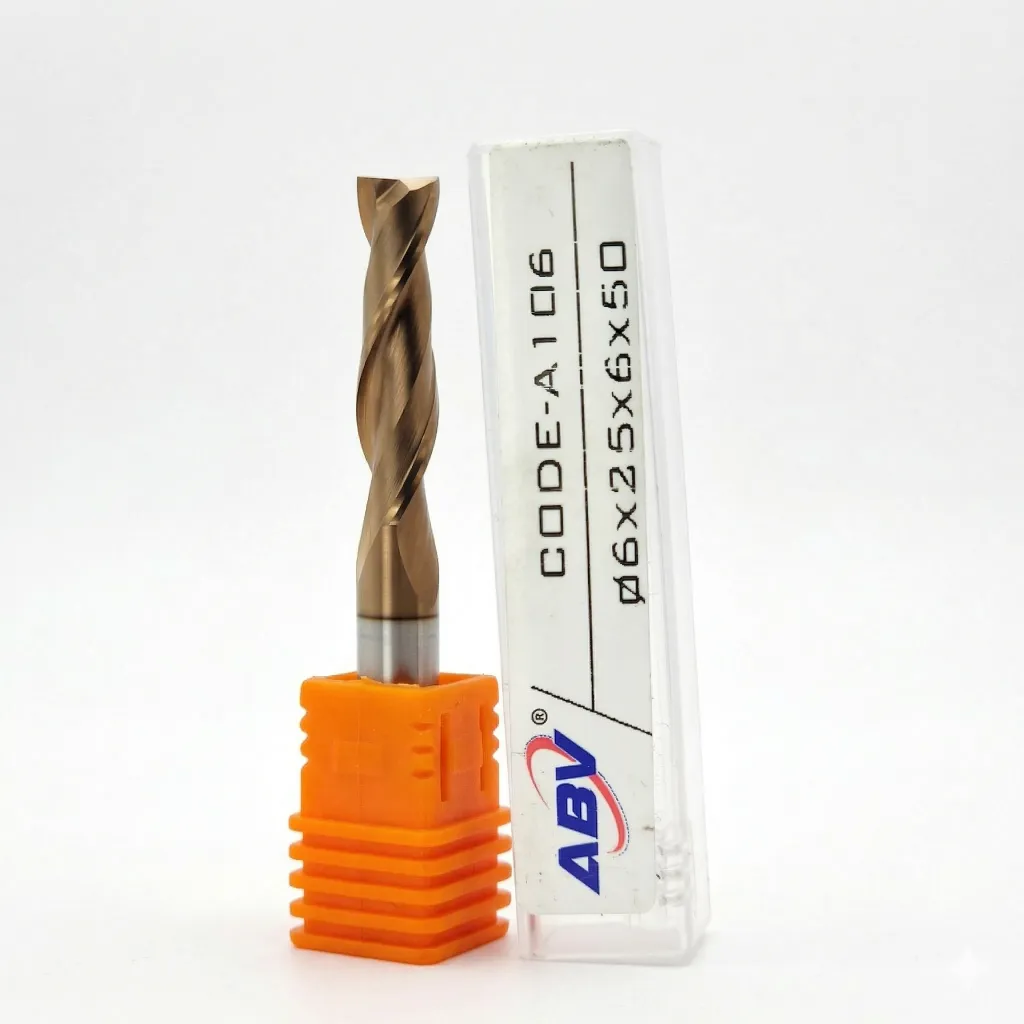
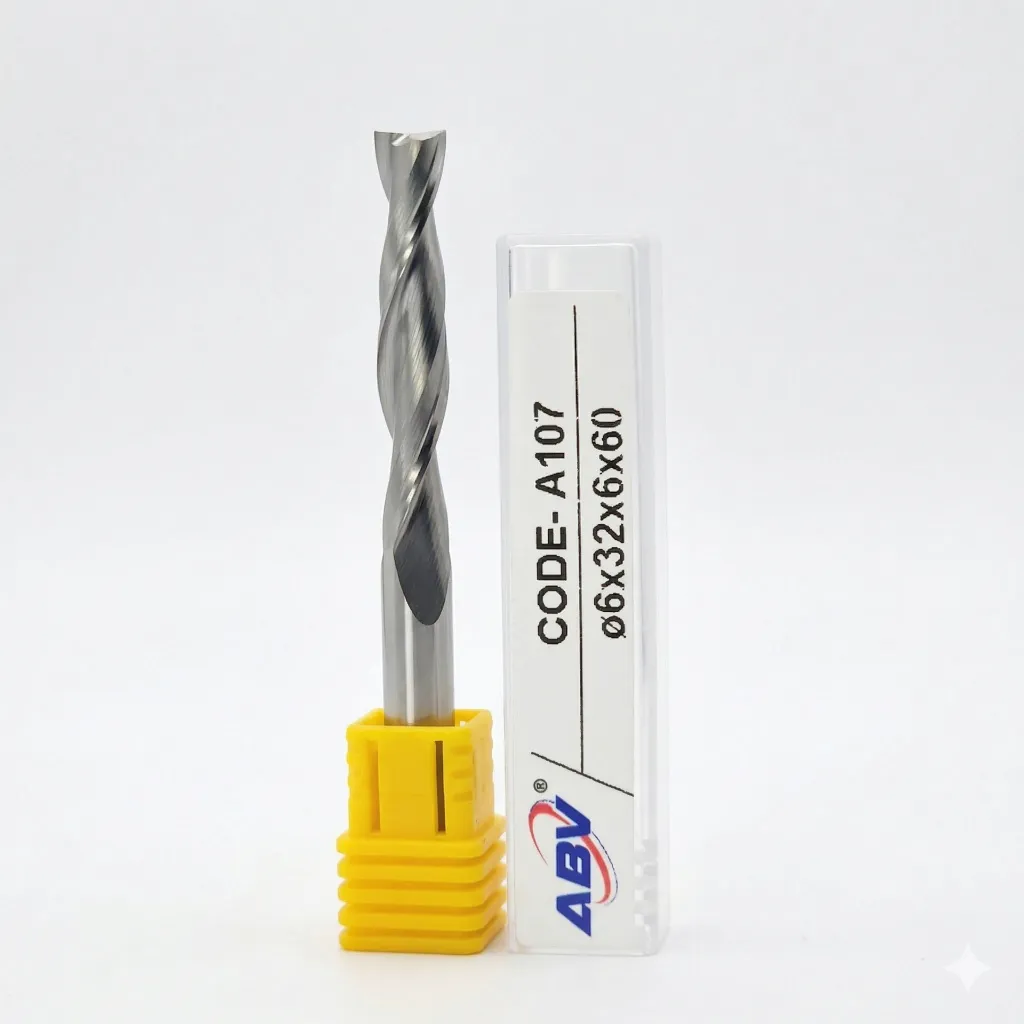
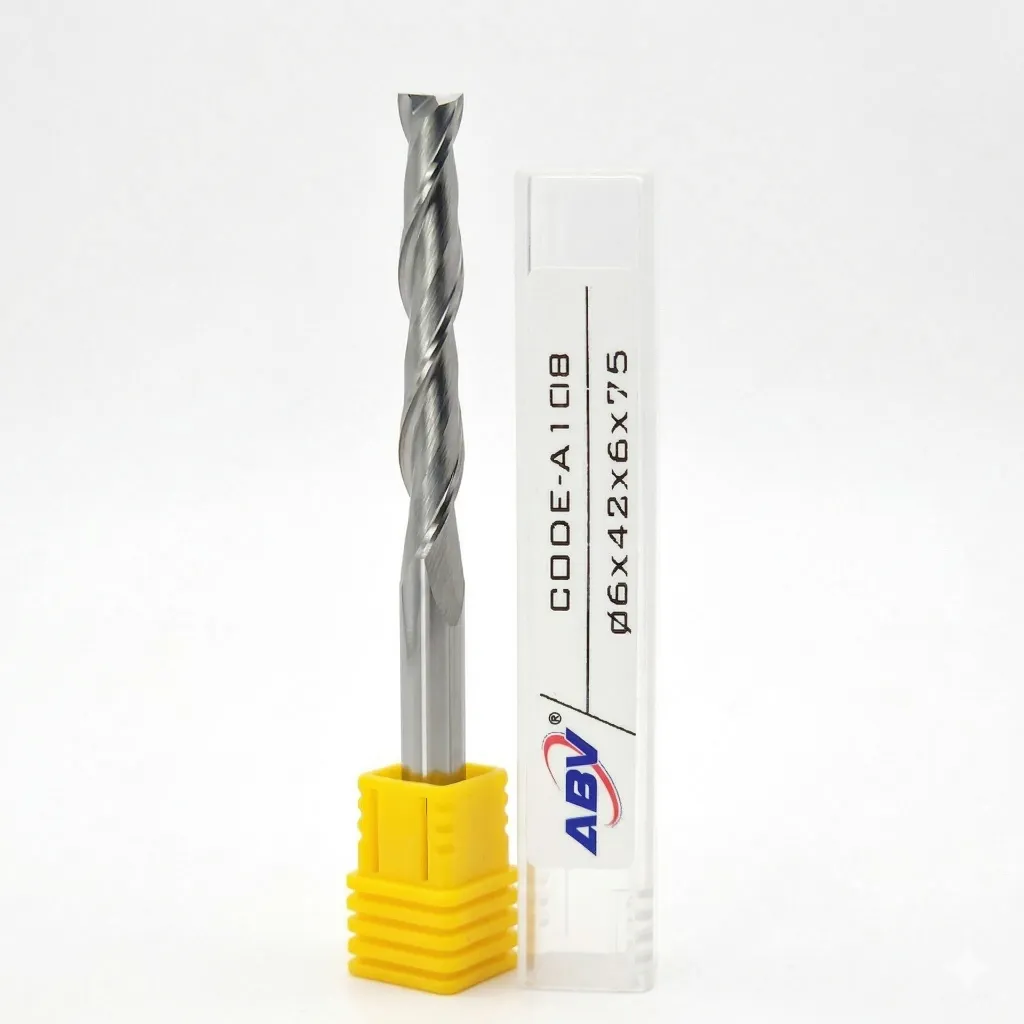
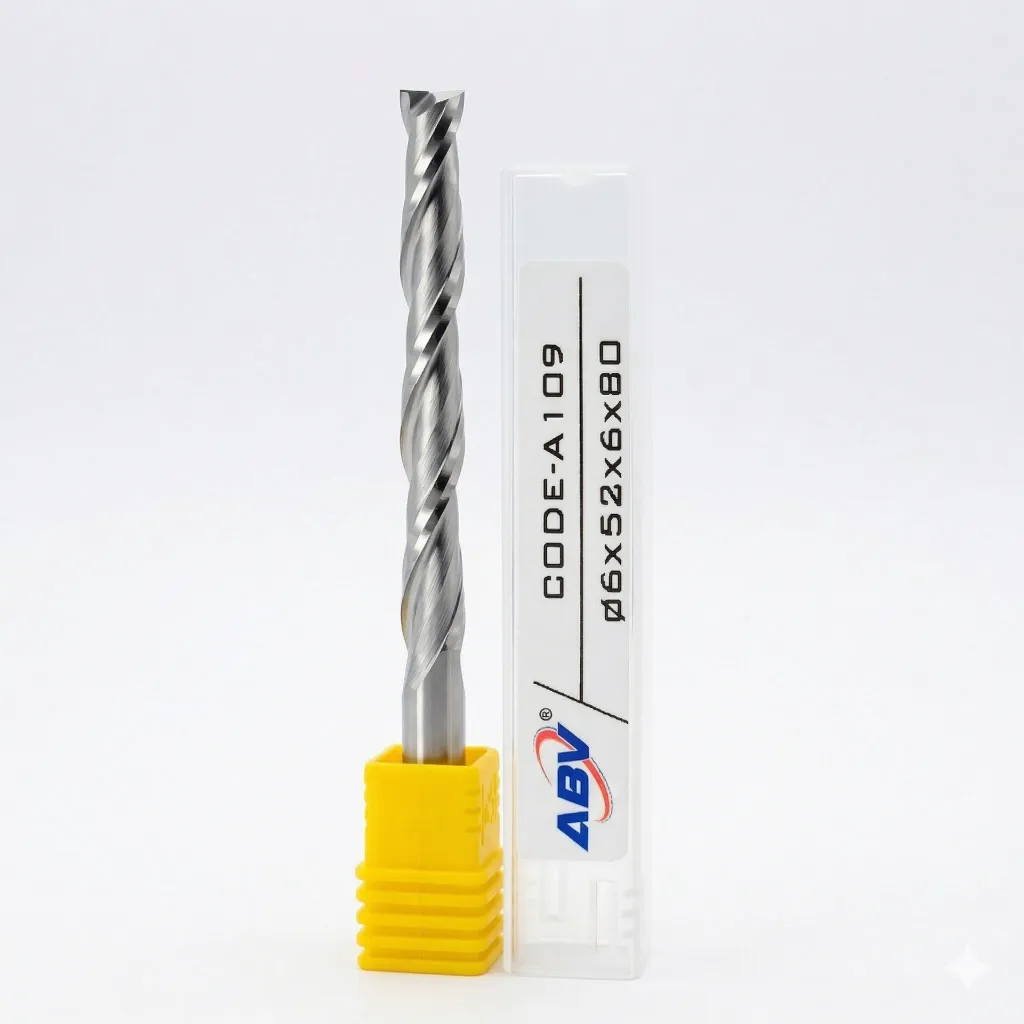
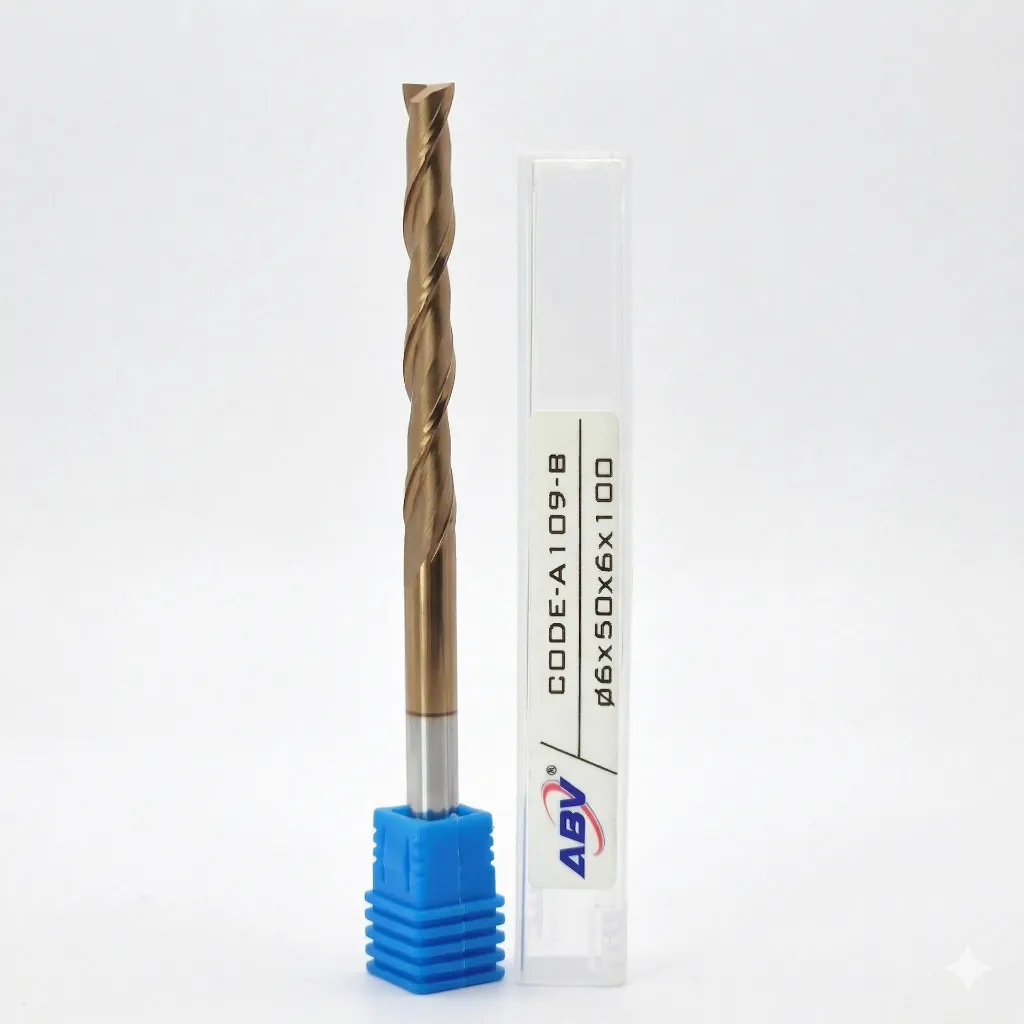
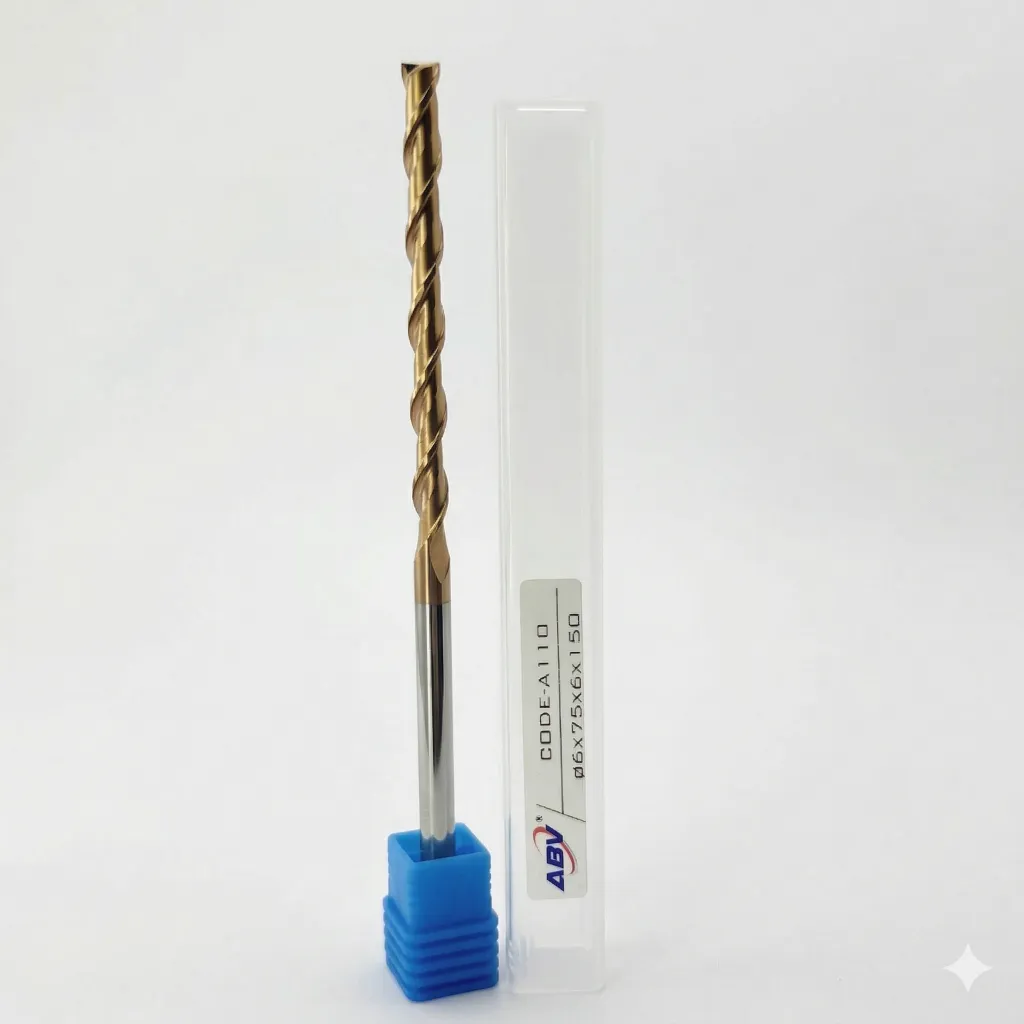
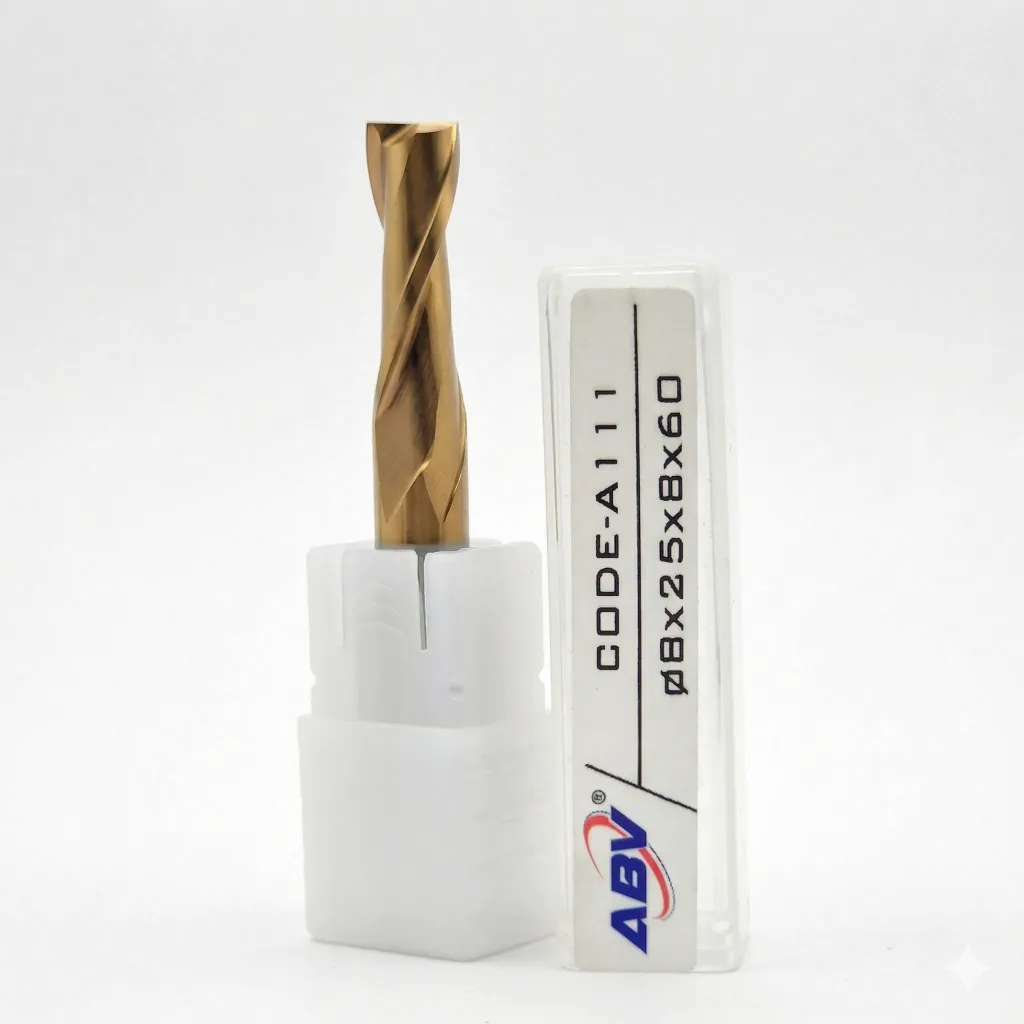
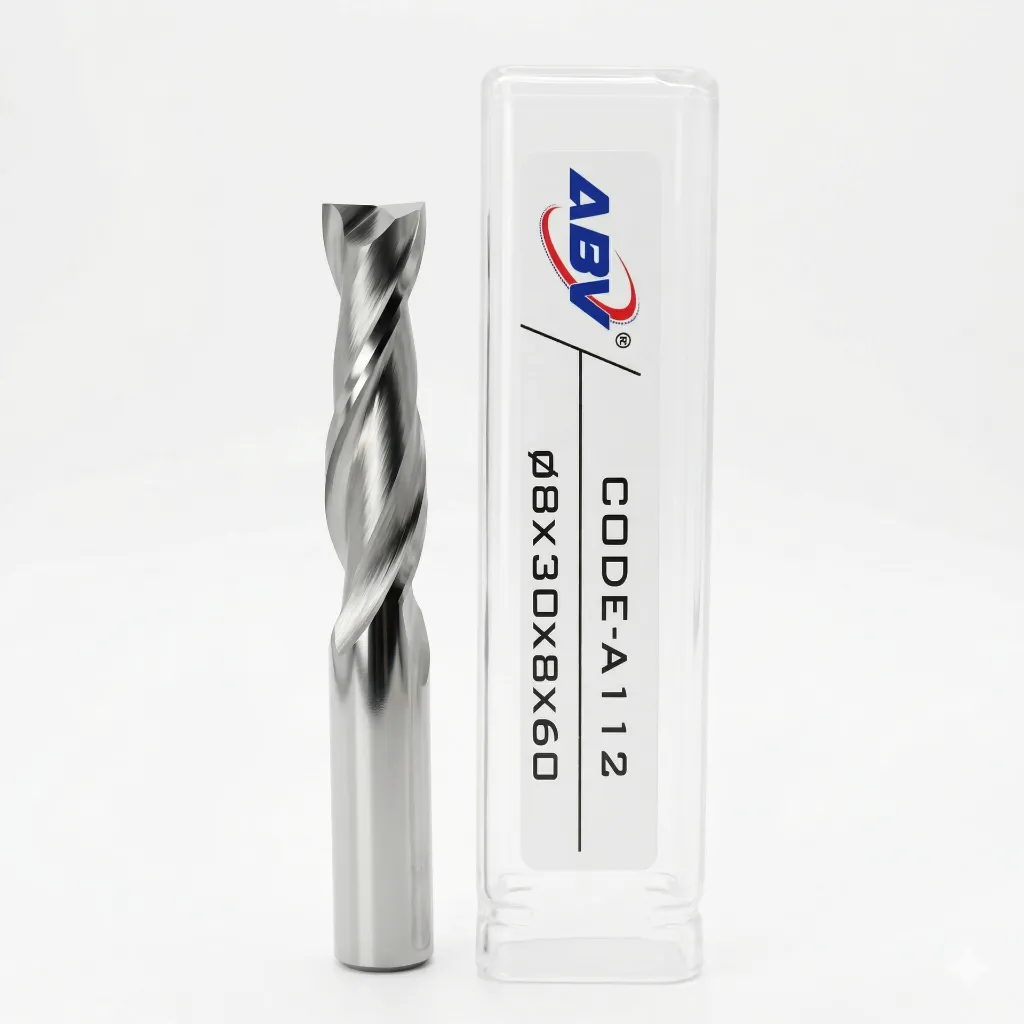
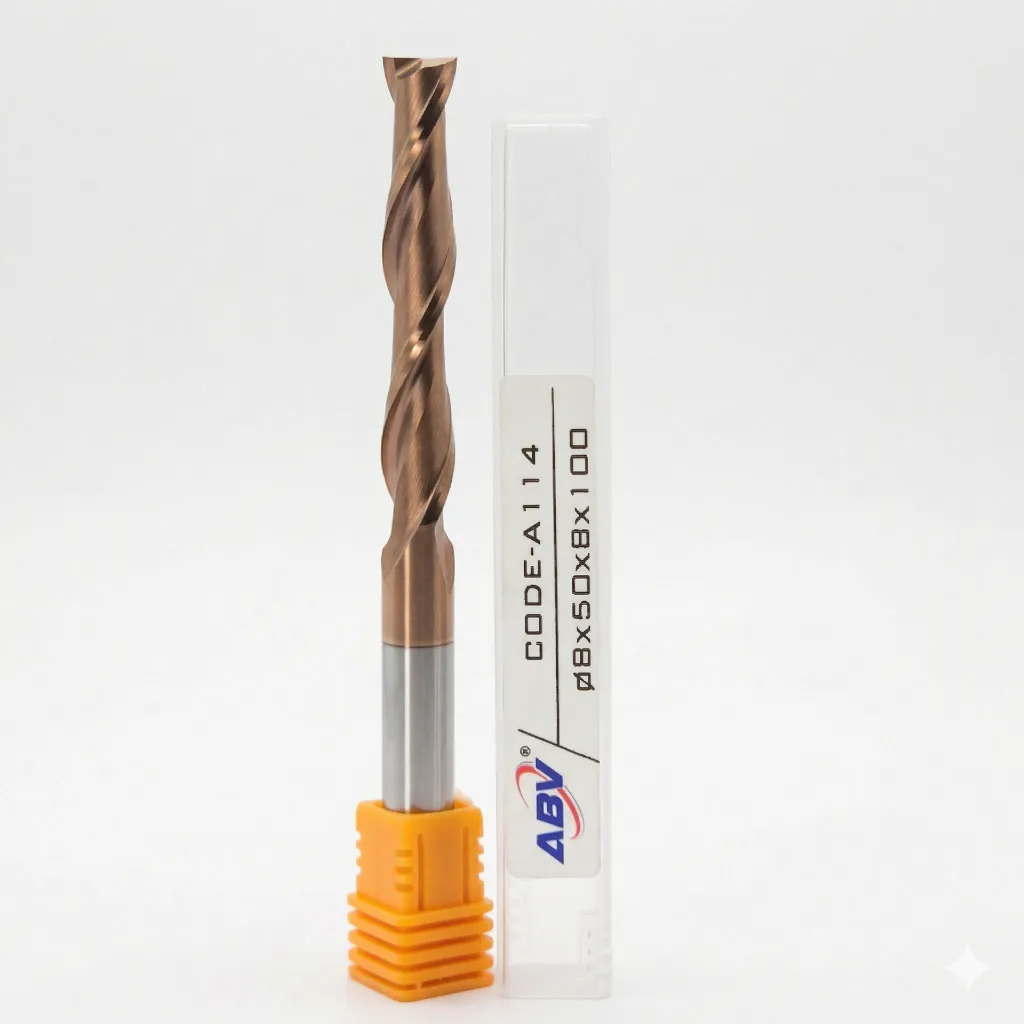
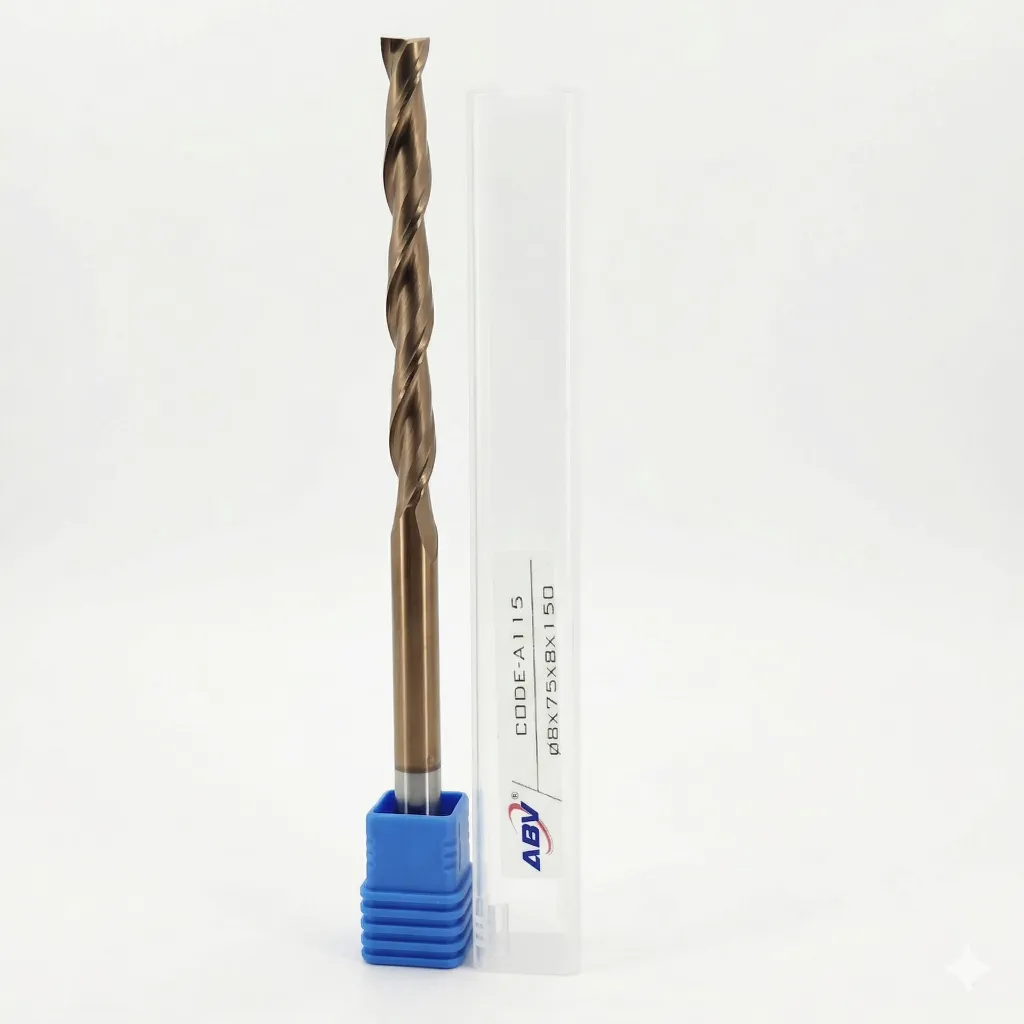
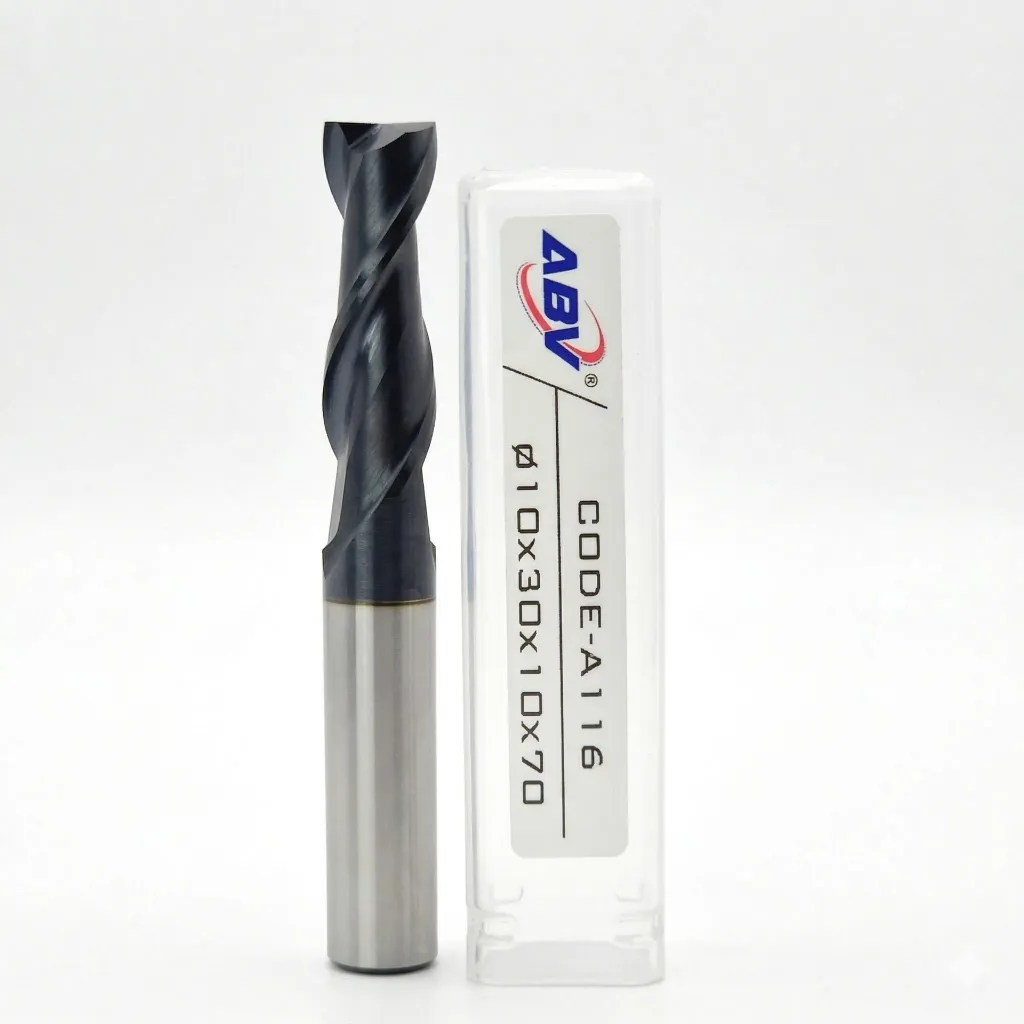
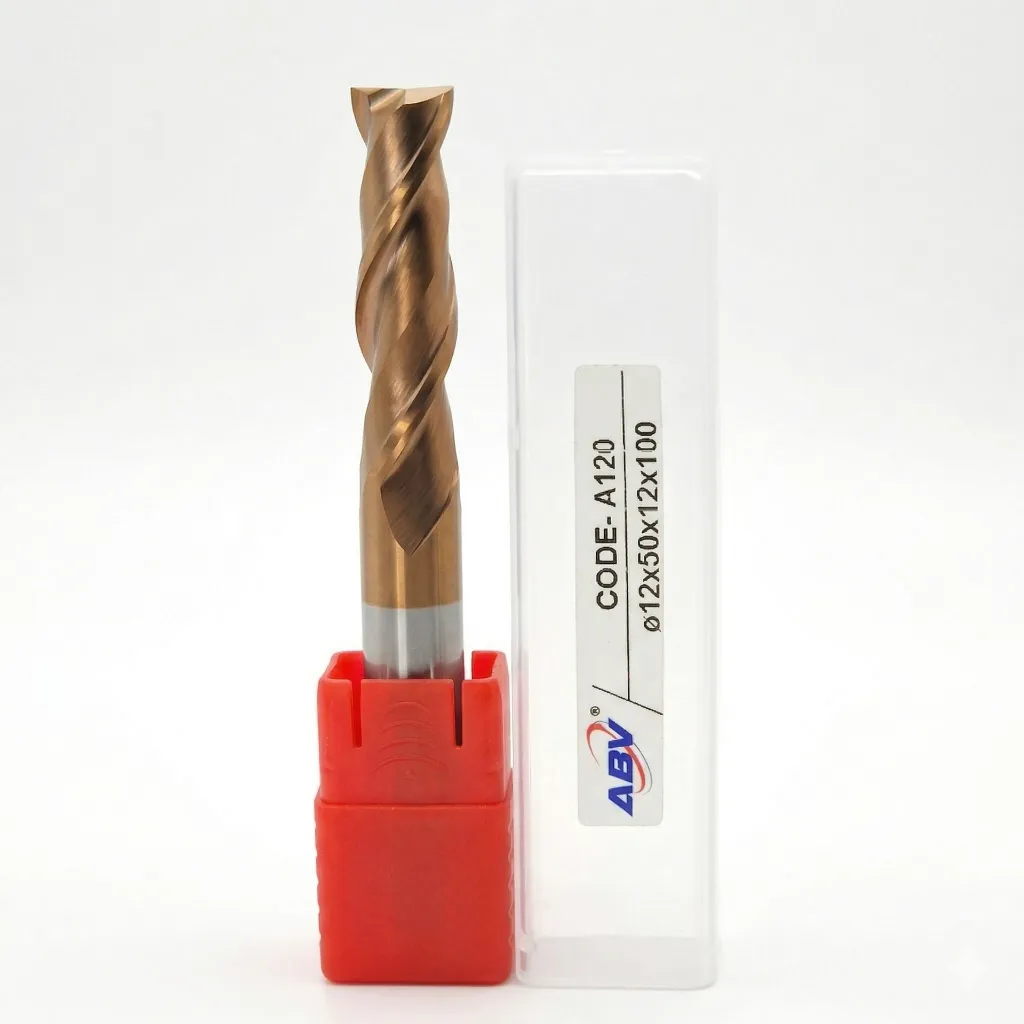
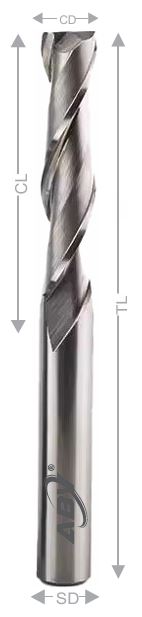
A Two-Flute Carbide Spiral Endmill is the most versatile and popular bit for CNC routing. Unlike straight bits, the "spiral" geometry functions like a drill bit, slicing the material at an angle. This creates a continuous shearing action that reduces vibration and allows for much faster travel speeds.
There are three primary types of spiral bits, each defined by the direction the chips are thrown:
1. The Three Spiral Types
| Type | Chip Direction | Best For |
| Upcut Spiral | Pulls chips UP and out. | Deep slots, heavy material removal, and aluminum. |
| Downcut Spiral | Pushes chips DOWN. | Creating a perfect top surface on laminates and thin veneers. |
| Compression | Pulls from bottom, pushes from top. | Cutting plywood or double-sided laminates without any chipping. |
2. Why Choose a 2-Flute Spiral?
Balance of Speed and Finish: Two flutes provide the "sweet spot." You have enough room for chips to escape (unlike 3 or 4-flute bits) while getting a smoother finish than a single-flute bit.
Shear Cutting: Because the edge is curved, it enters the material gradually. This reduces the "hammering" effect, which saves wear and tear on your spindle bearings.
Solid Carbide Rigidity: Being made of solid tungsten carbide, these bits are incredibly stiff, ensuring that your cuts are perfectly vertical even at high speeds.
3. Applications for ABV Tool Customers
Nesting: Cutting out furniture parts from 8' x 4' sheets of plywood or MDF.
Aluminum Cutting: Upcut 2-flute spirals are excellent for aluminum as they clear the gummy chips quickly to prevent melting.
Deep Grooving: When you need to cut a channel deeper than 10mm, the spiral action is essential to prevent the bit from "choking" on its own dust.
4. Technical Pro-Tips
Heat Management: Solid carbide is heat-resistant, but if you run the bit too fast RPM without moving the machine fast enough, the bit will "rub" and dull prematurely. Always look for actual chips, not fine dust.
Plunging: Spiral bits are excellent for "drilling" (plunging) straight down into the material because the spiral acts as a screw to pull the waste out.
Collet Care: Because spiral bits exert vertical force (pulling or pushing), ensure your ER Collet is clean and tightened to the correct torque. A loose upcut bit can actually be "sucked" out of the collet during a heavy cut.