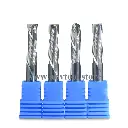
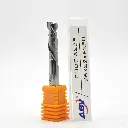
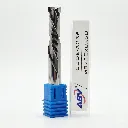
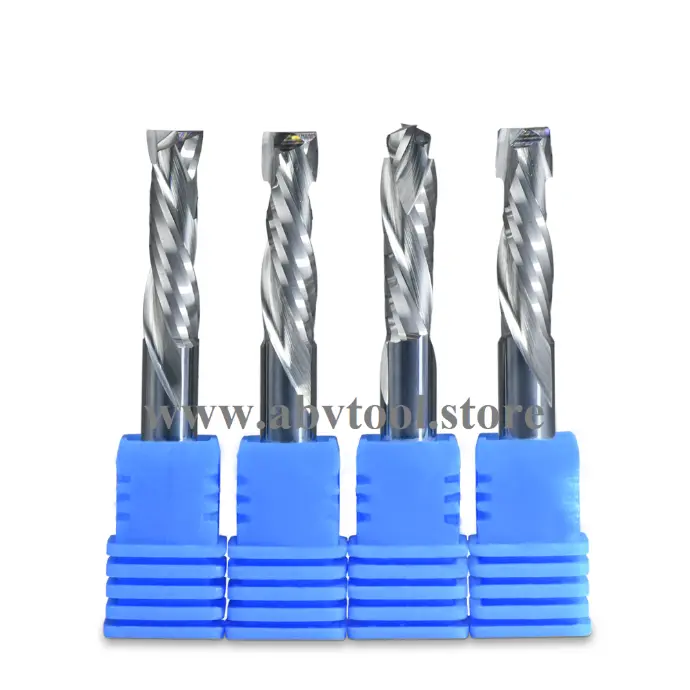
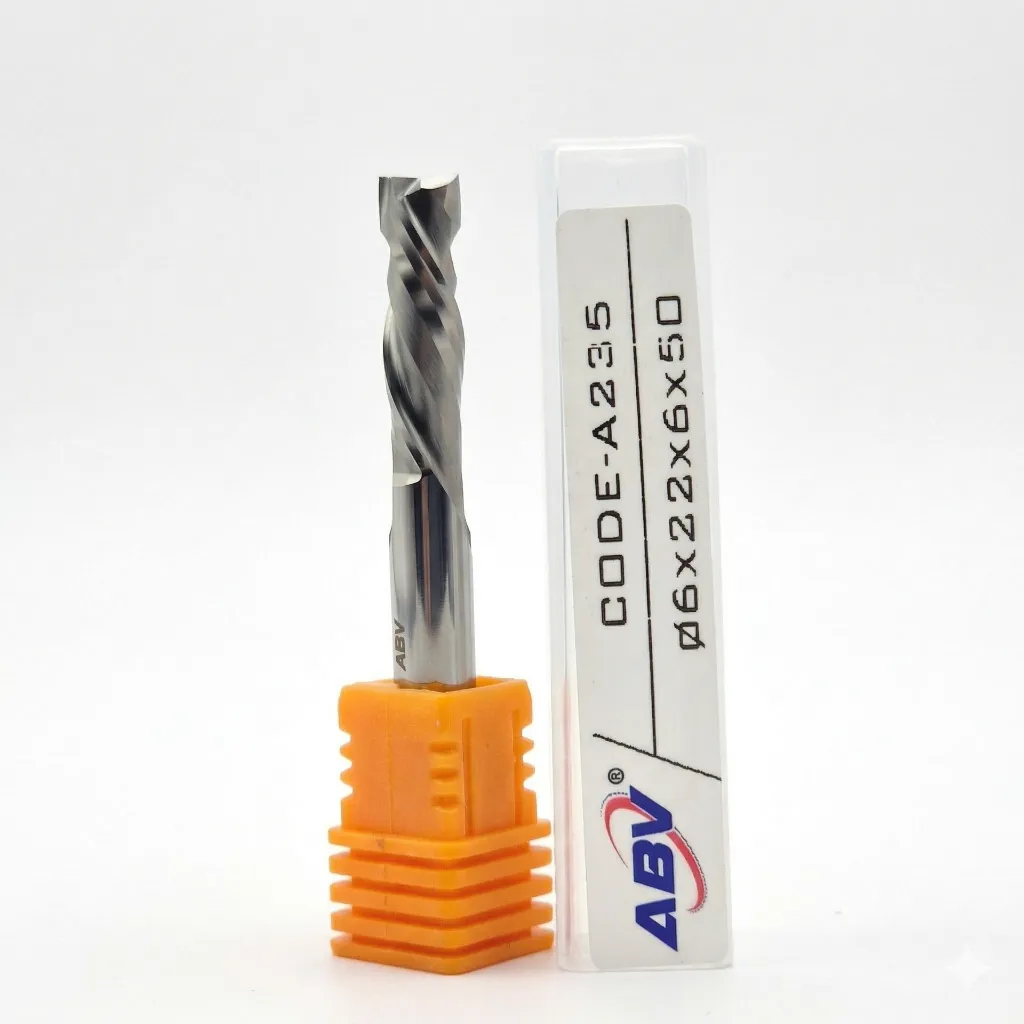
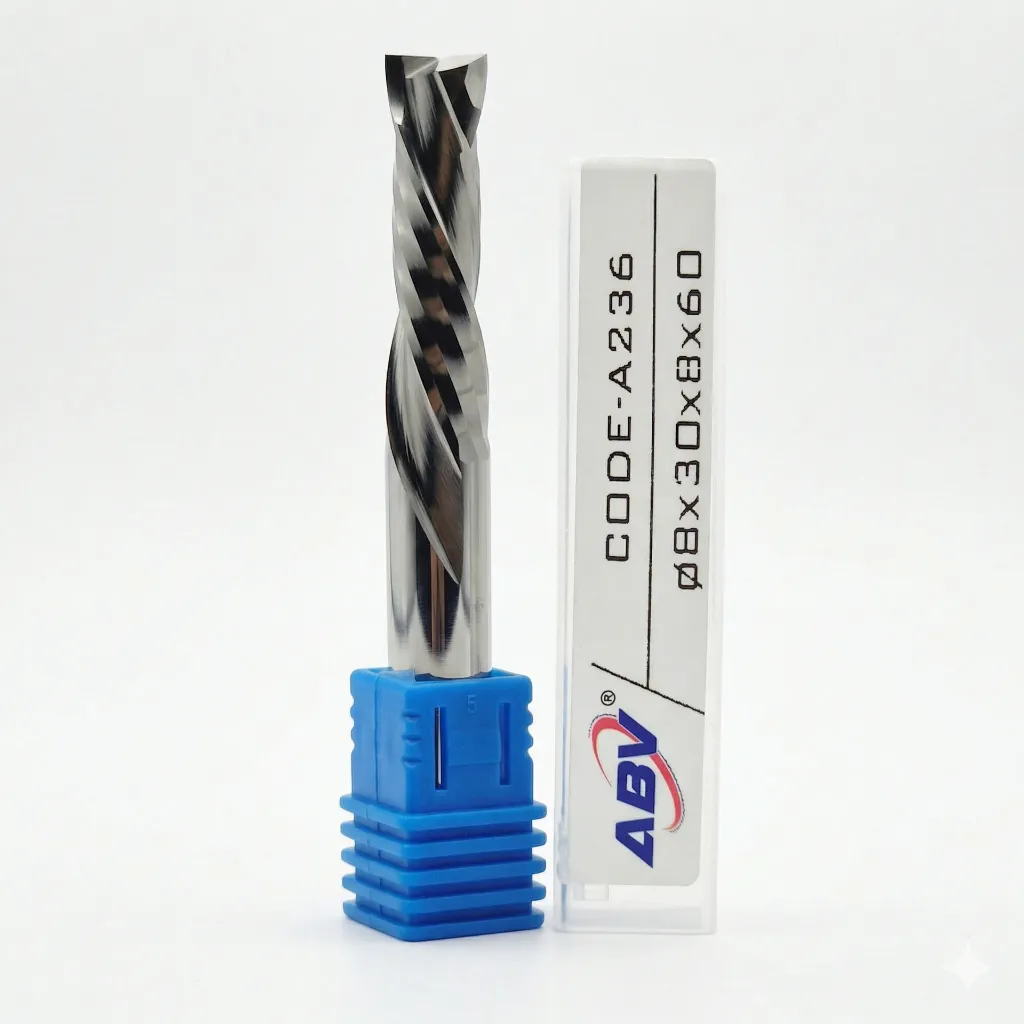
Up Down Cut Spiral Endmill 2Flute
₹ 434.00
₹ 434.00
-
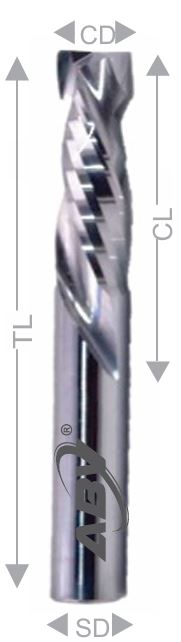
Select Product Code A234 to 236
An Up-Down Cut Spiral Endmill (widely known as a Compression Bit) is the ultimate high-performance tool for the woodworking industry. It combines an Up-cut spiral at the bottom tip with a Down-cut spiral on the remaining length of the tool.
For ABV Tool, this is your "Hero Product" for the modular furniture industry in Ahmedabad, as it solves the problem of chipping on both the top and bottom of a board simultaneously.
Standard bits either push chips up (splintering the top) or down (splintering the bottom). The Compression bit "squeezes" the chips toward the center of the board.
The Bottom Section (Up-cut): Usually the first 3mm to 10mm of the bit. It pulls the bottom fibers upward to ensure the bottom edge is clean.
The Top Section (Down-cut): The rest of the cutting length. It pushes the top fibers downward to ensure the top edge is clean.
The Result: A perfectly "finished" edge on both sides of the material, eliminating the need for manual sanding or edge cleaning.
Compression bits are designed specifically for double-sided laminated or veneered materials:
| Material | Why use a 2-Flute Compression Bit? |
| BWP Plywood | Prevents the face and back veneers from splintering during "nesting" operations. |
| Laminated MDF | Crucial for modular kitchen shutters where both sides are visible. |
| Melamine Particle Board | Handles the brittle plastic coating on both faces without "chipping" the edges. |
| Softwood/Hardwood | Excellent for cutting thick slabs where edge quality on both faces is a priority. |
To get a perfect finish, your Pass Depth must be deeper than the up-cut portion of the bit.
The Problem: If you cut too shallowly (e.g., only 2mm deep with a bit that has a 5mm up-cut length), you are essentially using an Up-cut bit, and the top surface will splinter.
The Solution: Ensure the "meeting point" of the flutes is buried inside the material. For most 18mm boards, a single-pass cut at full depth is the best way to use a compression bit.
When selling these to your modular furniture clients, focus on these specs:
Shank Diameters: 6mm (for small details) and 12mm (for high-speed production nesting).
2-Flute Design: Offers a great balance of chip clearance and feed speed. It’s less likely to burn than a 3-flute bit in high-glue-content MDF.
Mortise Style: If your customers do a lot of shallow grooves (dadoes), suggest the "Mortise Compression" version, which has a very short up-cut length (e.g., 3mm, allowing for clean top edges even on shallow cuts.
While a Compression bit is more expensive than a standard spiral bit, it saves the workshop owner significant money by:
Reducing Labor: No more hand-sanding "fuzzy" edges.
Reducing Waste: No more rejected parts due to laminate chipping.
Increasing Speed: Optimized for high-speed nesting (often 10–15 meters per minute).